
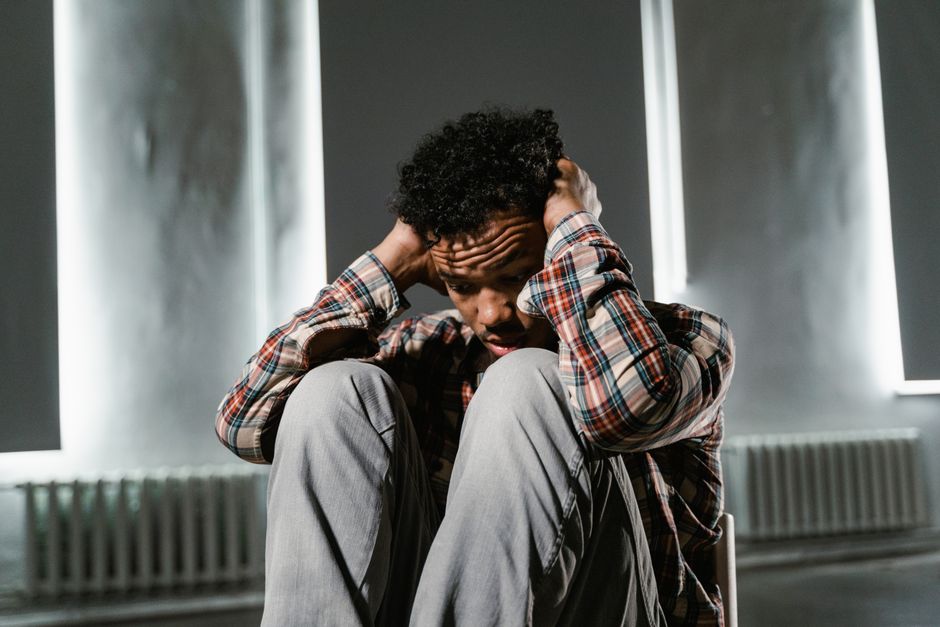
Suffering is not a sign that something has gone wrong with you. It is a built-in feature of having a nervous system that evolved to keep you alive. Pain, fear, grief, and heartbreak all exist because they helped our ancestors survive and stay connected to others. Science and psychology both point to the same conclusion: most human suffering comes from ancient survival systems meeting modern life, and from the way our minds try to protect us.
That answer sounds simple, but it explains a lot. It explains why emotional pain can hurt as much as physical pain. It explains why we replay embarrassing moments at 2 a.m. It explains why losing a relationship can feel like a physical wound. Understanding where suffering comes from does not remove it. But it often changes how people carry it.
Why We Suffer What Science And Psychology Reveal
The brain does not separate physical and emotional pain as cleanly as we once thought. Imaging research has shown that social rejection and physical injury activate overlapping regions involved in the experience of pain, including areas like the anterior cingulate cortex. The brain treats a broken heart as a genuine threat to survival, because for most of human history, being cast out of a group was dangerous.
Evolution built us to avoid two things: physical harm and social exclusion. Both systems run constantly in the background. They are useful, but they are not calibrated for modern life. A harsh email from a boss can trigger the same alarm as a predator once did. A social media comparison can feel like a threat to status. The alarm fires, the body responds, and we suffer.
Psychology adds a second layer. Humans do not just experience pain. We think about it, judge it, and try to control it. That added mental activity often creates more suffering than the original event. A fight with a friend hurts. Replaying the fight for three days, imagining what they think of you, and rehearsing comebacks hurts far more.
Is Emotional Pain Really Processed Like Physical Pain?
To a meaningful degree, yes. The overlap is real and well documented in brain imaging studies. This is why emotional wounds can produce genuine physical sensations: a heaviness in the chest, a knot in the stomach, a lump in the throat. The body responds to emotional threat with the same stress hormones it uses for physical danger.
This does not mean emotional pain and a broken bone are identical. They are not. But the idea that “sticks and stones may break my bones but words will never hurt me” is not supported by the science. Words and rejection register in the body.
There is a practical implication here. People who dismiss their own emotional pain as weakness are fighting their own biology. The pain is not imaginary. Treating it as real is not self-indulgence. It is accuracy.
Why Does the Mind Replay Painful Memories?
The mind replays painful memories because it is trying to solve a problem that has already happened. Rumination, the technical term for that loop of repetitive thinking, is one of the most studied patterns in psychology. It is strongly associated with anxiety and depression, though the relationship is complex and likely runs in both directions.
Rumination feels productive. It feels like you are working something out. In reality, most of it is the brain rehearsing threats without ever reaching resolution. The threat system stays switched on. Stress hormones stay elevated. Sleep suffers. Mood drops.
A useful distinction: reflecting on a problem to learn from it is different from replaying it to punish yourself. Reflection has an endpoint. Rumination does not.
Some research suggests that the tendency to ruminate is a stronger predictor of depression risk than the severity of the original stressful event. In other words, what happened to you matters, but how your mind handles it afterward can matter just as much.
Why Does the Brain Focus More on Bad Than Good?
This is called negativity bias, and it is well established. The brain gives more weight to negative information than positive information of the same intensity. A single criticism can outweigh several compliments. A bad day can color a whole week.
The reason is evolutionary. Missing a genuine threat could kill you. Missing a good opportunity rarely did. So the brain learned to err on the side of caution, and that caution became a default setting.
Negativity bias is not a character flaw. It is a survival feature that has become mismatched with a world where most threats are social and psychological rather than physical. Recognizing the bias does not switch it off, but it changes how much authority you give it.
What Role Does the Body Play in Suffering?
The body and mind are not separate systems. Chronic stress keeps the nervous system in a state of alert, and that state has downstream effects on sleep, digestion, immune function, and mood. Poor sleep makes emotional regulation harder. A body running on empty has less capacity to handle difficulty.
This is why suffering is often worse when basic needs are not met. People who are sleep-deprived, sedentary, or chronically stressed feel pain more intensely and recover from setbacks more slowly. The body is not a side issue in mental health. It is part of the mechanism.
Some clinicians emphasize the role of the vagus nerve and the parasympathetic nervous system in calming the stress response. Practices like slow breathing, time in nature, and physical movement are widely recommended. The evidence for specific techniques varies, and no single approach has been shown to work for everyone. But the general principle, that a calmer body supports a calmer mind, is well supported.
Is Suffering Always a Bad Thing?
No. Some suffering is unavoidable and even useful. Grief after loss is not a malfunction. It is the cost of attachment, and attachment is what makes human life worth living. The pain of a mistake can be the thing that teaches you not to repeat it.
Psychologists sometimes distinguish between pain that is a signal and pain that is a trap. Signal pain points to something real that needs attention: a loss, a danger, a relationship that is hurting you. Trap pain is the endless loop that adds nothing and takes everything.
The goal is not to eliminate suffering. That is not possible, and pursuing it can make things worse. The goal is to reduce the trap pain, respond to signal pain, and build a life that has enough meaning to make the unavoidable pain bearable.
When Should Someone Seek Professional Help?
When suffering starts to interfere with daily life, it is time to talk to a professional. That means trouble sleeping or eating, withdrawal from people, loss of interest in things that used to matter, or a sense that you cannot cope. These are not signs of weakness. They are signs that the system is overloaded.
If you have thoughts of harming yourself, reach out immediately. In the US, you can call or text 988 to reach the Suicide and Crisis Lifeline. This is a free, confidential service available 24 hours a day.
For ongoing struggles, a primary care doctor is often a good first stop. They can rule out physical causes and connect you with a therapist or psychiatrist. Evidence-based talk therapies, including cognitive behavioral therapy, have strong support for conditions like depression and anxiety. Medication helps some people and not others. The right path depends on the person, and a qualified clinician can help sort it out.
What Actually Helps People Carry Suffering?
Connection helps. This is one of the most consistent findings in the research on resilience. People who have strong social support recover better from hardship than people who face it alone. The effect is not small.
Meaning helps. Viktor Frankl, who survived the concentration camps and wrote about it, argued that people can endure almost anything if they can find meaning in it. Modern research on post-traumatic growth supports the idea that some people find new purpose and perspective after difficult experiences, though this is not universal and should never be used to minimize real pain.
Acceptance helps. The fight against suffering often causes more suffering than the original problem. Approaches like acceptance and commitment therapy focus on making room for difficult feelings rather than trying to eliminate them. The evidence for these approaches is growing.
Small daily actions help. Sleep, movement, time with people who matter, and a few minutes of quiet can shift the baseline. None of these are cures. Together, they build the capacity to carry what cannot be fixed.
Frequently Asked Questions
Why do we suffer emotionally?
Emotional suffering comes from survival systems that evolved to protect us from danger and social exclusion, now firing in response to modern stressors. The mind’s attempts to control or replay the pain often add a second layer of suffering on top of the first.
Is mental pain as real as physical pain?
Brain imaging shows that social rejection and physical injury activate overlapping pain-related regions, so emotional pain is real in the body. It is not identical to physical injury, but it is not imaginary either.
Why does the brain focus on negative things?
This is negativity bias, an evolutionary tendency to give more weight to threats than to rewards because missing a danger was once more costly than missing an opportunity. It is a default setting, not a personal failing.
When should I get help for suffering?
Seek help when suffering interferes with sleep, eating, relationships, or daily functioning, or when you feel unable to cope. If you have thoughts of self-harm, call or text 988 in the US for immediate support.
