
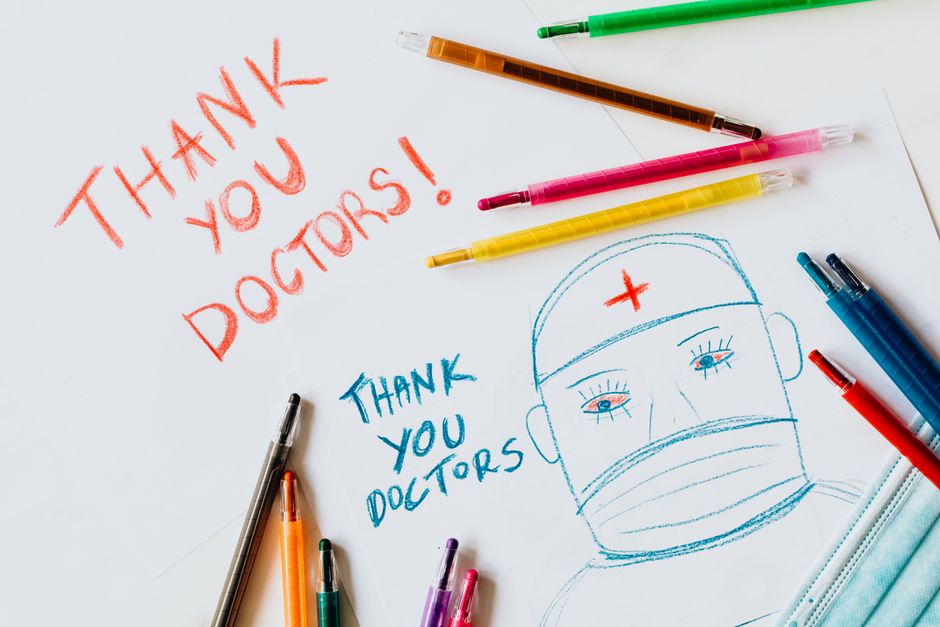
Healthcare workers carry a weight most of us never see. They are the people who hold your hand in an emergency room, who check on you at 3 a.m. when you are admitted, and who call with test results that change your life. Thanking them matters because their work is physically demanding, emotionally draining, and often goes unrecognized. A simple acknowledgment can remind them that their effort is seen, and that reminder has real value in a profession built on caring for others.
Why We Should Be Thanking Our Healthcare Workers
Healthcare workers do a job that most people cannot do. They face blood, illness, grief, and high-stakes decisions daily. They work long shifts that disrupt sleep and family life. They absorb the anger of scared patients and the sadness of families saying goodbye.
The evidence shows that gratitude has a measurable effect on well-being. Studies have found that expressing thanks can improve mood and reduce stress for both the giver and the receiver. For healthcare workers specifically, feeling valued is linked to lower burnout rates. When patients and families show appreciation, it reinforces why they entered the profession in the first place.
Thanking healthcare workers is not about empty words. It is about recognizing the reality that they show up for strangers on their worst days, and they do it with training, skill, and compassion. That deserves acknowledgment.
What Does a Healthcare Worker Actually Do on a Typical Shift?
Most people picture doctors and nurses when they hear “healthcare worker.” But the term covers a much wider group. It includes paramedics, lab technicians, phlebotomists, respiratory therapists, pharmacists, medical assistants, hospital janitorial staff, and the people who schedule appointments and manage medical records.
A nurse might manage six to eight patients during a shift. Each patient needs medications, wound care, monitoring, and documentation. The nurse also coordinates with doctors, physical therapists, and social workers. One interruption can delay care for another patient. This is not an exaggeration of the workload; it is a standard description of hospital nursing.
Physicians carry the responsibility of diagnosis and treatment decisions. They review lab results, interpret imaging, and explain complex conditions to families who are often terrified. Surgeons operate for hours while standing. Emergency doctors make split-second decisions with incomplete information.
Behind the scenes, lab technicians process thousands of samples. Pharmacists check every medication order for dangerous interactions. Respiratory therapists adjust ventilators for patients who cannot breathe on their own. Every role matters, and every role carries its own stress.
What Are the Physical and Emotional Costs of the Job?
The physical toll is well documented. Healthcare workers have higher rates of musculoskeletal injuries than workers in most other industries. Lifting patients, standing for hours, and performing repetitive tasks wear on the body over time.
Shift work disrupts circadian rhythms. Many healthcare workers rotate between day and night shifts, which is linked to poor sleep quality and long-term health risks. The body never fully adapts to working against its natural clock.
The emotional cost is harder to measure but equally real. Healthcare workers witness suffering regularly. They see patients die despite their best efforts. They comfort families who are losing loved ones. Over time, this exposure can lead to compassion fatigue — a state where the emotional reserves used for empathy become depleted.
Burnout is a recognized occupational hazard in healthcare. It involves emotional exhaustion, depersonalization, and a reduced sense of personal accomplishment. Research consistently shows that healthcare professionals experience burnout at higher rates than the general working population. This is not a personal failing; it is a predictable response to unrelenting stress.





What Happened During the COVID-19 Pandemic?
The pandemic put these stresses into sharp focus. Hospitals filled beyond capacity. Healthcare workers reused protective equipment when supplies ran short. They watched colleagues get sick. Some died.
Many worked overtime for months without breaks. They made decisions about who received ventilators when there were not enough to go around. They held tablets so families could say goodbye to loved ones dying alone because visitors were not allowed.
The mental health impact was significant. Studies conducted during the pandemic found elevated rates of anxiety, depression, and post-traumatic stress among healthcare workers. Many reported symptoms that met criteria for clinical distress.
Some healthcare workers left the profession during this period. Others stayed but carried lasting psychological scars. The pandemic did not create these problems — it exposed and intensified them.
How Can You Thank Healthcare Workers in a Meaningful Way?
A verbal thank you matters more than people think. When you are in a hospital setting, telling your nurse or doctor that you appreciate their care takes ten seconds and costs nothing. They hear complaints all day. Hearing gratitude stands out.
Small gestures can have a genuine impact. A handwritten card addressed to a specific person is more meaningful than a generic gift basket. If you want to thank a unit or department, check with the hospital about their policy on food donations. Many hospitals have guidelines about what can be accepted.
Writing a formal note of appreciation to a hospital administrator can help a healthcare worker’s career. Hospitals track patient feedback, and positive comments are often included in performance reviews. A detailed letter naming a specific nurse or doctor can support their professional advancement.
Advocating for better working conditions is another form of gratitude. Supporting policies that improve nurse-to-patient ratios, mental health resources, and fair scheduling helps healthcare workers in ways that a thank-you card cannot. This is a longer-term commitment but arguably the most impactful.
If you know a healthcare worker personally, check on them. Ask how they are actually doing, not just how work is going. Offer practical help like cooking a meal or watching their kids. The people who care for others often neglect their own needs.
What Should You Not Do When Thanking Healthcare Workers?
Avoid putting them on a pedestal. Phrases like “you are a hero” or “you are an angel” can feel uncomfortable. These words imply that healthcare workers should accept poor working conditions because their work is noble. They are professionals doing a job, and they deserve fair treatment, not sainthood.
Do not expect a lengthy conversation when they are working. A nurse in the middle of a shift may not have time to stop and chat. A brief acknowledgment is appropriate. Save the longer expression of gratitude for a card or letter.
Avoid gifts that create extra work. Flowers in a busy ICU unit may not be allowed due to infection control policies. Large food deliveries can be difficult to manage on a busy floor. Ask first or choose something simple like individually wrapped snacks.
Does Thanking Healthcare Workers Actually Change Anything?
Yes, but it is not a cure-all. Gratitude does not fix understaffing. It does not reduce the administrative burden that keeps clinicians at their computers instead of at bedsides. It does not address the financial pressures that force hospitals to run lean.
What gratitude does do is provide a moment of positive connection. Research on workplace appreciation shows that feeling valued is associated with higher job satisfaction and lower intention to leave. For individual workers, a sincere thank you can break through the monotony of a hard shift.
Some hospitals have formal recognition programs where patients can nominate staff for awards. These programs can boost morale and create a culture where excellent care is acknowledged publicly. If your hospital has one, use it.
The honest position is that healthcare workers need systemic change as much as they need personal gratitude. Both matter. One does not replace the other.
Frequently Asked Questions
What should I say to thank a nurse or doctor?
Simply say “thank you for taking care of me” or “I appreciate what you did.” Be specific if you can — mention something they did that helped you.
Is it appropriate to give gifts to healthcare workers?
Small tokens like a card or individually wrapped snacks are usually fine, but many hospitals have restrictions on gifts. Check with the facility first.
Can I thank a healthcare worker who treated me in the past?
Yes, you can send a card or letter to the hospital addressed to them by name. Hospitals typically forward patient correspondence to the appropriate staff member.
Why do healthcare workers burn out more than other professionals?
They face high emotional demands, long shifts, and life-or-death decisions regularly. The combination of physical exhaustion and emotional strain is unique to the profession.
