
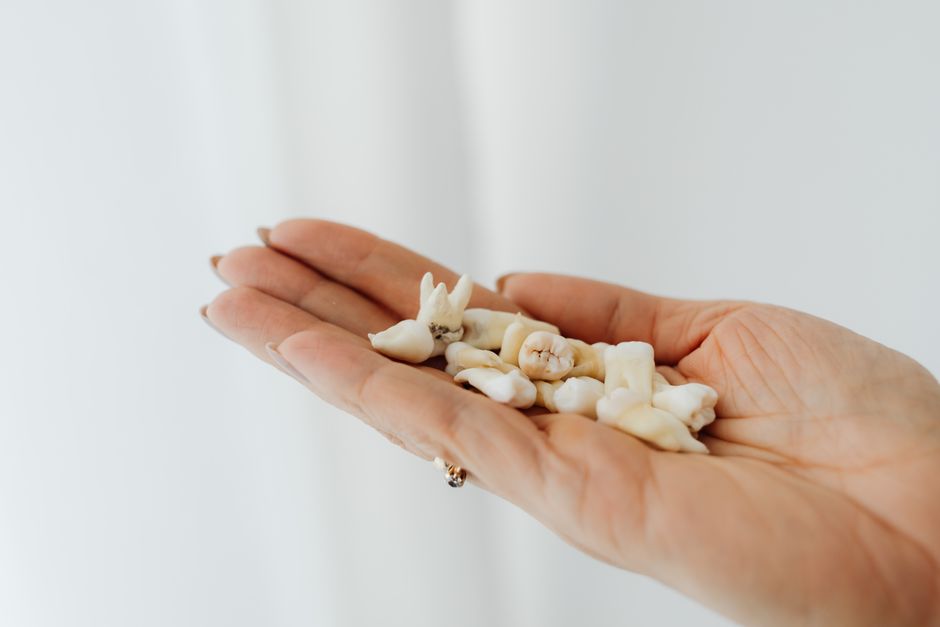
Wisdom teeth are called wisdom teeth because they are the last teeth to erupt, typically appearing between the late teens and the mid-twenties — the age when a person is said to be entering adulthood and, by older cultural standards, gaining “wisdom.” The name has nothing to do with intelligence or brain development. It is a historical label tied to timing, not to any measurable mental ability.
The science behind these teeth is more interesting than the name suggests. They are our third set of molars, and their story involves evolutionary leftovers, crowded modern jaws, and a wide range of normal variation in how — and whether — they emerge.
What Are Wisdom Teeth, Anatomically?
Wisdom teeth are the third molars, located at the very back of the mouth, one in each corner of the upper and lower jaw. Most adults have four, though some people have fewer, and a small number have none at all.
They sit behind the second molars, which are the large grinding teeth that come in around age twelve. The third molars are the last permanent teeth to develop. Their crowns begin forming in the jawbone during childhood, well before they ever push through the gums.
Dentists and oral surgeons classify wisdom teeth by how they sit in the jaw:
- Fully erupted: The tooth has broken through the gum and sits in a normal position.
- Partially erupted: Only part of the crown has emerged, often leaving gum tissue over the back of the tooth.
- Impacted: The tooth is blocked from erupting, sometimes by bone, other teeth, or the angle of its own growth.
Impacted teeth can be angled forward, backward, sideways, or trapped entirely below the gumline. These positions are common and are a major reason wisdom teeth cause trouble.
Why Do We Call Them “Wisdom” Teeth?
The label comes from the age at which the teeth appear. Because third molars typically come in during the late teens or early twenties, older generations associated them with the transition into mature adulthood — the “age of wisdom.”
This naming convention is not unique to English. Many languages carry a similar idea. The Greek term for these teeth translates roughly to “wisdom teeth,” and several other European languages use comparable phrasing. The concept traveled with the age association, not with any scientific finding.
It is worth separating the folklore from the biology. There is no evidence that wisdom teeth affect intelligence, memory, or cognitive ability. The name is a cultural artifact — a reminder of when the teeth show up, nothing more.
Why Do They Come In So Late?
Wisdom teeth erupt late because of how human jaws grow. The third molars are the last teeth to finish developing, and they only begin to push through once the jaw has largely reached its adult size.
The timing is a normal part of dental development. The first permanent molars arrive around age six, the second molars around age twelve, and the third molars somewhere in the late teens to early twenties. Some people’s wisdom teeth never erupt at all — they stay buried in the jawbone for life.
Because the third molars develop so late, they are also the last teeth to be affected by the space available in the mouth. That brings us to the central issue with wisdom teeth: room.
Why Do Wisdom Teeth Cause Problems?
Modern human jaws are, on average, smaller than those of our distant ancestors. The evidence for this comes from comparing jaw size across human populations and over time. Smaller jaws mean less space at the back of the mouth, and less space means the third molars often have nowhere to go.
When a wisdom tooth cannot fully erupt, several problems can follow:
- Pericoronitis: Gum tissue partly covering an emerging tooth can trap food and bacteria, leading to infection and swelling. This is one of the most common reasons people seek treatment.
- Crowding: A wisdom tooth pushing against neighboring teeth can contribute to crowding, though the evidence on how much it actually shifts other teeth is mixed.
- Cavities and gum disease: Teeth stuck at an angle are hard to clean, which raises the risk of decay and gum problems on the wisdom tooth and the tooth in front of it.
- Cysts: Rarely, a sac of fluid around an impacted tooth can form a cyst that damages nearby bone or teeth.
Not every wisdom tooth causes trouble. Many people live their whole lives with wisdom teeth that never bother them. The key point is that being impacted does not automatically mean a problem — it raises the risk, but the outcome varies from person to person.
Do Wisdom Teeth Make You Smarter?
No. There is no biological or clinical basis for the idea that wisdom teeth influence intelligence. The name reflects timing, not function.
The brain reaches most of its adult structure well before the third molars erupt. Cognitive ability is shaped by many factors — genetics, education, environment, health — but the presence or absence of third molars is not one of them.
The myth likely persists because the name sounds meaningful. It is a good example of how a label can shape assumptions long after the label itself stops making sense.
Should Wisdom Teeth Always Be Removed?
No. Removal is not automatically required, and current clinical thinking has moved away from removing every wisdom tooth as a matter of routine.
Professional guidance from dental organizations has shifted toward a more selective approach. The general direction is to remove wisdom teeth when there is a clear reason — repeated infection, decay that cannot be repaired, damage to neighboring teeth, or a cyst — rather than simply because the tooth exists. The evidence supporting routine removal of symptom-free, disease-free wisdom teeth is limited, and the decision is best made case by case.
Some clinicians still recommend removal of impacted teeth that are not currently causing symptoms, often to prevent future problems. This is a judgment call, not a universal rule. The trade-offs include the risks of surgery itself, which are real and should be weighed honestly.
If a dentist recommends removal, it is reasonable to ask why: what specific problem is being prevented, and what is the evidence that removal will help? A good clinician can explain the reasoning.
What Happens During Wisdom Tooth Removal?
Removal is a common procedure, usually done by a dentist or oral surgeon. The approach depends on how the tooth sits in the jaw.
A fully erupted tooth can sometimes be removed like any other tooth. An impacted tooth may require a small incision in the gum and, in some cases, removal of bone or sectioning of the tooth into pieces for easier extraction. Local anesthesia is standard; sedation is sometimes used for more complex cases or for anxious patients.
Recovery usually involves some swelling and discomfort for a few days. Most people return to normal routines within about a week, though healing varies. Your clinician should give you specific aftercare instructions, and those instructions matter — following them reduces the risk of complications like dry socket, a painful condition where the blood clot that protects the healing socket is lost.
As with any surgery, there are risks. These include bleeding, infection, and — for lower wisdom teeth especially — temporary or, rarely, longer-lasting nerve changes affecting sensation in the lip, tongue, or chin. These risks are worth discussing with your clinician before the procedure.
Key Takeaways
Wisdom teeth are the third molars, the last teeth to develop and erupt. Their name comes from the age at which they appear, not from any effect on intelligence. Modern jaws often lack the space for them, which is why impaction and related problems are common.
Removal is not mandatory. The decision should rest on whether a specific tooth is causing or likely to cause a real problem, weighed against the risks of surgery. That is a conversation to have with a dental professional who knows your mouth, not a rule to apply to everyone.
Frequently Asked Questions
Why are wisdom teeth called wisdom teeth?
They are named for the age at which they typically appear — the late teens to mid-twenties, a stage historically linked to adulthood and wisdom. The name reflects timing, not intelligence.
At what age do wisdom teeth come in?
Most wisdom teeth erupt between the late teens and the mid-twenties, though timing varies widely. Some people’s wisdom teeth never erupt at all.
Does everyone have wisdom teeth?
No. Some people are born without one or more third molars, and a small number have none. Having fewer than four is a normal variation.
Do wisdom teeth always need to be removed?
No. Removal is recommended when a tooth causes infection, decay, damage to nearby teeth, or a cyst. Symptom-free, disease-free wisdom teeth do not automatically require removal.
