
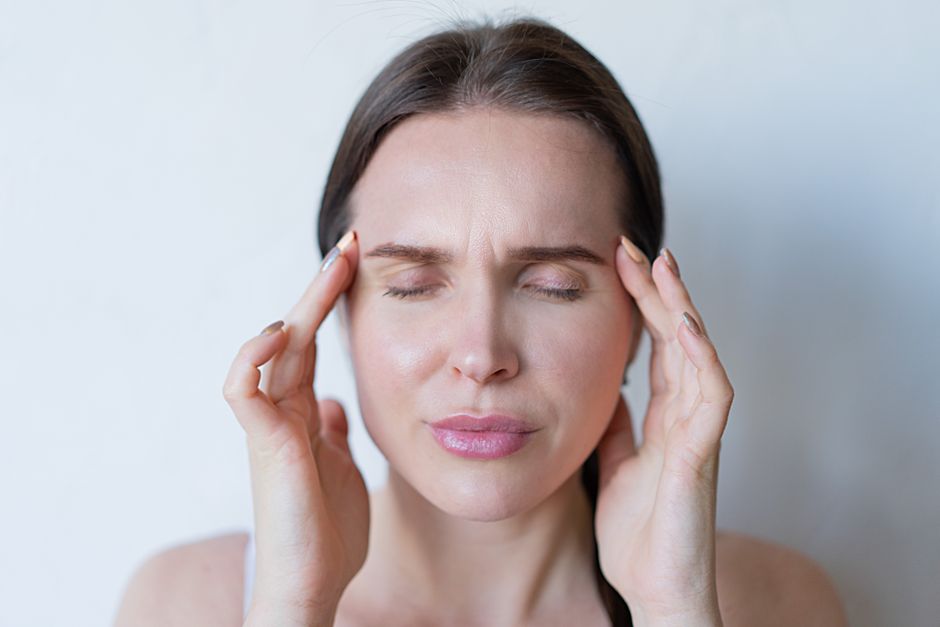
Tension headaches and eye pain often show up together, and the connection is not a coincidence. The same nerves and muscles that produce the dull, band-like pressure of a tension headache also send signals that register as aching, soreness, or pressure behind and around the eyes. That shared nerve pathway is why so many people feel eye pain during a tension headache even when nothing is wrong with their eyes themselves.
The good news is that tension headaches are the most common type of headache, and most cases respond to simple measures like rest, over-the-counter pain relievers, and attention to posture and stress. When eye pain comes with vision changes, a red eye, or pain that keeps getting worse, that is a different situation and needs medical attention.
Why Tension Headaches Cause Eye Pain And How To Treat It?
The pain of a tension headache comes from muscles and connective tissue around the skull and neck, not from the brain itself. The brain has no pain receptors. What hurts is the network of muscles in the scalp, jaw, neck, and the thin layer of tissue covering the skull, along with the nerves that run through those areas.
One of those nerves is the trigeminal nerve. It is a large cranial nerve with branches that reach the forehead, the area around the eyes, the upper cheek, and the jaw. When tension headache pain signals travel along the trigeminal nerve, the brain can interpret that discomfort as coming from the eyes or the area right around them. This is called referred pain — you feel it in one place even though the source is somewhere else.
There is a second factor. The muscles that move your eyes and the muscles that focus your lens work constantly. When those muscles are held tense for a long time — from squinting, staring at a screen, or reading in poor light — they can become fatigued and sore. That soreness overlaps with the same region where tension headache pain is felt, so the two sensations blend together.
So the eye pain in a tension headache is usually not eye disease. It is nerve signaling and muscle fatigue sharing territory. That distinction matters because it shapes how the problem is treated.
What Does Tension Headache Eye Pain Actually Feel Like?
The pain is typically dull and steady rather than sharp or throbbing. People describe it as pressure, tightness, or a heavy ache behind the eyes or in the temples. It often feels like a band squeezing around the head.
Tension headache pain is usually felt on both sides. It tends to be mild to moderate in intensity. It does not usually get worse with routine physical activity, which helps distinguish it from migraine. A migraine is often one-sided, throbbing, moderate to severe, and made worse by movement, and it frequently comes with nausea or sensitivity to light and sound.
Eye symptoms that commonly accompany a tension headache include:
- A dull ache behind or around one or both eyes
- A feeling of pressure in the eye area
- Tired or heavy-feeling eyes
- Mild sensitivity to light in some people
- Discomfort when moving the eyes, in some cases
What you should not see with a plain tension headache is a red eye, a pupil that is different in size from the other, sudden vision loss, double vision, or pain that is severe and rapidly worsening. Those signs point to something other than a tension headache and need prompt medical evaluation.
What Triggers Tension Headaches and Eye Strain Together?
Many of the same triggers drive both the headache and the eye discomfort. That overlap is part of why they arrive as a package.
Common triggers include:
- Screen time. Long stretches looking at a monitor or phone reduce how often you blink, which dries the eyes and strains the focusing muscles.
- Poor posture. A forward head position and rounded shoulders tighten the neck and scalp muscles that feed into tension headache pain.
- Stress and anxiety. Emotional tension shows up physically as muscle tightness in the jaw, neck, and shoulders.
- Uncorrected vision problems. Needing glasses but not wearing them, or wearing the wrong prescription, forces the eye muscles to work harder.
- Poor lighting. Reading or working in dim light or with harsh glare increases squinting.
- Sleep problems. Not getting enough sleep or sleeping poorly is a well-recognized headache trigger.
- Jaw clenching. Grinding or clenching the teeth loads the jaw muscles, which connect to the same nerve network as the temples and eyes.
One detail worth knowing: the eye strain itself does not cause the headache in a direct mechanical way. The relationship runs through shared muscles, shared nerves, and shared triggers. That is why fixing only the eyes or only the headache often leaves the other half of the problem in place.





How Are Tension Headaches With Eye Pain Treated?
Treatment usually works on two fronts at once — calming the current episode and reducing how often they happen.
For an active tension headache, over-the-counter pain relievers such as acetaminophen, ibuprofen, or aspirin are commonly used and are effective for many people. These should be used according to the label directions. Using them more than a few days a week on a regular basis can lead to medication-overuse headache, a condition where the pain reliever itself starts driving more headaches. If you find you need pain medication frequently, that is a signal to talk with a clinician rather than to keep taking it.
Non-drug measures that help many people include:
- Resting in a quiet, dimly lit room
- Applying a warm compress to the neck and shoulders to relax tight muscles
- Gentle stretching of the neck and shoulders
- Taking regular breaks from screens
- Improving posture at your desk or workstation
- Getting consistent sleep
For people who get tension headaches often, a clinician may recommend preventive approaches. These can include physical therapy for neck and shoulder muscles, stress management techniques, and in some cases preventive medication. The evidence for any single preventive approach varies, and what works for one person may not work for another. This is an area where individual guidance from a clinician matters more than a general rule.
If eye strain is part of the picture, an eye exam is worth considering. Correcting a vision problem or updating a prescription can reduce the muscle effort involved in focusing, which in turn can reduce one of the inputs feeding the headache.
When Is Eye Pain With a Headache a Medical Emergency?
Most tension headache eye pain is not dangerous. But certain combinations of symptoms point to conditions that need urgent care, and knowing the difference matters.
Seek medical attention promptly if you have:
- Sudden, severe headache that reaches peak intensity within seconds to minutes
- Eye pain with a red eye, especially with blurred vision or halos around lights
- Vision loss or double vision
- Pupils that are unequal in size
- Headache with fever, stiff neck, or rash
- Headache after a head injury
- Weakness, numbness, confusion, or trouble speaking
- A headache that is clearly different from your usual pattern or keeps worsening
Some of these signs can indicate serious conditions such as acute angle-closure glaucoma, which is a medical emergency involving a sudden rise in eye pressure. Others can point to infection or bleeding in the brain. These are not common, but they are the reason certain symptoms should never be brushed off as just another tension headache.
If your headaches are becoming more frequent, more severe, or are interfering with daily life, that is also a reason to see a clinician — not because it is an emergency, but because ongoing headaches deserve a proper evaluation and a plan.
Can You Prevent Tension Headaches and Eye Strain?
Prevention focuses on the triggers, and the same habits that reduce eye strain tend to reduce headache frequency.
Practical steps include:
- Follow the 20-20-20 habit for screen work: every 20 minutes, look at something about 20 feet away for about 20 seconds.
- Position your screen so the top is roughly at or slightly below eye level, at arm’s length.
- Reduce glare and adjust room lighting so it is not much brighter or dimmer than your screen.
- Blink regularly and consider lubricating eye drops if your eyes feel dry.
- Set up your chair and desk so your neck stays neutral rather than jutting forward.
- Take movement breaks to loosen the neck and shoulders.
- Manage stress with techniques that work for you, whether that is exercise, breathing, or something else.
- Keep a consistent sleep schedule.
- Stay hydrated.
None of these steps is a guaranteed fix. Tension headaches are influenced by many factors, and prevention is usually about lowering the odds rather than eliminating the problem entirely. But for many people, small consistent changes add up to fewer and milder headaches.
Frequently Asked Questions
Can a tension headache cause pain behind the eyes?
Yes. Tension headache pain travels along nerve pathways that also serve the eye area, so the discomfort is often felt behind or around the eyes even though the eyes themselves are not the source. This kind of referred pain is a normal feature of how these headaches work.
Is eye pain with a headache a sign of something serious?
Usually not, but certain signs do warrant urgent care — including a red eye, vision loss, double vision, unequal pupils, a sudden severe headache, or headache with fever and a stiff neck. If any of these appear, get medical help right away.
Does eye strain cause tension headaches?
Eye strain and tension headaches share many triggers, such as screen time, poor posture, and uncorrected vision problems, so they often occur together. Eye strain is not the direct cause of the headache, but reducing it can lower one of the inputs that contribute.
How do you get rid of a tension headache with eye pain?
Rest, a warm compress on the neck and shoulders, screen breaks, and over-the-counter pain relievers used per label directions help many people. If headaches are frequent or you need pain relievers often, talk with a clinician about a prevention plan.
