
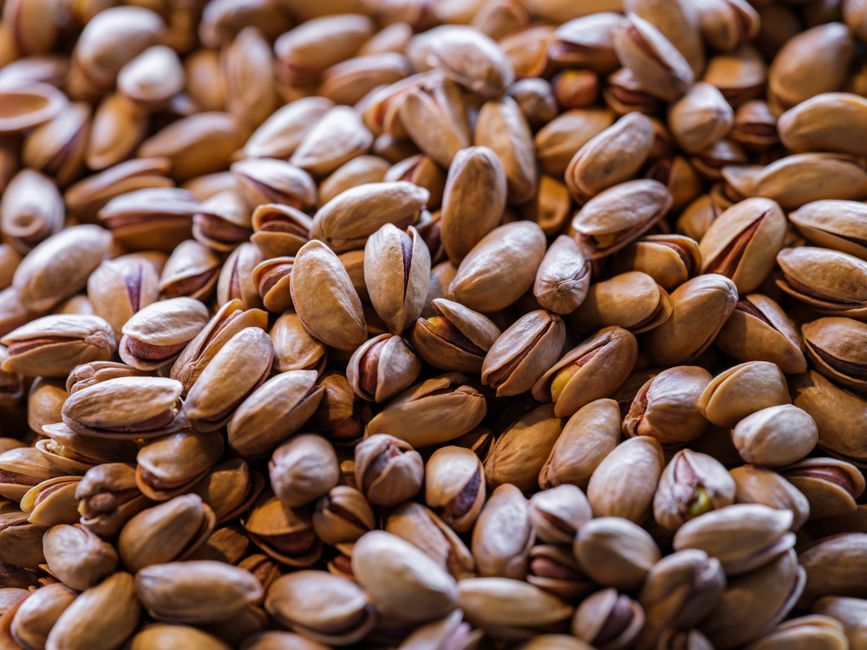
Pistachios cost more than almost any other nut on the grocery shelf, and the reason is not marketing. Pistachio trees take years to produce a meaningful crop, the nuts must be harvested and hulled within about a day to avoid spoilage, and roughly half of the world’s supply comes from a single country. Add in the fact that a portion of every harvest is lost to a natural defect, and you have a crop that is genuinely expensive to grow, process, and ship.
That combination of biology, labor, and geography explains most of the price. Understanding each piece makes the number on the tag easier to judge fairly.
Why Pistachios Are So Expensive Compared to Other Nuts
Pistachios are one of the most labor-intensive tree nuts to produce. Every step from orchard to package costs more than it does for almonds, peanuts, or cashews.
The biggest single factor is the hull. A pistachio grows inside a fleshy outer skin that must be removed quickly after harvest. If the hull stays on too long, the shell stains and the nut inside can develop mold. That means growers cannot simply shake the trees and store the crop. They harvest, hull, and dry the nuts in a tight window.
Harvesting itself is delicate. Pistachio trees are shaken mechanically so the nuts fall onto catch frames. Timing matters. Pick too early and the shell will not split. Pick too late and the nuts drop to the ground or spoil. This narrow window forces growers to move fast and hire more labor.
Then there is the split-shell problem. Pistachios are one of the few nuts sold in the shell, and the shell must naturally split open for the nut to be marketable. A percentage of every crop never splits. Those nuts are pulled out and sold for processing at a lower price, which raises the cost of the good ones.
- Handling must happen within roughly a day of harvest
- Only naturally split-shell nuts go to the premium market
- Tree nuts in general require years of orchard investment before any return
None of this is true of peanuts, which grow in a year and are dug from the ground. It is only partly true of almonds, which also grow on trees but have a tougher outer layer and a longer safe handling window.
How Long Does It Take for a Pistachio Tree to Produce Nuts?
A pistachio tree does not give a real crop for years. This long wait is one of the clearest reasons the nuts cost what they do.
Growers plant young trees and wait. The trees grow slowly and typically begin producing only a small amount of nuts after about five to seven years. A full commercial crop usually takes closer to eight to ten years. That is a decade of watering, pruning, pest control, and land cost before the orchard earns anything.
Compare that to an annual crop. A farmer who plants corn or soybeans gets a harvest the same year. Money goes in and comes back out within months. A pistachio grower ties up land and capital for years with no income from that ground.
There is also an alternate bearing pattern. Many pistachio trees tend to produce a heavy crop one year and a lighter crop the next. That swing makes supply uneven, and uneven supply pushes prices around. Growers cannot simply plant more trees to fix a bad year, because new trees will not help for nearly a decade.
Where Do Most Pistachios Come From?
Global pistachio production is concentrated in a small number of countries, and that concentration makes the market fragile.
Iran and the United States have long been the two largest producers, with Turkey and Syria also growing significant amounts. A large share of the world supply comes from a handful of regions with the right climate. Pistachios need hot, dry summers and cool winters. Few places fit.
When production is clustered like this, a single bad event can move global prices. A drought in one major growing region, a frost at the wrong time, or a disease outbreak can cut supply sharply. Because the trees take years to mature, the market cannot quickly replace lost volume.
Trade policy adds another layer. Sanctions, tariffs, and export restrictions have affected pistachio trade between major producers and buyers at various points. When the flow of nuts between countries is disrupted, buyers pay more to secure supply from elsewhere.
California produces the vast majority of the pistachios grown in the United States. That is a strength for domestic supply, but it also means American prices are tied closely to conditions in one growing region and to how much is exported overseas.
Why Are Some Pistachios More Expensive Than Others?
Two bags of pistachios can differ in price by a wide margin, and the reasons are mostly about processing and quality.
The first factor is whether the nuts are in the shell. Shelled pistachio kernels cost more per pound because the shell is roughly half the weight of the whole nut. You are paying for the edible part only, plus the labor to remove the shells.
The second factor is how the nuts are sold. Roasted and salted pistachios in the shell are the standard product. Flavored, organic, or specialty varieties cost more because of extra processing and smaller production runs.
Freshness matters too. Pistachios are high in fat, and that fat can go rancid over time. Proper storage and fast turnover cost money. A retailer selling fresh nuts has to manage inventory carefully, and that cost shows up in the price.
Origin plays a role as well. Nuts from certain regions may command a premium based on size, color, and flavor. Larger, greener kernels are generally more desirable and cost more.
| Product | Why It Costs More |
|---|---|
| In-shell roasted | Standard product; shell is most of the weight |
| Shelled kernels | You pay only for the edible nut, plus shelling labor |
| Organic | Smaller supply, stricter growing rules |
| Flavored or specialty | Extra processing, smaller batches |
Are Pistachios Worth the Price?
Whether the price is fair depends on what you want from them. Pistachios are nutritionally dense, and that is a real point in their favor.
They provide protein, fiber, and unsaturated fats. According to USDA nutritional data, a one-ounce serving of pistachios supplies about 160 calories and around 6 grams of protein. They also contain potassium and vitamin B6.
Because they are sold in the shell, they take longer to eat. Some research suggests that shelling each nut slows eating and may help people feel satisfied with a smaller portion. That is a reasonable observation, though it is not a weight-loss strategy on its own.
The price per pound is high, but the price per serving is more moderate. A one-ounce serving is a small handful. If you compare cost per serving rather than cost per bag, pistachios are less extreme than they first appear.
There is one honest caveat. Pistachios are a common tree nut allergen. Anyone with a tree nut allergy should avoid them, and the price is irrelevant to that decision.
Will Pistachio Prices Go Down?
Prices could ease if supply grows, but the forces that make pistachios expensive are slow to change.
New orchards take years to mature, so any increase in supply arrives late. Climate stress in major growing regions is a persistent risk. Water availability in dry regions is a growing concern for growers. These pressures do not resolve quickly.
On the other side, improved farming methods and new plantings in additional regions could gradually add supply. If that happens, prices might soften. But the fundamental costs of labor, processing, and the long wait for trees to produce are not going away.
For shoppers, the practical takeaway is that pistachio prices reflect real costs, not just branding. Buying in bulk, choosing in-shell nuts over kernels, and watching for sales are the most reliable ways to pay less.
Frequently Asked Questions
Why are pistachios so expensive compared to peanuts?
Pistachios grow on trees that take years to produce a crop and must be hulled within about a day of harvest, while peanuts grow in a single season and are far cheaper to process. The long orchard investment and tight handling window drive the price difference.
How long does it take for a pistachio tree to produce nuts?
A pistachio tree typically starts producing a small amount of nuts after about five to seven years and reaches a full commercial crop closer to eight to ten years. That long wait ties up land and money with no return for nearly a decade.
Are shelled pistachios more expensive than in-shell?
Yes, shelled pistachio kernels usually cost more per pound because the shell makes up roughly half the weight of the whole nut. You are paying only for the edible part plus the labor to remove the shells.
Which country grows the most pistachios?
Iran and the United States have long been the two largest producers, with Turkey and Syria also growing significant amounts. This concentration means a single bad harvest or trade disruption can affect global prices.
