
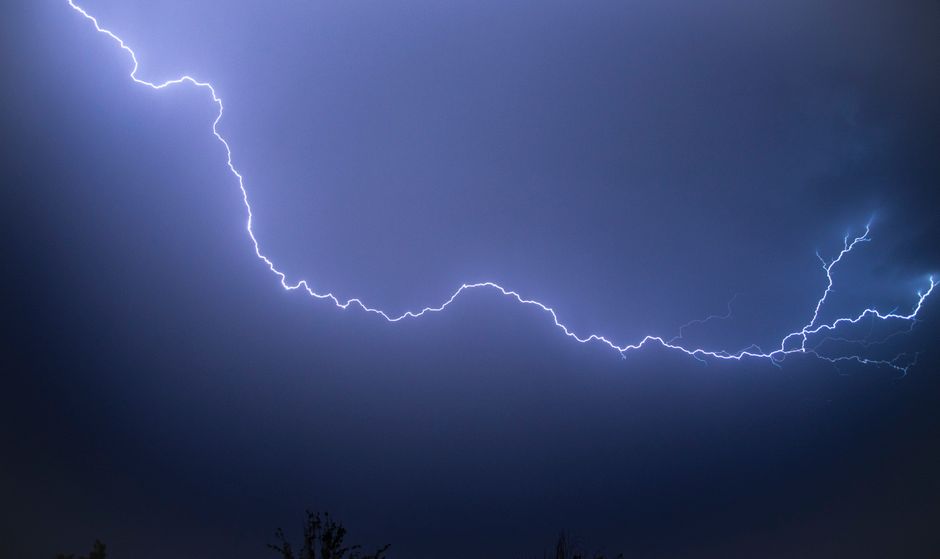
Lightning strikes open fields because they contain the tallest objects around, and lightning seeks the shortest path between the storm cloud and the ground. When you stand in a field, you become that tall object, making your body a ready-made pathway for a bolt carrying up to 300 million volts. Survival depends on getting low, minimizing your contact with the ground, and understanding that the most dangerous place in a storm is not under a tree — it is wherever you are standing out in the open.
Why Are Open Fields So Dangerous During Lightning Storms?
Lightning does not randomly pick targets. It follows the path of least resistance from the cloud to the earth. In an open field, there are no buildings, no trees, and no utility poles. You are the tallest conductive object in the area.
This makes you an ideal target. Your body is mostly water and electrolytes, which conduct electricity far better than the surrounding air. When a lightning leader descends from the cloud, it is drawn to whatever offers the easiest route to ground. In a flat field, that route goes straight through you.
The danger is not limited to a direct strike. Ground current spreads outward from where the bolt hits, traveling through the wet soil. If you are standing nearby, that current can enter your body through your feet. This is why multiple people can be injured by a single lightning strike, even if only one person is hit directly.
What Happens To Your Body When Lightning Strikes?
A lightning bolt is not like a household electrical shock. It is a massive pulse of direct current that lasts only a fraction of a second but carries enormous energy. The electricity can stop your heart, disrupt your brain’s electrical signals, and cause severe burns.
Cardiac arrest is the immediate cause of death in most fatal lightning strikes. The heart has its own electrical system that keeps it beating in rhythm. A lightning bolt overwhelms that system, causing the heart to stop. Some victims also experience respiratory arrest because the brain stops sending signals to the lungs.
Non-fatal strikes can cause lasting damage. Many survivors report memory problems, difficulty concentrating, chronic pain, and sleep disturbances for months or years afterward. Nerve damage and muscle weakness are also common. The effects are not always visible on the outside, which is why lightning injuries are sometimes called the “invisible injury.”
What Is The Safest Position In An Open Field During A Storm?
The safest position is crouched low with your feet together and your hands covering your ears. This is commonly called the “lightning crouch.” It does not make you safe, but it reduces your risk.
Get as low as you can without lying flat on the ground. Lying down is a mistake. It increases the surface area of your body in contact with the ground, which means ground current has a larger pathway through your body. A larger pathway means more current flows through your vital organs.
By crouching with your heels touching, you minimize the distance between your feet. This reduces the voltage difference between them, which lowers the chance of current traveling up one leg and down the other through your torso. Covering your ears helps protect your hearing from the thunderclap, which can arrive at close range with enough force to damage eardrums.
The crouch is not comfortable and not a guarantee of survival. It is simply the position that gives you the best odds when no shelter exists.





How Far Away Can Lightning Strike You?
Lightning can strike miles away from the storm that produces it. The average distance is about 10 miles, but strikes have been documented at greater distances. This is why the old rule about waiting 30 minutes after the last thunderclap exists.
You do not need to see rain or clouds overhead to be at risk. Clear skies above you do not mean you are safe. The storm can be over the horizon while the lightning reaches out ahead of it.
If you hear thunder, you are within striking distance. Thunder is the sound of the lightning channel heating the air. If you can hear it, the bolt was close enough to be a threat. Count the seconds between the flash and the thunder. Every five seconds equals about one mile. If that count is under 30, you should already be seeking shelter.
What Should You Do If You Are Caught In A Field With No Shelter?
If you cannot reach a building or a hard-topped vehicle, your options are limited. Do not shelter under a tree. Trees are tall, conductive, and frequently struck. The current can travel down the trunk and through the ground to reach you, even if you are not touching the tree.
Do not shelter under a small structure like a picnic shelter or a dugout. These are often open on the sides and do not provide protection. They may actually increase your risk because they are the tallest objects in the area.
Move away from metal objects. Drop metal-frame backpacks, golf clubs, fishing rods, and bicycles. Metal does not attract lightning, but it conducts electricity extremely well. If the area around you is struck, a metal object near you can carry current directly into your body.
If you are in a group, spread out. Keep at least 15 to 20 feet between each person. This reduces the chance that ground current from a single strike injures the entire group. It also means that if someone is struck, others remain able to provide first aid.
How Do You Help Someone Who Has Been Struck By Lightning?
Call for emergency help immediately. Then check the victim. A person struck by lightning does not carry an electrical charge, so it is safe to touch them. This is a common myth that costs lives.
The priority is CPR. Lightning victims often go into cardiac arrest, and immediate CPR can keep blood flowing to the brain until paramedics arrive. If the person is not breathing and has no pulse, start chest compressions. Continue until help arrives or the person shows signs of life.
Check for other injuries. The force of the strike can throw a person, causing falls or impact injuries. Look for burns, especially at entry and exit points. Burns may be small and easy to miss. Treat any visible burns and keep the person warm and still.
Do not assume the person is dead just because they are unresponsive. Lightning can cause a temporary paralysis that looks like death. Some victims recover with prompt CPR and advanced medical care.
How Can You Predict Lightning Risk Before Going Outside?
Check the weather forecast before heading into open areas. If thunderstorms are predicted, plan your outdoor activities for a different time. This is the most reliable way to avoid lightning exposure.
Learn to recognize developing storms. Cumulus clouds that grow tall and darken are a warning sign. Increasing wind, sudden drops in temperature, and distant thunder all indicate that a storm is approaching.
Pay attention to your hair. If you feel your hair standing on end or your skin tingling, the electrical field around you is building. This is a sign that a strike may be imminent. Drop to the lightning crouch immediately. Do not wait for the first flash.
Weather apps and lightning detection networks can give you real-time warnings. Many parks and golf courses have lightning alarms. If you hear an alarm, take it seriously and move to shelter right away.
Frequently Asked Questions
Is it safe to lie flat on the ground during a lightning storm?
No. Lying flat increases your body’s contact with the ground, giving ground current a larger pathway through your body. Crouch with your feet together instead.
How long should I wait after thunder before it is safe?
Wait at least 30 minutes after the last thunderclap before leaving shelter. Lightning can strike from storms that are more than 10 miles away.
Can lightning strike the same place twice?
Yes. Tall structures like skyscrapers and radio towers are struck repeatedly. Any tall object in an open area can be hit more than once.
Is a person struck by lightning safe to touch?
Yes. The victim does not carry an electrical charge. Begin CPR immediately if they are not breathing or have no pulse.
