

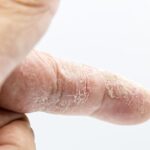
Dry, flaky skin happens when your skin loses water faster than it can hold onto it. The outer layer of your skin works like a brick wall, with skin cells as the bricks and fats like ceramides and cholesterol as the mortar. When that barrier is damaged or the fats are depleted, water escapes and the surface cracks, flakes, and feels tight. That single mechanism explains most cases, but the reasons the barrier breaks down vary widely, from cold weather to thyroid disease.
Why Is Your Skin So Dry And Flaky?
Your skin has a built-in waterproofing system. The outermost layer, called the stratum corneum, is made of flattened skin cells surrounded by a mix of lipids, including ceramides, fatty acids, and cholesterol. This layer keeps water in and irritants out. When those lipids drop, water evaporates from the surface faster than normal. The skin then contracts, cracks, and sheds in visible flakes.
Several things can disrupt this barrier:
- Low humidity pulls water out of the skin, especially in winter or in heated indoor air.
- Harsh soaps and detergents strip away the lipids that hold the barrier together.
- Hot water dissolves skin oils faster than lukewarm water.
- Aging reduces the skin’s natural oil production and its ability to repair the barrier.
- Genetics can affect how much ceramide your skin produces in the first place.
This is why dry skin is not just a surface problem. It reflects a measurable change in how well your skin holds water. Some people have naturally dry skin their whole lives. Others develop it suddenly, which is when it is worth looking for an underlying cause.
What Medical Conditions Cause Dry, Flaky Skin?
Dry skin that does not improve with moisturizer deserves a closer look. Several conditions produce flaking skin, and they are not all the same problem.
Eczema, also called atopic dermatitis, is an inflammatory condition where the skin barrier is faulty from birth. It causes dry, itchy, inflamed patches, often in the creases of the elbows and knees. Research consistently shows that people with eczema tend to have lower levels of certain ceramides in their skin.
Psoriasis is an immune-driven condition that speeds up skin cell turnover. Instead of shedding invisibly, skin cells pile up into thick, silvery scales, most often on the elbows, knees, scalp, and lower back. Psoriasis and eczema can look similar to an untrained eye, which is one reason a doctor’s diagnosis matters.
Hypothyroidism, an underactive thyroid, can cause dry, rough, flaky skin along with fatigue, cold intolerance, and hair changes. The skin changes are real but often subtle, and they usually appear alongside other symptoms.
Diabetes can lead to dry skin through several routes, including poor circulation, nerve damage that reduces sweating, and higher blood sugar affecting skin hydration. Kidney disease and liver disease can also change skin texture and moisture.
Nutritional deficiencies are a less common but real cause. Low levels of vitamin A, vitamin D, zinc, or essential fatty acids can affect skin health. These are usually diagnosed through blood tests, not guessed at.
If your dry skin is severe, widespread, or comes with other symptoms, that is a signal to see a doctor rather than experiment with more lotions.
Is It Dry Skin Or Something Else?
Dry skin is not the only thing that causes flaking. Several conditions look similar but need different treatment.
Seborrheic dermatitis causes flaky, greasy, yellowish scales, usually on the scalp, eyebrows, and sides of the nose. It is linked to a yeast that lives on everyone’s skin, and it flares with stress and cold weather. It is not the same as dry skin, and it responds to different treatments.
Contact dermatitis is a reaction to something touching your skin, such as a fragrance, nickel, or a cleaning product. It causes redness, itching, and flaking in the pattern of contact.
Fungal infections like athlete’s foot or ringworm cause flaking with a defined edge and often itching. They need antifungal treatment, not moisturizer.
Ichthyosis is a group of genetic conditions that cause persistently dry, scaly skin. It is usually present from childhood and does not come and go with the seasons.
The pattern matters. Dry skin tends to be uniform and worse in winter. Seborrheic dermatitis clusters in oily areas. Psoriasis forms thick plaques. Contact dermatitis follows the shape of whatever touched you. When the pattern is unclear, a dermatologist can usually tell the difference by looking, and sometimes by taking a small skin sample.




What Makes Dry Skin Worse?
Everyday habits often do more damage than people realize. The most common culprit is overwashing with harsh products.
Soap strips the skin’s natural oils and raises its pH, which weakens the barrier. Antibacterial and heavily fragranced soaps tend to be the harshest. Hot showers feel good but dissolve skin lipids faster than warm water. Long baths without added oils do the same.
Other common triggers include:
- Low humidity from winter air or indoor heating.
- Alcohol-based hand sanitizers used repeatedly, which dry the skin with each use.
- Retinoids and acne treatments, which speed up skin cell turnover and can cause flaking, especially in the first weeks.
- Fragrances and preservatives in skincare products that irritate sensitive skin.
- Air conditioning, which removes moisture from the air year-round.
- Smoking, which narrows blood vessels and reduces blood flow to the skin.
One detail people often miss: the order of products matters. Applying moisturizer to damp skin right after washing traps water that is already there. Applying it to completely dry skin mostly just coats the surface.
How Do You Treat Dry, Flaky Skin?
Treatment starts with repairing the barrier and stopping whatever is breaking it down. For most mild cases, that means changing a few habits and using the right moisturizer.
Moisturizers fall into three broad types:
- Humectants like glycerin and hyaluronic acid pull water into the skin.
- Emollients like oils and fatty acids fill the gaps between skin cells and soften the surface.
- Occlusives like petrolatum and dimethicone form a seal that slows water loss.
Many effective products combine all three. Thicker creams and ointments generally work better than thin lotions for very dry skin, though lotions are easier to spread over large areas. There is no single best ingredient for everyone. Products containing ceramides are designed to replace what dry skin is missing, and some studies suggest they help, though results vary by formulation.
Practical steps that make a real difference:
- Wash with lukewarm water, not hot.
- Use a gentle, fragrance-free cleanser instead of bar soap.
- Apply moisturizer within a few minutes of washing, while skin is still damp.
- Run a humidifier in dry rooms.
- Wear soft fabrics like cotton next to your skin, not wool.
If these steps do not help after a few weeks, or if the skin is cracked, bleeding, or intensely itchy, see a doctor. Prescription creams, including topical steroids for inflammation, are sometimes needed. These should be used under medical guidance, not self-prescribed, because strength and duration matter.
For people with eczema or psoriasis, moisturizing is part of a broader treatment plan that may include prescription medications. Moisturizer alone is not enough for those conditions.
When Should You See A Doctor About Dry Skin?
Dry skin is usually harmless and responds to home care. Certain signs mean it is time to get medical input.
See a doctor if:
- The skin is cracked, bleeding, or oozing.
- You have signs of infection, such as warmth, swelling, pus, or increasing pain.
- The dryness is severe or getting worse despite consistent moisturizing.
- It covers large areas of your body.
- It comes with fatigue, weight changes, cold intolerance, or other whole-body symptoms.
- It started suddenly without an obvious trigger.
- You have diabetes, kidney disease, or a condition that affects skin healing.
These signs do not automatically mean something serious is going on. They mean the cause is worth identifying rather than assuming it is simple dryness. A doctor can check for thyroid problems, nutritional deficiencies, or other conditions with a blood test and a physical exam.
Can Dry, Flaky Skin Be Prevented?
You cannot change your genetics or stop aging, but you can protect the barrier you have. Prevention is mostly about avoiding what strips the skin and adding back what it loses.
Keep showers short and warm. Choose fragrance-free cleansers and moisturizers. Moisturize daily, not just when skin feels dry. Use a humidifier when the air is dry. Drink enough water, though hydration from within has a limited effect on skin moisture compared with what you apply to the surface.
If you smoke, quitting improves blood flow to the skin over time. If you work with harsh chemicals or wash your hands frequently, use gloves where possible and moisturize after every wash.
None of these steps guarantee perfectly smooth skin. Skin type is partly inherited, and some dryness is simply part of how your skin is built. But for most people, consistent barrier care reduces how often dry, flaky skin flares up.
Frequently Asked Questions
Why is my skin suddenly dry and flaky?
Sudden dryness often follows a change in weather, a new soap or skincare product, or more frequent handwashing. If it appears without any clear trigger and does not improve with moisturizer, it is worth checking for an underlying condition like thyroid problems.
What deficiency causes dry, flaky skin?
Low levels of vitamin A, vitamin D, zinc, or essential fatty acids can contribute to dry skin, though this is less common than environmental causes. These deficiencies are diagnosed with blood tests, not by guessing.
Does drinking water fix dry skin?
Drinking enough water supports overall health, but research suggests it has a limited effect on skin moisture compared with what you apply directly to the skin. Moisturizing and protecting the barrier matter more for most people.
When should I worry about dry, flaky skin?
See a doctor if the skin is cracked, bleeding, oozing, or shows signs of infection like warmth or pus. Widespread or worsening dryness that does not respond to moisturizer also deserves a medical look.
