
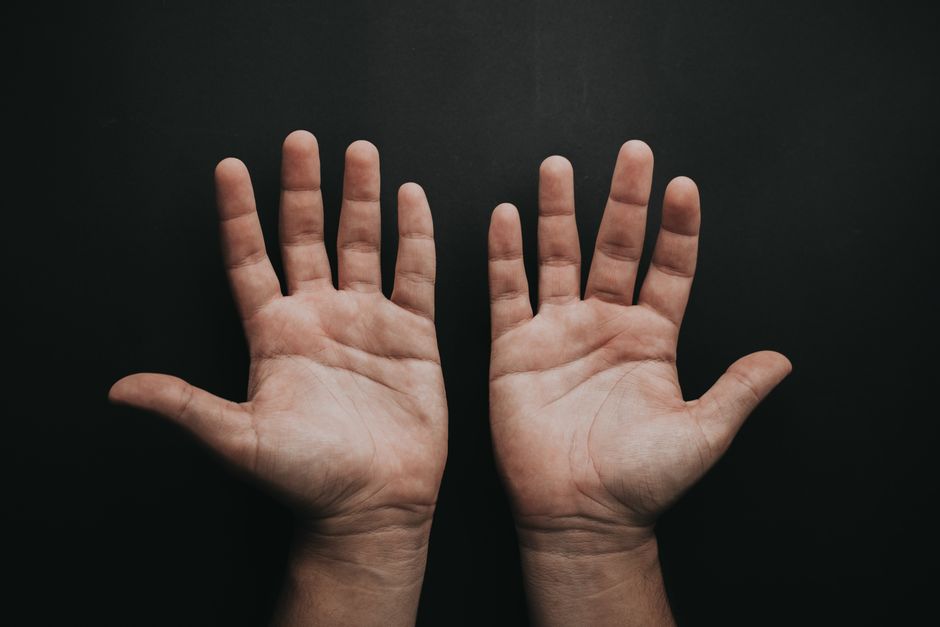
An itchy palm is usually a skin problem, not a sign of something serious. The most common causes are eczema, contact dermatitis, and fungal infections like athlete’s foot spreading to the hand. Sometimes the itch comes from inside the body rather than the skin itself, which is why a palm that itches without any visible rash deserves a closer look.
Why Is Your Palm Itchy? The Short Answer
The skin on your palms is different from the skin elsewhere on your body. It is thicker, has more sweat glands, and sits closer to a dense network of nerve endings. That combination makes the palm unusually sensitive to both external irritants and internal signals.
When something triggers those nerve endings, you feel itch. The trigger can be on the surface, in the skin itself, or traveling through the bloodstream from somewhere else entirely.
Doctors group palm itching into three broad buckets:
- Skin conditions — eczema, psoriasis, contact dermatitis
- Infections — fungal infections, scabies, rarely bacterial
- Systemic causes — nerve compression, liver or kidney issues, thyroid problems, diabetes
Most people fall into the first two groups. The third group is less common but matters because those causes will not improve with a cream.
What Skin Conditions Cause Itchy Palms?
Hand eczema is the most frequent reason palms itch. It shows up as redness, small bumps, peeling, or deep cracks. The itch can be intense, especially at night.
There are a few subtypes:
- Irritant contact dermatitis — caused by repeated exposure to soaps, detergents, solvents, or even water. This is common in people who work with their hands or wash them frequently.
- Allergic contact dermatitis — a delayed reaction to something specific. Common culprits include nickel, latex, certain fragrances, and some preservatives in lotions.
- Dyshidrotic eczema — also called pompholyx. It produces tiny, deep blisters on the palms and sides of the fingers. The blisters itch intensely before they are visible.
Psoriasis can also affect the palms. It tends to look different from eczema — thicker, more defined patches, sometimes with a silvery scale. Psoriasis of the palms is less common than eczema but can be stubborn.
One detail worth knowing: the itch of eczema is not just a symptom. Scratching damages the skin barrier, which lets in more irritants and triggers more inflammation. That cycle is why breaking the itch-scratch loop matters as much as treating the rash.
Can a Fungal Infection Make Your Palm Itch?
Yes, though it is less common than eczema. A fungal infection on the palm usually comes from somewhere else on the body.
Athlete’s foot is the most common source. If you have a fungal infection between your toes and you scratch or touch your feet, the fungus can spread to your hand. This is sometimes called “two feet-one hand syndrome” because it often affects both feet and just one hand.
Ringworm of the hand can also happen. It usually shows up as a red, scaly patch with a raised border. The itch can be mild or intense.
Fungal infections on the palm are often mistaken for eczema. That matters because the treatments are completely different. A steroid cream will calm eczema but can make a fungal infection worse by suppressing the skin’s local immune response. If a palm rash is not improving with steroid cream, a doctor may want to scrape a small sample of skin and check it under a microscope.




When Is Itchy Palms a Sign of Something Internal?
This is the question most people worry about, and it deserves a straight answer. Most itchy palms are not a sign of internal disease. But when the skin looks normal and the itch persists, doctors do consider a few systemic causes.
The main ones are:
- Cholestasis — reduced bile flow from the liver. Itching from cholestasis often starts on the palms and soles before spreading. It can happen during pregnancy (a condition called intrahepatic cholestasis of pregnancy) or from certain liver diseases.
- Chronic kidney disease — itching is common in advanced kidney disease, though it usually affects the whole body rather than just the palms.
- Diabetes — high blood sugar can cause itching through several mechanisms, including dry skin and nerve damage.
- Thyroid disorders — both an overactive and underactive thyroid can cause itchy skin.
- Iron deficiency — some people with low iron develop itchy skin, though the link is not fully understood.
- Polycythemia vera — a rare blood disorder that can cause itching, often after a warm shower.
Doctors do not test for all of these just because your palm itches. They look for other clues — fatigue, jaundice, changes in urine or stool color, unexplained weight loss, or a rash that does not respond to treatment.
One non-obvious point: the itch from cholestasis is often worse at night and on the palms and soles specifically. If you have itching in those exact spots with no rash and no obvious skin cause, that pattern is worth mentioning to a doctor.
Can Nerve Problems Cause Itchy Palms?
Yes. Carpal tunnel syndrome is a common example. The median nerve passes through a narrow tunnel in the wrist, and when it is compressed, it can cause tingling, numbness, and sometimes itching in the palm and fingers.
The itch from carpal tunnel usually comes with other symptoms — numbness in the thumb, index, and middle fingers, weakness in the hand, or a feeling like the hand is falling asleep at night. If itching is your only symptom, carpal tunnel is less likely.
Other nerve-related causes include cervical spine problems that affect the nerve roots going to the arm, and peripheral neuropathy from diabetes or other conditions.
What Else Can Make Your Palm Itch?
Several other things can trigger palm itching. They are less common but worth knowing about.
- Scabies — a mite that burrows into the skin. It causes intense itching, often worse at night, and can affect the palms and the webbing between fingers. A rash may or may not be visible.
- Dry skin — especially in winter or after frequent hand washing. Dry skin cracks and itches.
- Allergic reactions — food allergies, drug reactions, or contact with certain plants can cause itching on the palms.
- Pregnancy — itching on the palms and soles during pregnancy can be normal, but it can also be a sign of intrahepatic cholestasis of pregnancy. This condition needs medical attention because it can affect the baby.
- Medications — some drugs can cause itching as a side effect, including certain pain relievers, antibiotics, and blood pressure medications.
If you are pregnant and have itching on your palms and soles, especially without a rash, contact your doctor. This is not a wait-and-see situation.
How Do Doctors Figure Out the Cause?
Doctors start with the story. When did the itch start? Is it constant or comes and goes? Is there a rash? Does anything make it better or worse? What do you do for work? What products do you use on your hands?
Then they look at the skin. The appearance of the rash — or the absence of one — guides the next steps.
If a fungal infection is suspected, a doctor may scrape a small sample of skin and look at it under a microscope or send it for culture.
If an allergic contact dermatitis is suspected, patch testing can identify the trigger. This involves applying small amounts of common allergens to the skin and checking for reactions over a few days.
If a systemic cause is suspected, blood tests can check liver function, kidney function, blood sugar, thyroid levels, and iron levels.
If carpal tunnel is suspected, nerve conduction studies can measure how well the median nerve is working.
Most people do not need all of these tests. The history and skin exam usually point to the cause.
What Can You Do About Itchy Palms?
The right treatment depends on the cause. There is no single remedy that works for everyone.
For eczema and contact dermatitis, the mainstays are:
- Avoiding irritants and allergens
- Moisturizing frequently, especially after washing hands
- Using prescription steroid creams for flares
- Using non-steroid prescription creams for maintenance in some cases
For fungal infections, antifungal creams or oral medications are needed. Steroid creams alone will not cure a fungal infection and can make it worse.
For systemic causes, treating the underlying condition is the priority. Itching from cholestasis, for example, often improves when the liver problem is addressed.
For carpal tunnel, treatment ranges from wrist splints to surgery, depending on severity.
Over-the-counter antihistamines may help with itching from allergic reactions, but they are generally not effective for eczema or fungal itching. That is because the itch in those conditions is not primarily driven by histamine.
One practical step that helps almost everyone: keep your hands moisturized. Dry skin itches more. A thick, fragrance-free cream or ointment applied after every hand wash can make a real difference.
Frequently Asked Questions
Why is my palm itchy with no rash?
Itchy palms without a rash can be a sign of a systemic issue like liver problems, kidney disease, or thyroid disorders. It can also be caused by nerve compression or dry skin. If it persists, see a doctor.
Can stress cause itchy palms?
Stress can worsen skin conditions like eczema and psoriasis, which can make your palms itch. Stress alone is not a direct cause of itchy palms, but it can be a trigger for flare-ups.
Is itchy palms a sign of pregnancy?
Itching on the palms and soles during pregnancy can be normal, but it can also be a sign of intrahepatic cholestasis of pregnancy. This condition needs medical attention. Contact your doctor if you have this symptom.
When should I worry about itchy palms?
See a doctor if the itch is severe, lasts more than two weeks, comes with other symptoms like fatigue or jaundice, or does not improve with basic skin care. Most causes are not serious, but a few need treatment.
