

Oily hair comes from your scalp, not your strands. Sebaceous glands in the scalp produce an oil called sebum, and that oil coats the hair as it grows out. The amount your glands produce is mostly set by genetics and hormones, which is why some people wake up greasy the day after washing and others can go a week without a problem.
If your hair turns oily within hours of washing, you are not doing anything wrong. You are working with a scalp that makes more oil than average, and the fix is usually about managing that oil rather than trying to stop it.
Why Is Your Hair Oily? The Role of Sebum and Your Scalp
Sebum is not a flaw. It is a natural oil that keeps skin and hair from drying out and has some antimicrobial properties. The problem is quantity and distribution.
Every hair follicle on your scalp is connected to a sebaceous gland. These glands release sebum into the follicle, and as hair grows through the follicle, it picks up that oil. Hair near the root gets the most. That is why the top of your head and the roots look greasy first, while the ends can stay dry for much longer.
Sebum production is controlled mainly by hormones called androgens. Androgens are present in both men and women. When androgen levels rise, sebaceous glands tend to produce more oil. This is why oiliness often changes with puberty, pregnancy, and other hormonal shifts.
Hair texture plays a role too. Fine, straight hair shows oil faster because there is less hair to absorb it and the oil spreads down the strand more easily. Thick, curly, or coarse hair tends to hide oil for longer.
What Makes Your Scalp Produce More Oil?
Several factors can increase scalp oil. Some you can influence. Others you cannot.
Hormones
Androgens are the main driver of sebum production. This is well established in dermatology. Fluctuations during puberty, menstrual cycles, pregnancy, and menopause can all change how oily your scalp feels. Conditions that raise androgen levels, such as polycystic ovary syndrome, can also increase oiliness.
Genetics
How active your sebaceous glands are is largely inherited. If a parent had oily skin and hair, you are more likely to as well. There is no product that changes this underlying trait.
Overwashing and Harsh Products
This one surprises people. Washing too often with strong detergents can strip oil from the scalp. In response, some people’s glands ramp up production to compensate. The evidence for this rebound effect is not airtight, and researchers still debate how significant it is. But many dermatologists observe it in practice, and cutting back on harsh washing helps some people.
Heat and Humidity
Warm weather and humidity can make oil spread more easily and make the scalp feel greasier. Sweat itself is not oil, but it mixes with sebum and can make hair look and feel dirtier faster.
Touching and Brushing
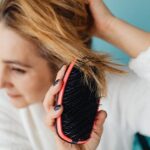
Your hands carry oil from your face and scalp. Touching your hair moves that oil down the strands. Brushing distributes sebum from the roots to the ends, which can be helpful for dry ends but makes oily roots look worse if you brush too much.
Does Washing Your Hair More Often Make It Oilier?
Washing daily does not cause oily hair in a permanent sense, but it can create a cycle for some people.
If you use a strong shampoo every day, you strip the scalp’s natural oils. The scalp may respond by producing more sebum. This does not happen to everyone, and the research on how strong this effect is remains limited. But it is a common clinical observation.
For most people with oily hair, washing daily or every other day with a gentle shampoo is reasonable. There is no single correct frequency. It depends on your scalp, your activity level, and how your hair looks and feels.
What matters more is the type of shampoo. Harsh sulfates clean aggressively. Gentler formulas clean enough without over-stripping. If you have tried going longer between washes and your scalp felt worse, not better, your scalp may simply produce a lot of oil, and daily washing is a fine choice.




What Actually Helps With Oily Hair
You cannot stop your scalp from making oil, but you can manage how it looks and feels. These approaches are widely used and supported by general dermatologic practice.
- Wash the scalp, not the ends. Shampoo is for your scalp. The suds that run down when you rinse are enough for the rest of your hair.
- Use conditioner only on the ends. Conditioner near the roots weighs hair down and can make it look greasier faster.
- Rinse with lukewarm water. Very hot water can irritate the scalp. There is no strong evidence it increases oil production, but lukewarm is gentler.
- Keep hands off your hair. Every touch moves oil from your fingers to your strands.
- Clean your brushes and pillowcases. Oil, skin cells, and product build up on both and transfer back to your hair.
- Try a clarifying shampoo occasionally. These remove product buildup that can make hair look dull and heavy. They are not for daily use.
- Consider dry shampoo between washes. These products absorb oil at the roots and can extend time between washes. They do not clean the scalp, so they are a temporary fix.
Some shampoos contain ingredients like salicylic acid, zinc pyrithione, or ketoconazole. These are mainly used for dandruff and seborrheic dermatitis, which involve a yeast on the scalp. If you have flaking and itching along with oiliness, a shampoo with one of these ingredients may help. If your only issue is oil, these are not proven to reduce sebum production.
When Oily Hair Might Signal Something Else
Oily hair on its own is usually just a normal variation. But in some cases, it comes with other signs that point to a scalp condition.
Seborrheic dermatitis is a common condition that causes oily, flaky, inflamed skin on the scalp. It involves a yeast called Malassezia that lives on everyone’s scalp. When it overgrows or the scalp reacts to it, you get dandruff, redness, and sometimes itching along with oiliness. This is not caused by poor hygiene, and it is not contagious.
If you notice persistent redness, itching, flaking, or patches of thick scale, those are reasons to see a dermatologist. The same goes for sudden changes in oiliness, especially if they come with hair thinning or loss.
Hormonal conditions can also increase oil production. If oily hair and skin appeared along with irregular periods, acne, or unusual hair growth, a doctor can check for underlying hormonal causes.
Common Myths About Oily Hair
Myth: Oily hair means you are not washing enough. Not true. Many people with oily hair wash daily and still have oil within hours. It is about sebum production, not hygiene.
Myth: You can train your hair to be less oily by washing less. This is a popular claim online. There is no strong evidence that sebaceous glands can be trained to produce less oil through washing habits. Some people do adjust over time, but many do not, and the idea is not supported by solid research.
Myth: Oily hair means your hair is unhealthy. Sebum is normal. Oily hair is not a sign of damage or disease on its own.
Myth: Certain foods make your hair oily. Diet can affect skin and hormones in some ways, but there is no consistent evidence that specific foods directly increase scalp oil. This claim is often repeated without good support.
Does Oily Hair Mean Oily Skin?
Often, yes. The same androgens that drive sebum production in the scalp also drive it in the face and back. People with oily hair frequently have oily skin on the T-zone, which includes the forehead, nose, and chin.
But the two do not always match. You can have an oily scalp and normal or dry facial skin. Sebaceous glands vary in density and sensitivity across the body, so oiliness is not uniform.
If your skin is also oily, the same principles apply. Gentle cleansing, not over-washing, and managing hormones where relevant.
What Does Not Work for Oily Hair
Some approaches marketed for oily hair have little or no evidence behind them.
- Scalp scrubs claiming to “balance” oil. Exfoliating the scalp can remove buildup, but there is no evidence it reduces sebum production.
- Powders and supplements marketed to control oil from within. No clinical evidence currently confirms these work.
- Washing with very hot water to “degrease.” Hot water does not reduce oil production and can irritate the scalp.
- Applying oil to “signal” the scalp to make less. This idea circulates online but has no solid research support.
The honest position is that oil production is mostly internal and hormonal. You can manage the appearance of oily hair, but you cannot switch off the glands that make sebum.
Practical Takeaways
Oily hair is normal. It comes from sebaceous glands that are more active than average, usually because of genetics and hormones. You can wash as often as you need to, focus shampoo on the scalp, keep conditioner on the ends, and use dry shampoo or clarifying products as needed.
If oiliness comes with redness, itching, flaking, or hair loss, see a dermatologist. Those signs point to something beyond normal oil production, and a proper diagnosis matters.
Frequently Asked Questions
Why is my hair oily even after washing?
Your scalp keeps producing sebum after you wash, so oil returns as the day goes on. If it happens within hours, your glands are simply very active, which is usually genetic or hormonal.
Can I train my hair to be less oily?
There is no strong evidence that washing less trains your scalp to produce less oil. Some people adjust over time, but many do not, and the claim is not well supported by research.
Does washing your hair every day damage it?
Daily washing with a gentle shampoo is generally fine for most people, especially those with oily scalps. Harsh shampoos used daily may strip the scalp, but frequency alone is not the problem.
When should I see a doctor about oily hair?
See a dermatologist if oily hair comes with redness, itching, flaking, thick scale, or hair thinning or loss. These can signal a scalp condition or a hormonal issue that needs diagnosis.
