
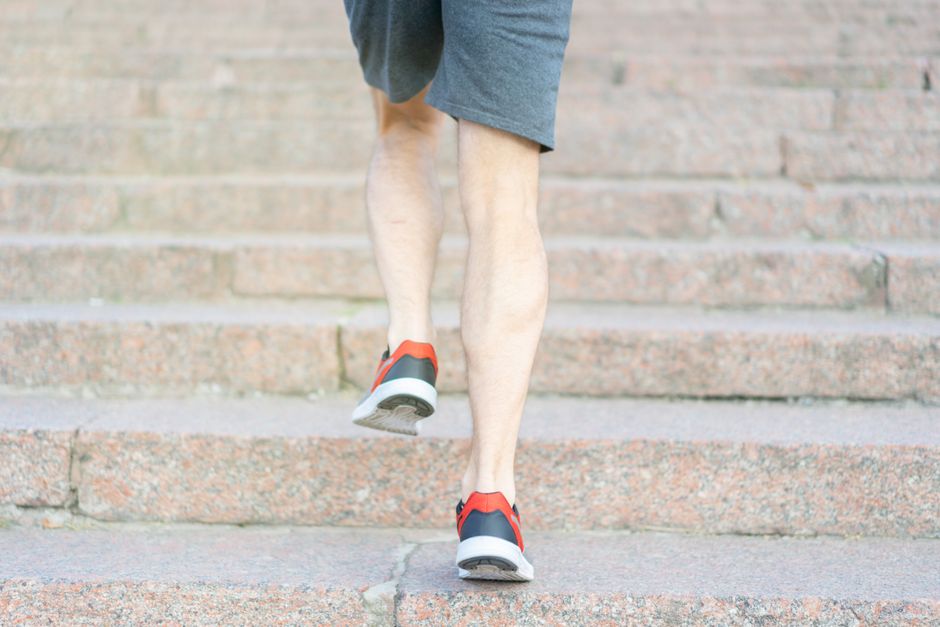
If your calf looks unusually large, the muscle doing most of that work is the gastrocnemius. It is the big, two-headed muscle that bulges at the back of your lower leg. It sits on top of a deeper muscle called the soleus, and together they form what most people call the calf. The gastrocnemius is large because it has to be. It is a powerful plantar flexor — it points your foot down and pushes you forward every time you walk, run, or jump. That repeated load, plus your genetics, training, and body weight, shapes how big it gets.
What Is the Gastrocnemius and What Does It Do?
The gastrocnemius is a superficial muscle, meaning it sits close to the skin. It has two parts, or heads, that start above the knee joint and merge into the Achilles tendon at the heel. That origin above the knee matters. It means the gastrocnemius crosses both the knee and the ankle, so it assists with bending the knee as well as pointing the foot.
Its main job is plantar flexion — the motion of pressing your toes down, like standing on tiptoe. It also helps stabilize the leg during standing and walking. The soleus, sitting underneath, handles much of the same work but is built for endurance. The gastrocnemius is built more for short, powerful bursts.
That difference in design is one reason the gastrocnemius can grow so visibly. It is a fast-twitch dominant muscle, and fast-twitch fibers tend to respond to heavy, explosive loading with size increases.
Why Is Your Gastrocnemius So Big?
The size of your gastrocnemius comes down to a mix of factors you cannot change and factors you can. Genetics set the ceiling. Training, body weight, and activity history determine how close you get to it.
Genetics and muscle fiber type. Some people are born with a higher proportion of fast-twitch fibers in the calf, or with muscle bellies that sit lower down the leg and appear bulkier. The length of the tendon relative to the muscle belly is largely inherited. A shorter tendon with a longer muscle belly looks bigger even at the same strength.
Training history. Anyone who runs, jumps, cycles, or lifts weights loads the calf repeatedly. Over time, that load can increase muscle size. Sprinters, dancers, and basketball players often develop prominent calves because their sport demands repeated explosive plantar flexion.
Body weight. The calf supports your body weight with every step. Carrying more mass means the gastrocnemius works harder during ordinary movement, which over years can contribute to size.
Everyday habits. Regularly walking on uneven ground, climbing stairs, or wearing flat shoes that force the calf to work can add cumulative load.
It is worth separating two things people often confuse. Muscle size and muscle strength are related but not identical. A large calf is not automatically a strong one, and a strong one is not always visibly large. Tendon length, neural factors, and technique all affect how much force a muscle can produce.
Is a Big Gastrocnemius Always From Muscle?
Not always. A large calf can come from muscle, but it can also come from fat, fluid, or other tissue. This distinction matters because the causes and the meaning are different.
Subcutaneous fat can add bulk to the calf, especially in people who carry more body fat overall. Swelling, called edema, can also enlarge the lower leg. Edema has many possible causes, including heart, kidney, liver, and vein problems, and it usually looks different from muscle — the skin may look tight or puffy, and pressing on it can leave a temporary dent.
Other causes include a blood clot in the deep veins, a condition called deep vein thrombosis, and a ruptured or torn muscle. These are not cosmetic issues. A calf that becomes suddenly swollen, warm, red, or painful — especially on one side only — needs urgent medical evaluation. That is a situation where you do not wait to see if it improves.
Pseudohypertrophy is another possibility. In some muscle conditions, the calf appears enlarged but the tissue is being replaced by fat and scar tissue rather than growing stronger. This is uncommon, but it is a reminder that size alone does not tell you what is happening inside.




Can You Change the Size of Your Gastrocnemius?
You can influence calf size through training, but the response varies a lot from person to person. Some people add visible size with relatively little work. Others train hard for years and see modest change. Genetics and starting point set much of the range.
Resistance training is the main tool. Exercises that load the calf through a full range of motion — standing and seated calf raises, for example — are commonly used. The standing version targets the gastrocnemius more because the knee is straight. The seated version, with the knee bent, shifts more work to the soleus.
If your goal is to reduce the appearance of calf size, the realistic options are different. You cannot spot-reduce fat from one area through exercise. Losing overall body fat may reduce fat around the calf, but it will not shrink muscle. Reducing high-impact or heavy calf training can lead to some loss of muscle size over time, though the amount and speed vary.
No exercise reliably shrinks muscle in a targeted way. Be cautious of any product or routine that claims to slim the calves specifically. No clinical evidence currently confirms that such targeted slimming works.
When Should a Big Calf Concern You?
Most large calves are simply muscle and are not a health problem. The concern is when size changes quickly or comes with other symptoms.
Seek medical care if you notice any of the following:
- Sudden swelling in one calf, especially with pain, warmth, or redness
- Calf pain that worsens with walking and does not ease with rest
- Shortness of breath or chest pain alongside a swollen leg
- Weakness that makes it hard to stand on tiptoe or push off
- Progressive enlargement that is not explained by training or weight change
A single swollen, painful calf is a red flag for a blood clot. That is a medical emergency, not something to monitor at home. The combination of a swollen leg and breathing difficulty is especially serious.
If the size has been stable for years and causes no pain or functional problem, it is usually just how your body is built. If it is new, one-sided, or getting worse, get it checked.
Does Calf Size Say Anything About Your Health?
Calf size on its own is not a reliable health marker. It reflects muscle, fat, fluid, and genetics together, so a single measurement tells you little.
Some research has looked at calf circumference as a rough indicator of muscle mass in older adults, since low muscle mass is linked to frailty and falls. But circumference is a crude measure. It does not separate muscle from fat or fluid, and it varies with body size. It is not a stand-alone diagnostic tool.
The more useful signal is function, not size. Can you stand on tiptoe? Walk without pain? Climb stairs without unusual effort? Those questions tell you more about calf health than a tape measure does.
If you are concerned about muscle loss with age, the general direction from the evidence is that staying physically active and doing resistance training supports muscle maintenance. The specifics of how much and how often depend on your health and should come from a clinician or qualified trainer, not a general article.
Frequently Asked Questions
Why is my gastrocnemius so big compared to other muscles?
The gastrocnemius carries your body weight and drives every step, jump, and push-off, so it is loaded constantly. Its fast-twitch fiber makeup and your inherited muscle shape also make it look large in some people.
Is a big calf a sign of anything bad?
Usually no — most large calves are just muscle. But a calf that swells suddenly, hurts, or turns warm and red on one side needs urgent medical evaluation for a possible blood clot.
Can you make your gastrocnemius smaller?
You cannot spot-reduce muscle or fat in one area. Losing overall body fat may reduce fat around the calf, and cutting back on heavy calf training may slowly reduce muscle size, but results vary and no method reliably targets the calf alone.
Does a big gastrocnemius mean strong calves?
Not necessarily. Muscle size and strength are related but not the same, and tendon length, nerve signaling, and technique all affect how much force you can produce.
