
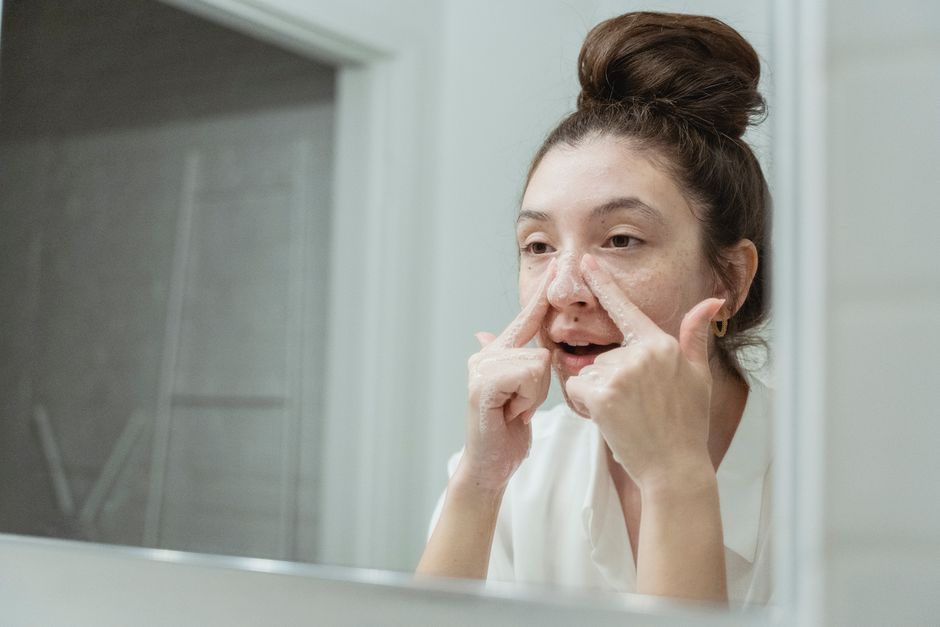
If your face looks shiny an hour after washing it, you are not imagining things. Your skin’s sebaceous glands are simply working overtime. Sebum is the natural oil your skin produces to keep itself protected, but when those glands produce too much, the result is a greasy face. The cause is almost always a mix of genetics, hormones, and daily habits, not a single mistake you are making.
What Causes Excess Facial Oil?
Your skin contains millions of sebaceous glands, most of them concentrated on your face, scalp, and upper back. These glands produce sebum, an oily substance made of fats and waxes. Sebum is not the enemy. It keeps your skin moisturized and forms a barrier against bacteria and irritants.
The problem starts when the glands produce more sebum than your skin actually needs. That excess oil sits on the surface, mixes with dead skin cells and sweat, and leaves your face looking shiny and feeling slick. The medical term for this is seborrhea, and it is one of the most common skin complaints dermatologists see.
Why do some people produce more oil than others? The short answer is that oil production is largely determined before you are born. Your genes set a baseline for how active your sebaceous glands will be. If your parents had oily skin, there is a good chance you do too.
Hormones and the Oil Connection
Hormones are the strongest trigger for excess oil production. Androgens, which are male sex hormones present in both men and women, directly stimulate sebaceous glands to enlarge and produce more sebum.
This is why oily skin often peaks during puberty, when androgen levels surge. But hormones do not settle down after your teenage years. For many adults, oil production follows a monthly cycle. Women frequently notice their skin gets oilier in the days before their period, when progesterone levels rise and estrogen dips.
Pregnancy, menopause, and conditions like polycystic ovary syndrome (PCOS) can also shift hormone levels enough to change how much oil your skin produces. If you notice a sudden increase in facial oil that does not match your usual pattern, a hormone-related cause is worth discussing with a doctor.
Why Is Your Face So Greasy And Oily Even After Washing?
This is one of the most frustrating experiences, and it has a clear explanation. When you wash your face with a harsh cleanser, you strip away all the oil from the surface. Your skin’s barrier detects this sudden dryness. In response, it signals the sebaceous glands to produce more oil to compensate.
This is not a theory. It is a well-documented feedback mechanism. Your skin does not know you just washed your face. It only knows that the protective oil layer is gone, and it works quickly to replace it.
The type of cleanser matters. Soap-based cleansers and products with sulfates are particularly good at removing oil, which sounds helpful but often backfires. Within a few hours, your skin may produce even more oil than before you washed. Using a gentle cleanser that does not completely strip the skin can actually reduce the rebound oiliness.
Over-washing makes this worse. Washing your face more than twice a day, or scrubbing aggressively, removes the skin barrier’s natural components. This does not just increase oil. It can also cause irritation, redness, and flaking, which is a combination dermatologists call sensitive oily skin.





Everyday Habits That Make Oily Skin Worse
Your environment and daily routine play a real role in how much oil ends up on your face. Some of these factors are obvious. Others are less well known.
- Hot water. Washing your face with hot water strips more oil than lukewarm water. The hotter the water, the more the barrier is disrupted.
- Humidity. High humidity makes sweat and oil mix together on the skin surface, which increases the feeling of greasiness even if your oil production has not changed.
- Touching your face. Every time you rest your chin in your hand, you transfer oils and bacteria from your fingers onto your skin. This does not increase oil production, but it spreads existing oil around and can clog pores.
- Heavy moisturizers. Using a thick cream when you have oily skin can clog pores. Lighter, water-based gels are usually a better fit for oily skin types.
- Skipping moisturizer entirely. The opposite mistake is also common. If you skip moisturizer because your face is oily, your skin may produce even more oil to compensate for the lack of hydration.
One habit that does not cause oily skin is eating greasy food. The oil on your face does not come from the oil in your diet. However, some research suggests that a diet high in refined carbohydrates and dairy may influence hormone levels in ways that increase sebum production. The evidence here is mixed, and no single food has been proven to cause oily skin in everyone.
Skin Care That Actually Helps Oily Skin
Managing oily skin is about finding the right balance, not eliminating oil completely. The goal is to keep your skin barrier intact while removing enough surface oil to keep pores clear.
A gentle cleanser is the foundation. Look for products labeled “non-comedogenic,” which means they are formulated not to clog pores. Wash your face twice a day, once in the morning and once before bed. If you exercise and sweat heavily, a third rinse with plain water is acceptable.
Moisturizer is not optional, even for oily skin. Use a lightweight, oil-free moisturizer after cleansing. This signals to your skin that the barrier is intact, which reduces the urge to overproduce oil.
Niacinamide, a form of vitamin B3, is one of the most studied ingredients for oily skin. Some clinical research has found that topical niacinamide can reduce sebum production over several weeks of daily use. Salicylic acid is another option. It helps remove dead skin cells from the surface and can keep pores from becoming clogged.
Clay masks can temporarily absorb surface oil, but the effect lasts only a few hours. They are fine for occasional use but will not change your baseline oil production.
When Oily Skin Is a Sign of Something Else
Most oily skin is simply a genetic trait that requires daily management. But in some cases, excess oil is a symptom of an underlying condition.
Acne and oily skin often go together. Excess sebum mixes with dead skin cells and blocks hair follicles, which creates the perfect environment for acne-causing bacteria. If you have both oily skin and frequent breakouts, treating the oil production is part of treating the acne.
Seborrheic dermatitis is a different condition. It causes oily, flaky patches on the scalp, face, and chest. The flakes are usually yellowish and greasy, not dry. This condition is linked to an overgrowth of a yeast that naturally lives on the skin. It requires specific treatment, and regular cleansers will not resolve it.
Sudden, severe changes in oil production can also point to a hormonal issue. If your skin becomes dramatically oilier over a short period, especially along with other symptoms like irregular periods, unusual hair growth, or hair thinning, it is worth seeing a doctor. These can be signs of PCOS or another hormone imbalance.
There is no evidence that stress directly causes your glands to produce more oil. However, stress hormones can influence other hormones in ways that indirectly affect sebum production. If you notice your skin is oilier during stressful periods, that connection is plausible but not fully proven.
Prescription Options for Stubborn Oily Skin
If over-the-counter products are not enough, dermatologists have stronger options. These require a prescription and are not appropriate for everyone.
Topical retinoids, such as tretinoin, are among the most effective treatments. They work by normalizing the way skin cells shed and by reducing sebaceous gland activity. They require consistent use for several months, and they can cause dryness and irritation at first.
Oral medications can also reduce oil production. Certain hormonal medications, including some types of birth control pills, can lower androgen levels and reduce sebum. Spironolactone, a medication originally used as a diuretic, is sometimes prescribed off-label for oily skin and acne in women because it blocks androgen receptors.
Isotretinoin, formerly known as Accutane, is the most powerful option. It shrinks sebaceous glands dramatically and can permanently reduce oil production. Because of significant side effects and strict monitoring requirements, it is reserved for severe cases that have not responded to other treatments.
These are decisions to make with a dermatologist. Do not attempt to obtain or use prescription acne medications without medical supervision.
Frequently Asked Questions
Does washing my face more often reduce oil?
No. Washing more than twice a day usually makes oil production worse by stripping the skin barrier and triggering a rebound effect.
Can diet cause oily skin?
Research is mixed, but no single food has been proven to cause oily skin in everyone. Some studies suggest high-glycemic diets and dairy may influence oil production, but the effect varies by person.
Is oily skin a sign of bad hygiene?
No. Oil production is controlled by hormones and genetics, not by how often you wash. Poor hygiene can worsen clogged pores, but it does not cause excess oil.
Will oily skin go away with age?
Oil production often decreases with age as hormone levels change. Many people notice their skin becomes less oily in their 30s and 40s, but this is not guaranteed for everyone.
