
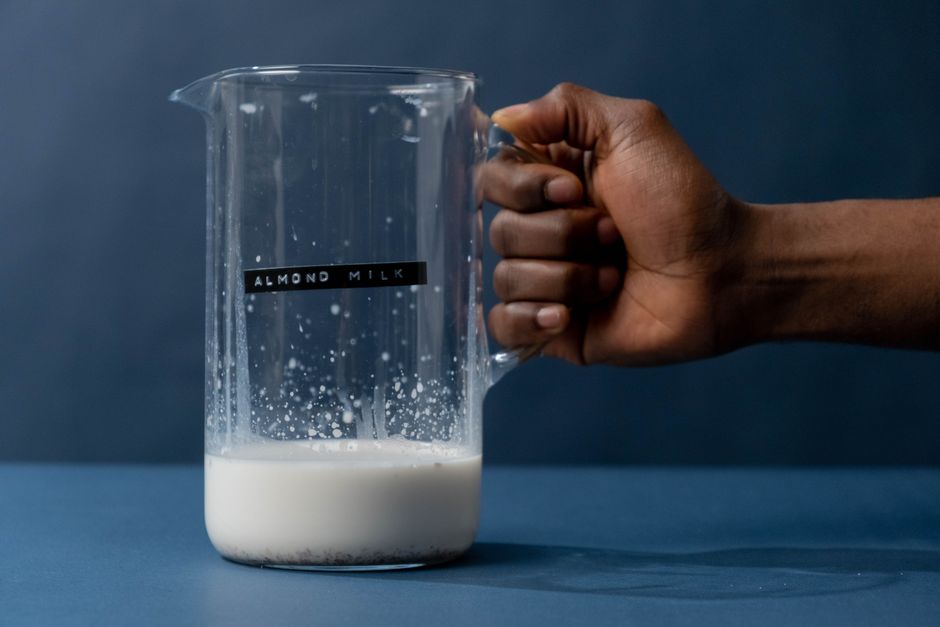
If you have ever poured almond milk and noticed a thick, gritty layer at the bottom of the carton, you are not alone. That sediment is a normal result of how almond milk is made. Almonds are ground, filtered, and mixed with water, but the solid almond particles never fully dissolve. Given enough time, gravity pulls those particles to the bottom. This is not a sign of spoilage in most cases. The thickness is simply separation — the almond solids settling out of the liquid.
Is Thick Almond Milk Safe to Drink?
Yes, in almost all cases, thick almond milk is safe to drink. The sediment at the bottom is concentrated almond solids. Commercial almond milk contains stabilizers to slow this separation, but it still happens over time. If the milk smells and tastes normal, the thickness is just a texture issue, not a safety one.
However, if the almond milk has been left unrefrigerated for hours or past its expiration date, thickness may be accompanied by sour smell, curdled appearance, or mold. In those cases, throw it out. But a simple layer of thick paste at the bottom is not a danger sign.
What Causes the Thick Layer at the Bottom?
Almond milk is an emulsion — a mixture of water, almond solids, oils, and often added thickeners. The solid particles are heavier than water, so they settle over time. This is the same basic physics that makes sand settle in a jar of water.
Commercial brands add ingredients like carrageenan, gellan gum, sunflower lecithin, or guar gum to keep particles suspended longer. Even with these stabilizers, separation eventually occurs. The longer the carton sits, the more sediment you will see. Shaking the carton redistributes the particles temporarily, but they will settle again.
Temperature also plays a role. Cold temperatures can make certain thickeners clump slightly, adding to the bottom layer. If you store almond milk in the refrigerator door where it gets warmer and colder, separation may happen faster.
Is It Separation or Spoilage?
Separation is a physical change. Spoilage is a biological one. You can usually tell the difference with your senses.
Normal separation: The top layer looks thinner or even watery. The bottom layer is thick, pasty, or grainy. When you shake the carton, the texture becomes uniform again. The milk smells mild and nutty. The taste is fine.
Spoilage: The milk smells sour, rancid, or off. It may have visible mold spots or a curdled, chunky texture that does not mix back together even with vigorous shaking. The taste is unpleasant. Spoilage can happen if the carton is left out too long, past its date, or if bacteria got in after opening.
If you are unsure, pour a small amount into a clear glass. Separation will show a distinct layer at the bottom. Spoilage often shows floating chunks, a film on top, or bubbles. When in doubt, throw it out — but do not confuse a harmless sediment with a spoiled product.





How to Prevent or Fix Thick Almond Milk
You cannot stop almond solids from settling completely, but you can reduce how much thick layer forms.
- Shake well before each use. This is the simplest fix. Give the carton a vigorous shake for 5–10 seconds before pouring. This redistributes the particles.
- Store it properly. Keep almond milk refrigerated at a consistent temperature between 35°F and 40°F. Avoid the refrigerator door if you can — the temperature fluctuates more there.
- Use it within a week after opening. Even with preservatives, separation increases over time. The fresher the milk, the less sediment.
- Choose brands with fewer stabilizers if you prefer thinner texture. Some brands use only sunflower lecithin or no gums at all. These separate faster but some people prefer that.
If you already have a thick bottom layer, you can stir it back in with a spoon or shake the carton. The texture may be slightly gritty, but it is fine to drink. Some people even blend the milk briefly in a blender to smooth it out.
Does Homemade Almond Milk Thicken Differently?
Homemade almond milk has no commercial stabilizers. It separates much faster — often within a few hours in the refrigerator. A thick, dense layer of almond paste will form at the bottom quickly.
This is normal. Shaking or stirring usually recombines it. But because homemade versions lack preservatives, they spoil faster than store-bought. If homemade almond milk sits for more than 3–4 days, the sediment may start to ferment and turn sour. That thickness is not safe to consume.
To reduce separation in homemade almond milk, some people add a small amount of sunflower lecithin or a pinch of gum arabic. No clinical guidelines exist for these ingredients in homemade beverages, but they are generally recognized as safe in small amounts. Another option is to simply accept the separation and shake before each use.
Key point: Thick almond milk is almost always a sign of natural particle settling, not spoilage. Your senses are reliable guides. If it looks, smells, and tastes fine, it is fine to drink — even if the bottom layer is thick as paste.
Frequently Asked Questions
Why is my almond milk chunky at the bottom?
Chunks at the bottom are almond solids that have settled out of the liquid. This is normal and safe as long as the milk smells and tastes fresh.
Can you drink almond milk with sediment?
Yes, sediment is safe to drink. Shake the carton well to redistribute the solids before pouring.
How do you know if almond milk has gone bad?
Spoiled almond milk smells sour, looks curdled or has mold, and may taste bitter. Separation alone is not a sign of spoilage.
Why does store-bought almond milk separate less than homemade?
Commercial brands add stabilizers like carrageenan or gellan gum to keep particles suspended longer. Homemade almond milk lacks these ingredients, so it separates quickly.
