
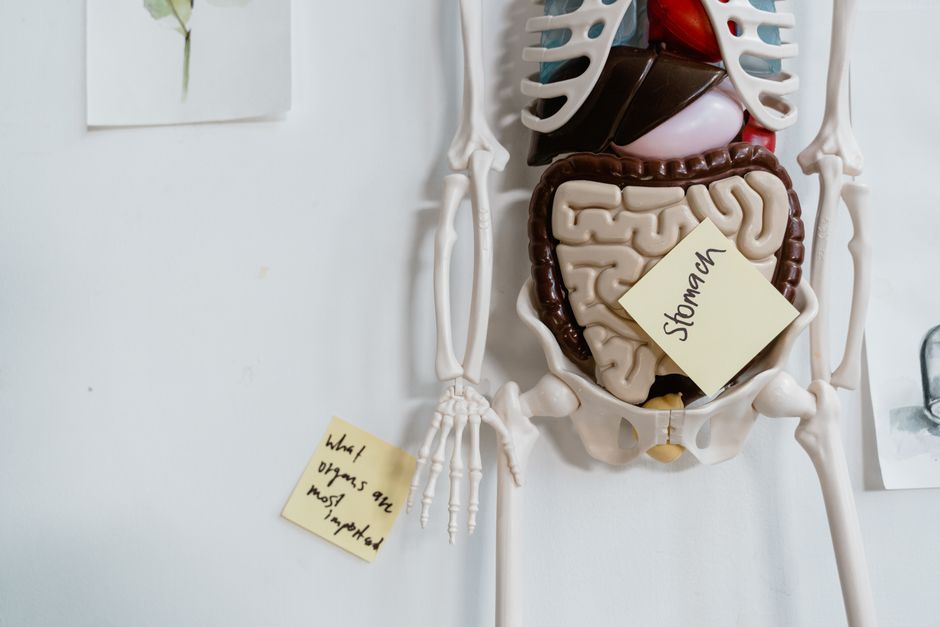
Pain in the lower left part of your belly usually points to something in your colon, your left kidney or ureter, or — in women — your left ovary and fallopian tube. The most common cause is a digestive issue in the descending or sigmoid colon, the section of large intestine that sits right there. But the same spot can also signal a urinary problem or a reproductive one, which is why the pain’s exact character matters as much as its location.
Doctors call this area the left lower quadrant. It is a small, crowded neighborhood. Several organs share it, and the pain they produce can feel surprisingly similar. Your job is not to diagnose yourself. It is to notice the pattern — when it started, what makes it worse, and what comes with it — so you can describe it clearly to a clinician.
Why Is The Bottom Left Of My Stomach Hurting?
The anatomy explains a lot. Your large intestine travels up the right side of your abdomen, crosses the top, then comes down the left side before curving into the sigmoid colon and rectum. That descending stretch and the S-shaped sigmoid colon sit in the lower left. When stool, gas, or inflammation builds up there, you feel it in that corner.
Other structures in the same area include the left ureter (the tube carrying urine from the left kidney to the bladder), and in women, the left ovary and fallopian tube. In men, the left spermatic cord passes nearby. Any of these can be the source.
That is why lower left abdominal pain is a symptom, not a diagnosis. The location narrows the list. It does not name the cause.
What Are The Most Common Causes?
Digestive causes top the list for most adults. Constipation is the most frequent. When stool backs up in the descending and sigmoid colon, it stretches the bowel wall and produces a dull, cramping ache that often eases after a bowel movement. Gas trapped in the same segment causes a similar feeling — sharp, fleeting, and relieved by passing gas.
Diverticular disease is another common source. Small pouches called diverticula can form in the colon wall, most often on the left side in Western populations. When these pouches become inflamed, the condition is called diverticulitis. It typically causes persistent lower left pain, often with fever and a change in bowel habits. This is a real diagnosis that needs medical care, not something to manage at home.
Other digestive causes include irritable bowel syndrome, which can cause pain anywhere along the colon, and inflammatory bowel conditions such as Crohn’s disease or ulcerative colitis.
Urinary causes matter too. A kidney stone passing through the left ureter can cause waves of severe pain that start in the back or flank and move toward the groin. A urinary tract infection can produce lower abdominal discomfort, usually with burning or urgency.
In women, ovarian cysts, ovulation pain, and pelvic inflammatory disease can all cause lower left pain. An ectopic pregnancy — a pregnancy growing outside the uterus — is a medical emergency and can present with sharp lower abdominal pain, often on one side.
How Do I Tell The Difference Between These Causes?
You cannot tell for certain on your own. But the pattern of symptoms gives useful clues that you can report to a doctor.
- Constipation or gas: dull or cramping pain, bloating, relief after a bowel movement or passing gas.
- Diverticulitis: steady pain that worsens over hours to days, often with fever, nausea, or tenderness when the area is pressed.
- Kidney stone: severe, wave-like pain that radiates from the back or side toward the groin, often with blood in the urine.
- Urinary tract infection: burning with urination, frequent urge to urinate, lower abdominal pressure.
- Ovarian cause: pain that may cycle with your menstrual period, or sudden sharp pain if a cyst ruptures.
One detail people often miss: the pain’s behavior over time is as informative as its location. Pain that comes and goes in waves suggests a muscular or urinary source. Pain that builds and stays put suggests inflammation. Pain that suddenly becomes severe and constant is a red flag.





When Should I See A Doctor Right Away?
Some lower left abdominal pain needs emergency care. Go to an emergency department or call emergency services if you have:
- Severe pain that comes on suddenly and does not ease
- A rigid, board-like, or very tender abdomen
- Fever with abdominal pain
- Blood in your stool or urine
- Persistent vomiting
- Signs of shock — pale skin, rapid heartbeat, confusion, fainting
- In women of childbearing age, any chance of pregnancy with one-sided lower abdominal pain
These signs can point to conditions that need urgent treatment, including diverticulitis with complications, a kidney stone blocking urine flow, a ruptured cyst, or an ectopic pregnancy. Do not wait to see if they pass.
What Happens At The Doctor’s Office?
A clinician starts with your history — when the pain began, what it feels like, what makes it better or worse, and what other symptoms you have. Then they examine your abdomen, checking for tenderness, guarding, and bowel sounds.
Depending on what they find, they may order tests. Common ones include blood work to look for infection or inflammation, a urine test to check for infection or blood, and imaging such as an ultrasound or CT scan. A CT scan is often used to confirm or rule out diverticulitis and other structural causes.
Treatment depends entirely on the cause. Constipation is managed with dietary changes, fluids, and sometimes laxatives. Diverticulitis may need antibiotics or, in some cases, drainage or surgery. Kidney stones may pass on their own or need a procedure. Ovarian and pregnancy-related causes have their own pathways.
The key point: the same symptom has very different treatments. Getting the right diagnosis first is what makes treatment work.
Can This Pain Be Prevented?
You cannot prevent every cause, but you can lower your risk for some of the most common ones. For constipation and diverticular disease, the evidence points to a few habits.
Eat enough fiber. Most adults fall short of the recommended daily intake. Fiber adds bulk and water to stool, which helps it move through the colon. Good sources include beans, whole grains, vegetables, and fruit.
Drink enough water. Fiber without fluids can make constipation worse, not better. Aim for regular hydration throughout the day.
Stay physically active. Movement helps stimulate normal bowel function. Even a daily walk can make a difference.
Do not ignore the urge to go. Holding it in can worsen constipation over time.
For urinary causes, drinking enough water may help reduce the risk of kidney stones in some people. For women, regular checkups can help catch ovarian issues early, though ovarian cysts are often not preventable.
These steps reduce risk. They do not guarantee you will never have pain in that area. If it happens, the pattern of your symptoms is what guides the next step.
What About Pain That Comes And Goes?
Intermittent pain — the kind that shows up, fades, and returns — often has a different set of causes than constant pain. Gas and mild constipation commonly cause this pattern. So can ovulation, which many women feel as a twinge on one side mid-cycle.
But intermittent pain can also be a kidney stone moving through the ureter, or a bowel that is partially obstructed. If the pain keeps returning, or if it is getting stronger over time, it deserves a medical evaluation. A pattern is information. Do not dismiss it just because it is not constant.
Does The Location Always Match The Cause?
No. This is one of the most useful things to understand about abdominal pain. The location is a clue, not a verdict.
Referred pain is the reason. Your gut has fewer pain-sensing nerve endings than your skin, and the nerves that supply your internal organs connect to the spinal cord at levels that also serve other parts of your body. As a result, a problem in one organ can be felt somewhere else.
Appendicitis is the classic example. The appendix sits in the lower right, but early appendicitis often causes a vague pain around the belly button before it settles into the right lower area. Problems in the left kidney can sometimes be felt in the back. A problem in the colon can be felt across a wider area than expected.
So lower left pain usually points to the organs in that region, but not always. That is why doctors ask about your whole body, not just the spot that hurts.
Frequently Asked Questions
What organ is on the bottom left of your stomach?
The main organs in the lower left abdomen are the descending and sigmoid colon, the left ureter, and in women, the left ovary and fallopian tube. The stomach itself sits higher up, so pain in the lower left usually comes from the colon or a nearby structure.
Is lower left abdominal pain serious?
It can be. Many causes are minor, like gas or constipation, but others — such as diverticulitis, a kidney stone, or an ectopic pregnancy — need urgent care. Severe, sudden, or fever-associated pain should be evaluated right away.
How do I know if my lower left pain is from my colon or my ovary?
You usually cannot tell on your own. Colon pain often shifts with bowel movements or gas, while ovarian pain may cycle with your period, but these patterns overlap. A doctor can distinguish them with an exam and imaging.
When should I worry about lower left abdominal pain?
Worry — and seek care — if the pain is severe, comes on suddenly, lasts more than a day, or comes with fever, vomiting, blood in your stool or urine, or a rigid abdomen. Any chance of pregnancy with one-sided pain also needs immediate attention.
