
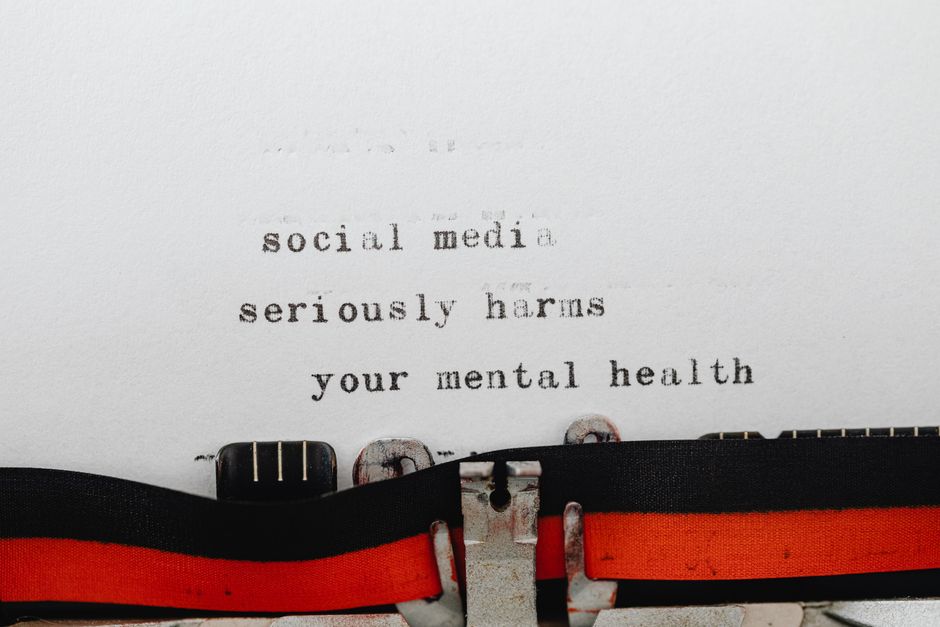
Social media platforms are designed to capture your attention and keep you scrolling, and this design directly harms your mental health. Research from multiple universities and health organizations shows that heavy social media use is linked to higher rates of anxiety, depression, and loneliness. The problem is not just that you spend too much time online — it is that these platforms trigger social comparison, disrupt sleep, and create a false sense of connection that leaves you feeling more isolated.
How Does Social Media Actually Affect Your Brain?
Your brain is wired to seek rewards, and social media provides them in tiny, unpredictable doses. Every like, comment, or notification releases a small amount of dopamine, the same chemical involved in cravings for food, money, and drugs. This is not a metaphor — brain imaging studies have shown that the same neural pathways light up when you receive a social media notification as when you win money.
The problem is that these rewards are designed to be intermittent. You never know when you will get a like, so you keep checking. Over time, this trains your brain to crave the next hit. A 2018 study published in the journal Psychiatry Research found that people who checked social media most frequently had stronger activity in the brain’s reward centers when viewing their own posts. This creates a loop: you post, you check, you get a small reward, and you check again.
This cycle also reduces your ability to focus on longer tasks. Your brain becomes accustomed to quick, small bursts of stimulation. Reading a book or finishing a work project feels slow and boring in comparison. Many people report that their attention span has shortened since they started using social media regularly. The evidence backs this up — a 2020 study from the University of California, Irvine found that people check their phones an average of 80 times per day, and most of these checks last less than 30 seconds.
What Does the Research on Social Media and Depression Actually Show?
The link between social media use and depression is one of the most studied topics in digital health. A landmark study from the University of Pennsylvania in 2018 directly tested cause and effect. Researchers took 143 undergraduate students and randomly assigned them to either limit their social media use to 10 minutes per platform per day or continue using it as usual. After three weeks, the group that limited their use showed significant reductions in depression and loneliness. This was not a correlation study — it was an experiment that showed changing social media habits directly improved mental health.
Other large-scale studies have confirmed these findings. The CDC reports that adolescents who spend more than three hours per day on social media have a significantly higher risk of experiencing symptoms of depression. The American Psychological Association has noted that the relationship is dose-dependent, meaning the more time you spend, the greater the risk. However, it is important to be honest about what the research does not say. Not everyone who uses social media becomes depressed. Some people seem to be more vulnerable, particularly those who already struggle with low self-esteem or social anxiety.
One non-obvious finding from the research is that passive use — scrolling through other people’s posts without interacting — is more strongly linked to depression than active use, like posting your own content or messaging friends. A 2015 study from the University of Michigan found that passive Facebook use predicted declines in well-being over time, while active use did not. This matters because most of the time people spend on social media is passive. You are watching other people’s lives, not living your own.
Why Does Social Comparison on Social Media Hurt So Much?
Social comparison is a natural human tendency, but social media makes it constant and unfair. In real life, you see your friends when they are tired, grumpy, or having a bad hair day. On social media, you see only the curated highlights — vacation photos, career achievements, happy family moments. Your brain does not automatically adjust for the fact that you are comparing your real, messy life to someone else’s highlight reel. It feels like everyone else is doing better than you.
This is particularly damaging for teenagers and young adults whose identities are still forming. A 2020 report from the Royal Society for Public Health in the UK found that Instagram was the platform most associated with negative body image and anxiety among young people. The visual nature of the platform makes it easy to compare your appearance, lifestyle, and popularity to others. But adults are not immune. Many parents report feeling inadequate after seeing other families’ perfectly staged holiday photos or children’s achievements.
The worst part is that social comparison on these platforms is often inaccurate. People post their best moments and hide their struggles. A person who looks like they have a perfect life may be dealing with debt, relationship problems, or health issues that never appear in their feed. But you do not see that. You see the vacation. You see the promotion. And you feel like you are falling behind.





How Does Social Media Disrupt Sleep and What Does That Mean for Mental Health?
Sleep is one of the most important factors for mental health, and social media directly interferes with it in two ways. First, the blue light from screens suppresses melatonin production, making it harder to fall asleep. Second, the content itself is stimulating — an argument in a group chat, a worrying news story, or a post from an ex can keep your mind racing long after you put the phone down.
The numbers are stark. A 2017 study from the University of Pittsburgh found that young adults who used social media frequently were three times more likely to have sleep problems. The researchers controlled for other factors like depression and anxiety and still found a strong independent link. Another study from 2019 tracked teenagers’ social media use and sleep patterns using objective phone data, not self-reports. It found that every additional hour of social media use was associated with 10 to 15 minutes less sleep that night.
This sleep disruption creates a vicious cycle. Poor sleep makes you more vulnerable to negative emotions and less able to cope with stress. When you feel bad, you are more likely to scroll through social media for comfort. But the scrolling keeps you awake and exposes you to more content that makes you feel worse. The next day, you are tired and irritable, and the cycle continues.
What Practical Steps Actually Help Reduce the Harm?
You do not need to quit social media entirely to protect your mental health. The research points to several specific changes that make a real difference. The most effective step is to set time limits — and stick to them. The University of Pennsylvania study mentioned earlier used a limit of 10 minutes per platform per day. You do not have to be that strict, but the principle holds. Decide how much time is reasonable, use your phone’s screen time settings to enforce it, and do not override the limit.
A second evidence-based strategy is to curate your feed aggressively. Unfollow accounts that make you feel bad about yourself. Mute or block people who post content that triggers negative comparisons. Follow accounts that educate, inspire, or simply make you laugh. One study found that people who followed more educational and less appearance-focused content reported better body image and life satisfaction. You have control over what you see — use it.
A third approach is to shift from passive to active use. Instead of scrolling through your feed, send a direct message to a friend. Comment thoughtfully on a post. Share something meaningful. The research consistently shows that active use is less harmful than passive consumption. A fourth strategy is to remove social media apps from your phone entirely and only use them on a computer. This simple change makes it harder to check impulsively and naturally reduces your total time.
Here is a comparison of common strategies based on the available evidence:
| Strategy | What Research Shows | Difficulty Level |
|---|---|---|
| Time limits (10-30 min/day) | Strong evidence of reduced depression and loneliness | Moderate |
| Curating your feed | Moderate evidence of improved mood and body image | Easy |
| Removing apps from phone | Strong evidence of reduced total usage time | Easy |
| Quitting completely | Mixed evidence — benefits for some, social isolation for others | Hard |
| Only active use (no scrolling) | Moderate evidence of less harm than passive use | Hard |
What About the Argument That Social Media Also Has Benefits?
It is true that social media is not all bad. For people with rare health conditions, social media can provide a community of others who understand their experience. For LGBTQ+ youth in unsupportive homes, online spaces can be a lifeline. For new parents feeling isolated at home, a parenting group on Facebook can offer real support. These benefits are real and should not be dismissed.
But recognizing the benefits does not cancel out the harms. The same platform that connects you with a supportive community also exposes you to comparison, misinformation, and addictive design. The question is not whether social media is good or bad — it is whether the balance tips in a harmful direction for you personally. For most people, the evidence suggests that heavy use is more harmful than helpful. A 2021 study from the University of Cambridge found that the negative effects of social media on well-being were roughly twice as large as the positive effects for the average user.
One honest observation that is often missing from these discussions: the benefits of social media are usually the result of your own intentional behavior, while the harms are built into the platform’s design. You have to actively seek out a support group or message a friend. But the algorithm automatically feeds you content designed to keep you engaged, even if that content makes you feel anxious or inadequate. The platform is not neutral — it is engineered to maximize your time on it, and your mental health is not its priority.
Frequently Asked Questions
How much social media is too much for mental health?
Research suggests that more than two to three hours per day is consistently linked with higher risks of depression and anxiety. The exact threshold varies by person, but limiting use to under 30 minutes per day has shown the strongest mental health benefits in controlled studies.
Can quitting social media cure depression?
No, quitting social media alone is not a treatment for clinical depression. It can reduce symptoms for some people, but depression often requires professional support including therapy or medication. Social media changes are a helpful addition to treatment, not a replacement for it.
Why does social media make me feel lonely even when I am connected?
Social media replaces deeper, in-person interactions with shallow digital ones. You may see updates from many people but have fewer real conversations. This creates a feeling of being connected without actually receiving the emotional support that comes from face-to-face contact.
Is social media worse for teenagers than for adults?
Most research indicates that teenagers are more vulnerable to social media’s negative effects because their brains are still developing and they are more sensitive to social feedback. However, adults are also affected, particularly in areas like sleep disruption and social comparison around career and family.
