
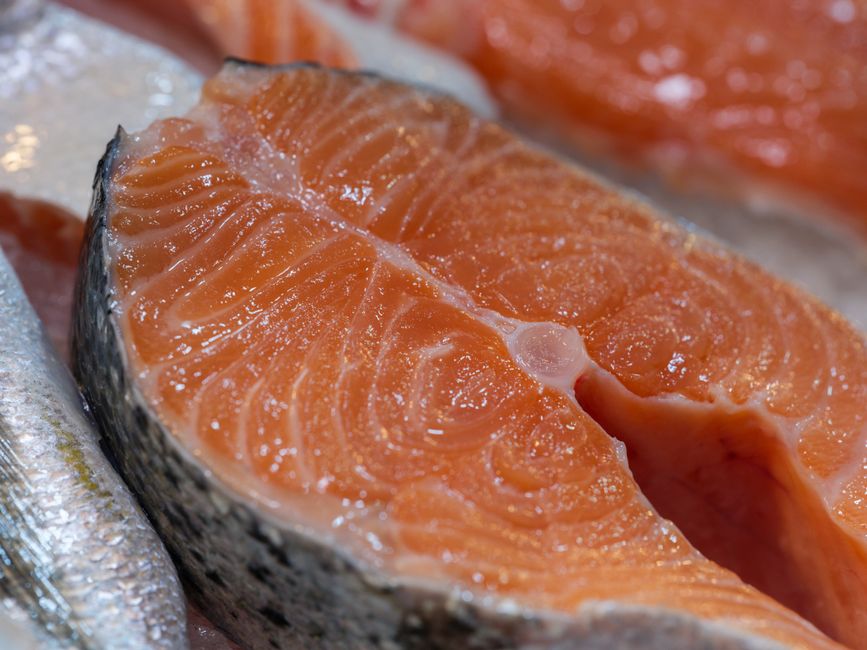
Salmon is oily because it is a fatty fish built for cold water and long-distance swimming. Its flesh stores fat as an energy reserve and as insulation, and that fat is packed with omega-3 fatty acids the fish cannot make efficiently on its own. The oiliness is not a defect or a sign of poor quality. It is a biological feature that shapes how the fish survives, how it tastes, and how it affects human health.
Why Is Salmon So Oily The Science Behind The Fat?
Salmon belong to a group called fatty fish, alongside mackerel, herring, sardines, and anchovies. Their fat is stored mainly in the flesh rather than concentrated in the liver, which is what separates them from lean white fish like cod. That stored fat serves two jobs: it is fuel, and it is insulation.
Cold water pulls heat out of an animal fast. Fat conducts heat poorly compared with water, so a layer of fat in the muscle helps a salmon hold its body temperature and keep its tissues working in near-freezing seas. The same fat is also the energy source salmon burn during long migrations, sometimes swimming hundreds of miles upstream without feeding.
The fat itself is largely unsaturated. Salmon are what researchers call a rich source of long-chain omega-3 fatty acids, particularly EPA and eicosapentaenoic acid and DHA, or docosahexaenoic acid. These are the same fats that have drawn so much attention in human nutrition research. The fish get them by eating algae and smaller organisms that produce them, then concentrate those fats in their tissue.
What Makes Salmon Fat Different From Other Fish?
The difference comes down to where the fat sits and what kind of fat it is. In a lean fish like cod, most fat is stored in the liver, and the fillet is nearly fat-free. In salmon, fat is distributed through the muscle, which is why the flesh looks marbled and feels rich.
The type of fat matters just as much. Salmon fat is high in omega-3s, which are polyunsaturated. That makes the fat softer and more liquid at room temperature than the saturated fat in beef or butter. It is part of why salmon flakes apart easily and why it does not taste greasy the way some fattier meats do.
Farmed and wild salmon differ in fat content, and the difference is mostly about diet and lifestyle. Farmed salmon tend to have more total fat because they move less and eat a steady, calorie-rich diet. Wild salmon swim constantly and burn more of their stored fat, so they are generally leaner. Both can be good sources of omega-3s, though the exact amounts vary with species, diet, and season.
Does the Oiliness of Salmon Change Its Nutrition?
The oil is the nutrition. Strip the fat out of salmon and you remove most of what makes it distinctive as a food. That fat carries fat-soluble vitamins, including vitamin D, and it is where the omega-3s live.
Salmon is also a solid source of complete protein, meaning it supplies all the essential amino acids the body needs. It provides several B vitamins and minerals such as selenium. The oiliness and the nutrient density travel together, which is why fatty fish tend to be more nutrient-rich than lean fish.
One point worth being precise about: the health benefits linked to omega-3s in research come from eating fish, not from the idea that more oil is always better. The evidence for fish as part of a balanced diet is stronger than the evidence for isolated fish oil supplements taken on their own.
| Type | Where fat is stored | General fat level | Omega-3 content |
|---|---|---|---|
| Salmon (fatty fish) | Throughout the flesh | Higher | High |
| Cod (lean fish) | Mainly in the liver | Low | Lower in the fillet |
| Mackerel, sardines, herring | Throughout the flesh | Higher | High |



Why Does Salmon Taste Oily and Sometimes Fishy?
The oily mouthfeel comes directly from the fat content. Fat coats the tongue and carries flavor compounds that water cannot, so fatty fish taste richer and more intense than lean fish. That is a feature, not a flaw.
The “fishy” smell is a separate story. It comes from the breakdown of fats and other compounds after the fish is caught. Omega-3 fats are unsaturated, which makes them more prone to oxidation than saturated fats. When they oxidize, they produce the compounds behind that strong smell. Fresher fish and proper cold storage slow this process down.
This is also why salmon does not keep as long as lean white fish and why it is often frozen quickly after harvest. The same chemistry that makes the fat valuable makes it more fragile.
Is Salmon Oil Healthy or Just Hype?
The evidence on fatty fish and health is substantial and largely consistent. Research has linked eating fish, including salmon, to heart health benefits. Major health organizations have long recommended eating fish regularly as part of a healthy eating pattern, and fatty fish are usually singled out for their omega-3 content.
What is less certain is how much of that benefit comes from omega-3s specifically versus the whole food. Fish oil supplements have been studied extensively, and the results have been mixed. Some trials show modest benefits for certain heart outcomes; others show little to none. The honest position is that eating fish and taking a supplement are not the same thing, and the food has the stronger evidence behind it.
Claims that salmon oil “cures” or “prevents” specific diseases go beyond what the evidence supports. Salmon is a nutritious food. It is not a treatment.
Does Cooking Change the Fat in Salmon?
Cooking changes the fat somewhat, mostly by letting some of it render out. Grilling, baking, or pan-searing can release oil, which is why cooked salmon sometimes sits in a pool of fat. Poaching and steaming tend to lose less.
Heat can also speed up oxidation of the unsaturated fats, which is one reason overcooked or reheated salmon can taste stronger. Cooking does not destroy the omega-3s outright, but very high heat and long cooking times are not kind to them.
How you cook matters less than whether you eat the fish at all. For most people, the bigger question is simply getting more fatty fish into the diet, not perfecting the cooking method.
Are There Any Concerns About Salmon Fat?
For most people, the fat in salmon is not a concern. The main issues that come up are contaminants and how the fish fits into an overall diet.
Some research has raised questions about contaminant levels in certain farmed salmon, though the picture is complicated and varies by source and region. Regulatory agencies in the United States have concluded that the benefits of eating salmon outweigh the risks for the general population. That said, specific guidance exists for groups who need to be more careful, including pregnant women, nursing mothers, and young children. If you fall into one of those groups, follow current official guidance rather than general advice.
People who take blood-thinning medication should talk to their doctor about fish and omega-3 intake, since omega-3s can affect clotting. This is a conversation to have with a clinician, not something to sort out from an article.
Frequently Asked Questions
Why is salmon so oily compared to other fish?
Salmon store fat throughout their flesh as fuel and insulation for cold water and long migrations, unlike lean fish that keep most fat in the liver. That stored fat is rich in omega-3 fatty acids.
Is the oil in salmon healthy?
Yes, the fat in salmon is largely unsaturated and is a major source of omega-3 fatty acids, which research has linked to heart health. The evidence for eating fish is stronger than for taking fish oil supplements.
Is farmed salmon more oily than wild salmon?
Farmed salmon generally have more total fat because they move less and eat a steady, calorie-rich diet. Wild salmon swim more and burn off more stored fat, so they tend to be leaner.
Why does salmon sometimes smell fishy if it is fresh?
The fishy smell comes from oxidation of the unsaturated fats after the fish is caught, which is why salmon is often frozen quickly. Proper cold storage and freshness slow this process down.
