
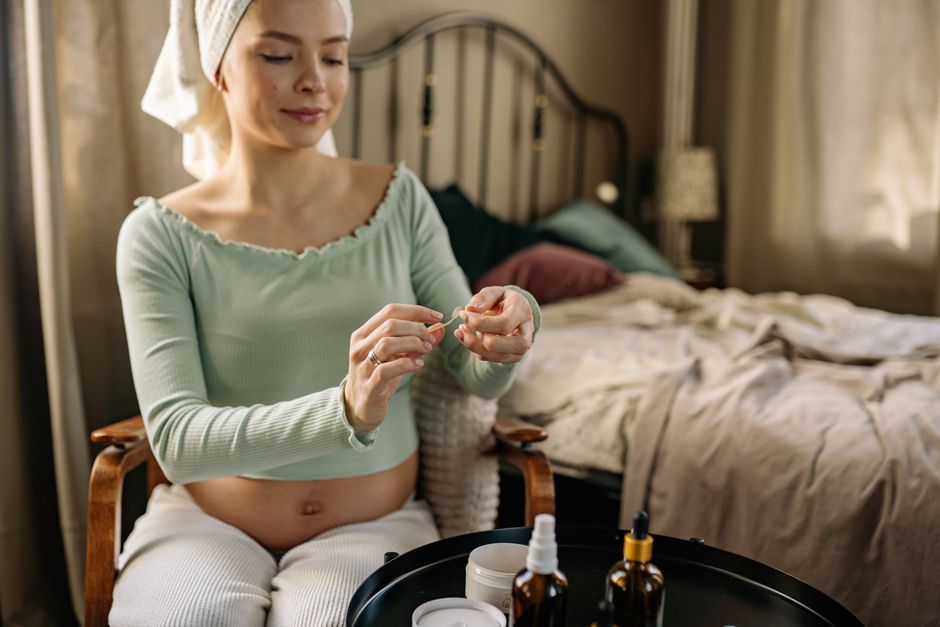
Salicylic acid is the active ingredient in aspirin and a common ingredient in acne washes, toners, and anti-dandruff shampoos. During pregnancy, the concern is not skin contact itself. The concern is that salicylic acid belongs to a drug family — salicylates — that can affect a pregnancy when enough of it reaches the bloodstream. High-dose aspirin taken internally is linked to real pregnancy risks, and that is the root of the caution around the ingredient in skin care too. The two situations are not the same, and the difference matters for anyone trying to make a sensible decision.
Why Is Salicylic Acid Bad For Pregnancy?
The core issue is a group of hormone-like compounds called prostaglandins. Salicylic acid and its relatives block the enzymes that make them. In an adult taking a normal dose for a headache or inflammation, that is the whole point. In pregnancy, prostaglandins do essential jobs — they help regulate blood flow through the placenta, they are involved in the timing of labor, and they play a role in keeping the ductus arteriosus open in the developing fetal heart until birth.
When salicylates reach the fetus in meaningful amounts, they can interfere with those processes. The clearest evidence comes from aspirin taken by mouth at analgesic or anti-inflammatory doses. That evidence supports a real association with problems in pregnancy. It does not automatically transfer to a face wash that stays on the skin for a few minutes.
There is also a practical wrinkle that gets lost in most discussions. Salicylic acid is absorbed through skin. How much gets through depends on the product, the concentration, how much skin is covered, and whether the skin is broken. A thin layer of a 2% cleanser rinsed off quickly is a very different exposure from a leave-on product applied over a large area every day.
What Does the Evidence Actually Show About Salicylic Acid and Pregnancy?
The strongest evidence concerns oral aspirin, not topical skin care. Research going back decades has linked regular aspirin use at analgesic doses during pregnancy to increased risks, including problems with fetal circulation and bleeding-related concerns around delivery. That is why aspirin use in pregnancy is treated as a clinical decision, not a casual one.
There is one important exception worth knowing. Low-dose aspirin — commonly 81 mg per day — is sometimes deliberately prescribed during pregnancy to reduce the risk of preeclampsia in people at elevated risk. This is a case where the same drug that carries risk at higher doses is used intentionally at a low dose under medical supervision. It shows that dose and context drive the risk, not the molecule alone.
For topical salicylic acid, the picture is much less clear. No large human trials have confirmed harm from typical over-the-counter skin products during pregnancy. That is not the same as proof of safety. It means the evidence is thin, and the absence of reported harm is being used as a substitute for evidence that does not really exist.
Most clinical guidance lands in a cautious middle. Many dermatologists and obstetric providers advise limiting or avoiding topical salicylic acid during pregnancy, especially leave-on products and high-concentration formulations, while treating a brief rinse-off cleanser as lower concern. That is common clinical practice, not a strongly evidence-based recommendation. It is worth being honest about that distinction.
Which Products Contain Salicylic Acid?
Salicylic acid shows up in more places than most people expect. It is a beta hydroxy acid, which is why it appears on the label of many acne and exfoliating products. It is also a common active ingredient in dandruff and scalp treatments.
- Acne cleansers, toners, and spot treatments
- Exfoliating pads and peels
- Anti-dandruff shampoos and scalp treatments
- Some wart and callus removers, often at higher concentrations
- Products labeled with related names such as beta hydroxy acid or BHA
Ingredient lists can be confusing because salicylates also appear in food and in some medications. A bowl of berries or a cup of tea contains small amounts of natural salicylates. These dietary amounts are not the concern in pregnancy. The concern is concentrated exposure — from a medication dose or a product applied to skin in a way that allows meaningful absorption.
How Much Salicylic Acid Reaches the Bloodstream From Skin Care?
Less than from a pill, in most cases, but the amount is not zero and it is not well characterized. Absorption depends on several factors that vary widely between products and between people.
- Concentration: over-the-counter acne products are typically limited to low percentages, while some professional peels and wart removers are far higher.
- Contact time: a cleanser rinsed off in under a minute allows far less absorption than a leave-on treatment.
- Surface area: treating a single spot is different from applying a product across the back or chest.
- Skin condition: broken, inflamed, or exfoliated skin absorbs more than intact skin.
- Occlusion: covering treated skin with a bandage or heavy moisturizer increases absorption.
This is why a blanket statement that “salicylic acid is unsafe in pregnancy” is not quite accurate, and why a blanket statement that it is “fine in skin care” is not accurate either. The honest position is that risk scales with exposure, and topical exposure from a brief rinse-off product is generally low. For leave-on products and higher concentrations, the caution is more justified.
What Are the Alternatives to Salicylic Acid During Pregnancy?
If you want to avoid salicylic acid entirely, several options are widely used in pregnancy. Glycolic acid is an alpha hydroxy acid that works on the skin surface and is commonly used in pregnancy, though it can irritate sensitive skin. Azelaic acid is often recommended by dermatologists for acne and rosacea during pregnancy and is generally considered a reasonable option. Benzoyl peroxide is another common acne treatment that many clinicians continue in pregnancy.
For dandruff, zinc pyrithione shampoos and selenium sulfide shampoos are frequently used alternatives. For general exfoliation, gentle physical exfoliation with a soft cloth may be enough for some people.
One clarification worth making: “natural” does not mean safer in pregnancy. Essential oils and botanical extracts can also contain active compounds, and some have their own cautions. The absence of a drug name on a label does not mean the product has been studied in pregnancy.
When Should You Talk to a Doctor About Salicylic Acid?
Talk to your obstetric provider or a dermatologist before using any leave-on salicylic acid product during pregnancy, and before any professional peel or high-concentration treatment. That conversation is especially important if you are using a product over a large area, if you have eczema or broken skin, or if you are also taking aspirin or another medication that affects bleeding.
If you have already used a salicylic acid cleanser or spot treatment before realizing you were pregnant, the most useful thing you can do is tell your provider rather than panic. Occasional use of a low-concentration rinse-off product is a very different exposure than regular use of a leave-on treatment. Your provider can help you put it in context.
The broader point is that pregnancy skin care is not about avoiding every ingredient with a warning label. It is about matching caution to actual exposure. Salicylic acid earns its caution from real evidence about salicylates at higher doses. Applying that caution sensibly to skin care means paying attention to concentration, contact time, and how much skin you are treating — not treating every product the same way.
Frequently Asked Questions
Is salicylic acid safe during pregnancy?
High-dose oral aspirin is linked to pregnancy risks, but no large human trials have confirmed harm from typical topical products. Many clinicians advise limiting leave-on and high-concentration products while treating brief rinse-off cleansers as lower concern.
Can I use a salicylic acid face wash while pregnant?
A brief rinse-off cleanser at a low concentration is generally considered lower exposure than a leave-on treatment. Talk to your provider before regular use, especially if you have broken skin or use other medications.
What can I use instead of salicylic acid for acne during pregnancy?
Azelaic acid and benzoyl peroxide are commonly used alternatives that many dermatologists consider reasonable in pregnancy. Glycolic acid is another option, though it can irritate sensitive skin.
Does salicylic acid in shampoo matter during pregnancy?
Scalp contact is brief and the treated area is small, so exposure from a shampoo is generally low. If you are concerned, zinc pyrithione and selenium sulfide shampoos are widely used alternatives.
