
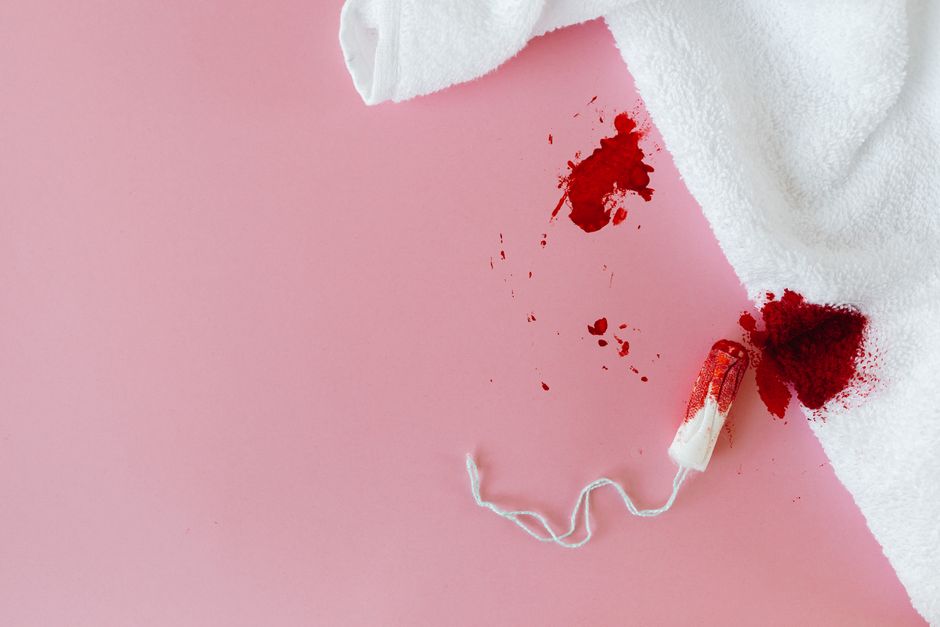
Seeing chunky bits in your period blood can be surprising, but it is usually a normal part of menstruation. These clots are simply collections of blood and tissue that your uterus sheds during your period. Your body normally releases anticoagulants to prevent blood from clotting, but when your flow is heavy, these chemicals can’t keep up, and clumps form. You should only worry when the clots are consistently large, the bleeding is very heavy, or you have other symptoms like severe pain or dizziness.
What Causes Period Blood to Become Chunky?
Your period blood is not just blood. It also contains mucus and tissue from the lining of your uterus, called the endometrium. As this lining breaks down and is shed, it can come out in pieces. These pieces mix with blood and appear as clots or chunky tissue.
The primary cause of visible clots is a heavy menstrual flow. When your flow is faster than your body’s natural anti-clotting enzymes can handle, the blood clumps together before it exits your body. This is a straightforward mechanical process. It is not a sign of disease by itself.
Most women will pass small clots at some point. These are typically less than the size of a quarter and are considered a normal part of the menstrual cycle. The color can range from bright red to dark maroon, depending on how quickly the blood leaves your body. Darker blood usually means it took longer to exit, while bright red indicates a faster flow.
Why Is Period Blood Chunky And When To Worry?
The key to knowing when to worry lies in the size and frequency of the clots, and the overall volume of your bleeding. A normal period produces about 30 to 80 milliliters of blood over the entire cycle. That is roughly 2 to 6 tablespoons. If you are passing large clots frequently, you may be losing more blood than is healthy.
You should consider seeking medical advice if you are soaking through a pad or tampon every hour for more than a few consecutive hours. Another warning sign is passing clots that are larger than a quarter or the size of a golf ball. If you need to use double protection, like a pad and a tampon together, to manage your flow, this is also a sign of heavy bleeding.
Do not ignore the situation if you feel lightheaded, dizzy, short of breath, or excessively fatigued during your period. These symptoms can indicate anemia, a condition caused by low iron levels due to significant blood loss. Heavy menstrual bleeding is a common medical issue, and it is treatable. It is not something you have to simply endure.
Underlying Conditions That Can Cause Large Clots
When clots are consistently large and accompanied by heavy bleeding, a medical evaluation is warranted. Several well-established conditions can cause this. Uterine fibroids are non-cancerous growths in the uterus that can increase menstrual flow and cause larger clots. They are common and often harmless, but they can lead to significant blood loss.
Adenomyosis is another condition where the endometrial tissue grows into the muscular wall of the uterus. This can cause the uterus to become enlarged and lead to very heavy, painful periods with large clots. Endometriosis, where similar tissue grows outside the uterus, can also cause heavy bleeding and severe pain, although it is more commonly associated with pain than with clots specifically.
Hormonal imbalances are another possible cause. When estrogen and progesterone levels are not in their normal balance, the uterine lining can build up more than usual. When it sheds, the result is a heavier, clottier period. Polycystic ovary syndrome (PCOS) and thyroid disorders are examples of conditions that can disrupt this hormonal balance.
Less common, but important to rule out, are issues with the uterine lining itself, such as endometrial polyps or, in rare cases, endometrial cancer. These are typically diagnosed in older women, especially those who have gone through menopause, but they can occur in younger women too. A doctor can use an ultrasound to look at the uterus and determine if any of these structural issues are present.





What Is Considered Heavy Menstrual Bleeding?
Clinically, heavy menstrual bleeding is defined as losing more than 80 milliliters of blood per period. Since measuring this at home is not practical, doctors rely on your symptoms and experience. The most reliable indicators are the ones mentioned earlier: soaking through protection hourly, passing large clots, and having periods that last longer than seven days.
If heavy bleeding is affecting your daily life, it is worth discussing with a healthcare provider. For example, if you have to stay home from work or school because of your flow, or if you are constantly worried about leakage, that is a sign that your bleeding is not normal for you. Your doctor can perform a simple blood test to check for anemia and assess your iron levels.
Treatment options for heavy bleeding vary. Hormonal birth control, such as the pill or a hormonal IUD, is often the first-line treatment. These methods thin the uterine lining, which reduces bleeding and clotting. Other options include tranexamic acid, a medication that helps blood clot, or nonsteroidal anti-inflammatory drugs (NSAIDs) like ibuprofen, which can reduce blood loss and pain.
For some women, surgical options are considered. These range from a procedure to remove fibroids or polyps to a endometrial ablation, which removes the lining of the uterus. In severe cases, a hysterectomy may be recommended, but this is usually a last resort. The right treatment depends entirely on your individual situation, your desire for future fertility, and the underlying cause.
When to See a Doctor Immediately
Most of the time, chunky period blood is not an emergency. However, there are specific situations where you should seek immediate medical care. If you are pregnant and experiencing any vaginal bleeding with clots, you should contact a doctor right away. Bleeding during pregnancy is never normal.
Also, seek urgent care if you have a fever, severe pelvic pain that is different from your usual cramps, or a foul-smelling vaginal discharge alongside the clotting. These symptoms could indicate an infection or a miscarriage. If you feel faint, have a rapid heart rate, or cannot keep fluids down due to pain, go to the emergency room.
It is important to trust your own judgment. You know your body and your normal cycle better than anyone. If something feels wrong, or if your bleeding pattern has changed significantly and you are concerned, a medical evaluation is the right step. It is always better to have a doctor check and find that everything is fine than to delay and risk complications from significant blood loss.
Frequently Asked Questions
Are period blood clots normal?
Yes, small blood clots during your period are a normal part of the menstrual cycle for many women. They are more common during the heaviest days of your flow.
What does a large period clot look like?
A large clot is generally considered to be bigger than a quarter or about the size of a golf ball. Passing these frequently is a sign of heavy menstrual bleeding.
Can dehydration cause period clots?
No, dehydration does not directly cause period blood to clot. Clots are caused by the speed of your menstrual flow, not by your hydration status.
How much bleeding is too much during a period?
Soaking through a pad or tampon every hour for several hours in a row is considered too much. This level of bleeding warrants a discussion with a healthcare provider.
