
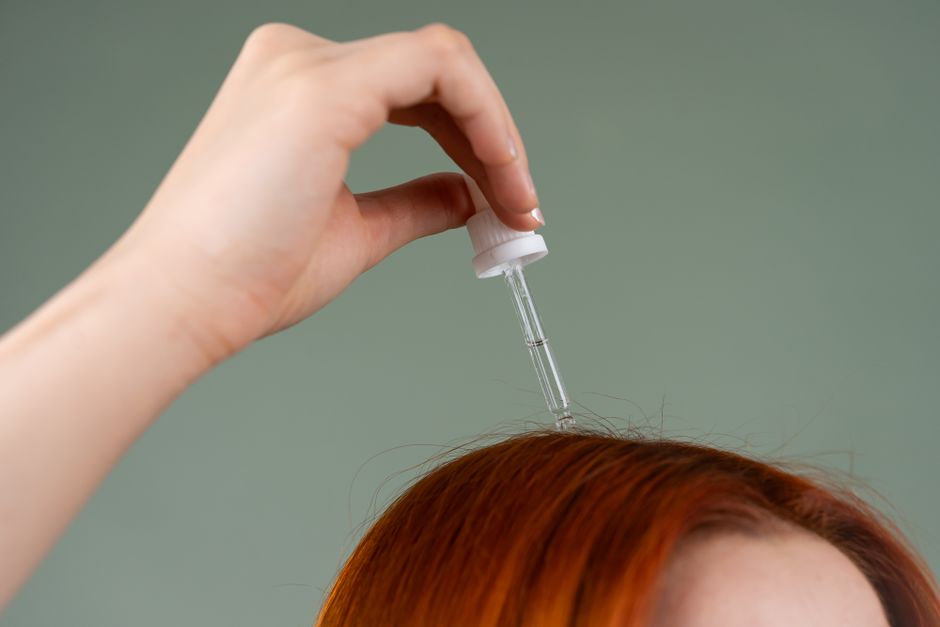
Hair curl is decided inside the follicle, not on the surface of the strand. Each hair grows from a tiny pocket in the skin, and the shape of that pocket — plus how the proteins inside the hair fiber link together — determines whether the hair comes out straight, wavy, or curly. When only some of your hair is curly, it means different follicles on your scalp are building hair in different shapes. That is normal. The pattern is set by your genes, and no product can rewrite it.
Most people do not have one single hair type across their whole head. It is common to find straight sections next to waves, or tight coils underneath looser hair on top. The reasons come down to genetics, follicle shape, hormone changes over time, and how hair is handled day to day. Below is what the science actually shows about each.
Why Is Only Some Of My Hair Curly The Real Reasons?
The real reason is that your scalp is a patchwork of follicles with slightly different shapes and protein instructions. A round follicle tends to produce straight hair. A flatter, more oval follicle tends to produce curl. The flatter the cross-section, the tighter the curve.
This shape is not uniform across your head. Follicles on different parts of the scalp can differ in shape and in how they respond to the same genetic signals. That is why you can have a straight fringe and curly sides, or waves at the back and straight hair at the crown.
Inside each hair fiber, proteins called keratins are cross-linked by chemical bonds. Two types matter most for shape:
- Disulfide bonds — strong links between sulfur-containing amino acids in the hair. They create permanent bends and are what perms and chemical straighteners target.
- Hydrogen bonds — weaker links that change with water and heat. They are why wet hair can be reshaped and why humidity affects styling.
The way these bonds are arranged is directed by your genes. Two people with the same hair color can have completely different bond patterns and therefore different curl.
How Do Genetics Decide Which Parts of Your Hair Curl?
Hair curl is polygenic, meaning many genes contribute rather than one single “curl gene.” Research has identified several genes linked to hair shape, including variants in genes that affect how keratin fibers are built and organized. The genetics are complex, and scientists are still working out exactly how each variant changes the fiber.
What is clear is that you inherit a set of instructions, not a single outcome. Those instructions get read differently in different follicles. A follicle is not just following a blueprint — it is responding to local signals, blood supply, and the surrounding skin. Small differences in those signals can produce a straight hair next to a curly one.
This is also why curl patterns run in families but do not copy exactly. A child can inherit waves from one parent and coils from another, and the mix shows up as a head of hair that is part straight, part curly. The pattern you see is the sum of many small genetic effects, not a coin flip.
Does Hormonal Change Make Hair Curl Differently Over Time?
Hormones can change hair texture, and this is one of the most common reasons people notice a shift in curl pattern during their life. Pregnancy, puberty, menopause, and thyroid changes are all times when hair can look different.
The mechanism is not fully understood. Hormonal shifts can affect the hair growth cycle and the size of the follicle, and some people report that hair grows back with a different texture after a major hormonal change. The evidence for exactly how this happens is limited. What is well established is that hormones affect hair growth and shedding, and that texture changes are reported by many people around these transitions.
There is an important distinction here. A change in curl pattern is not the same as hair loss. Some conditions that cause thinning, such as thyroid disorders, can also change how hair feels and behaves. If you notice a sudden change in texture along with shedding, breakage, or scalp symptoms, that is worth discussing with a clinician rather than assuming it is just a styling issue.
Why Does Hair Curl Differ Between the Top, Sides, and Back?
Different regions of the scalp can have different follicle shapes. This is anatomical, not a sign that something is wrong. The hair at the nape of the neck, the crown, and the temples can all behave differently because the follicles there are not identical.
Damage and handling add a second layer. Hair on the top and front of the head is usually exposed to more sun, more brushing, and more heat styling. That can make those sections look straighter or frizzier over time, even if the follicle underneath is building a wave. Hair that has been chemically treated, colored, or heat-styled repeatedly can lose some of its natural pattern.
Sleep position, ponytails, and hats can also create localized patterns of mechanical stress. Over months, this can change how a section of hair lies, though it does not change the follicle itself. The follicle keeps producing hair in its own shape; the visible difference comes from what happens after the hair leaves the skin.
Can Products or Treatments Change Which Parts of Your Hair Curl?
No product can permanently change the shape your follicle produces. What products can do is temporarily alter the bonds in the hair fiber, which changes how the hair behaves on any given day.
Water breaks hydrogen bonds, which is why wet hair can be reshaped and why humidity makes styled hair revert. Heat styling and chemical treatments work on these same bonds. A perm or relaxer changes disulfide bonds permanently, but it changes the hair that has already grown — not the follicle. New hair grows in with the original pattern.
This is a common point of confusion. People sometimes think a treatment “fixed” their curl pattern because the treated hair stays straight. It did not change the follicle. As new hair grows, the original pattern returns, which is why touch-ups are needed.
Some shampoos and styling products claim to “train” curl. No clinical evidence currently confirms that a product can retrain a follicle. Products can reduce frizz, add hold, and make a pattern look more defined, but they are working on the surface and on temporary bonds, not on the biology underneath.
What Else Can Make Hair Look Partly Straight and Partly Curly?
Several everyday factors can make a naturally curly head look uneven without any change in the follicle.
- Length and weight — longer hair is heavier, and gravity can pull waves straighter, especially at the top of the head.
- Layers and cutting — where hair is cut changes how much weight sits on each section and how the pattern falls.
- Humidity and dryness — moisture levels change hydrogen bonding, so the same hair can look different from one day to the next.
- Brushing and combing — brushing dry curly hair disrupts the pattern and creates frizz, making some sections look straighter.
- Damage — repeated heat, bleach, and tight styling can weaken the fiber and change how it holds shape.
One clarification that surprises people: curl pattern is not the same as curl “health.” A head of hair can have a strong natural wave and still be damaged, and a head of straight hair can be very healthy. Pattern is genetic; condition is about how the fiber is treated.
Is It Normal to Have More Than One Curl Pattern?
Yes. Having multiple curl patterns on one head is common and not a sign of a problem. Many people have two or three distinct patterns, often with tighter coils underneath and looser waves on top.
The pattern can also shift across your lifetime. Texture changes are reported around puberty, pregnancy, and menopause, and some people notice a difference after illness or significant weight change. The evidence for exactly why this happens is limited, so it is best described as something many people experience rather than something fully explained by research.
If the change is sudden, comes with hair loss, or is paired with scalp itching, pain, or flaking, that is a reason to see a clinician. Most of the time, though, a head of mixed curl is simply the way your follicles are built.
Frequently Asked Questions
Why is only some of my hair curly?
Different follicles on your scalp have slightly different shapes and genetic instructions, so they build hair with different amounts of curve. A round follicle tends to make straight hair and a flatter follicle tends to make curl.
Can hair change from straight to curly?
Hair texture can change over time, most often around hormonal shifts such as puberty, pregnancy, or menopause. The evidence for exactly how this happens is limited, but texture changes are commonly reported.
Does cutting hair change your curl pattern?
Cutting does not change the follicle or the pattern hair grows with. It can change how the pattern looks because shorter hair carries less weight and falls differently.
Can products make straight hair curly permanently?
No product can permanently change the shape your follicle produces. Styling products and chemical treatments can temporarily or semi-permanently alter bonds in the hair that has already grown, but new hair returns to its original pattern.
