
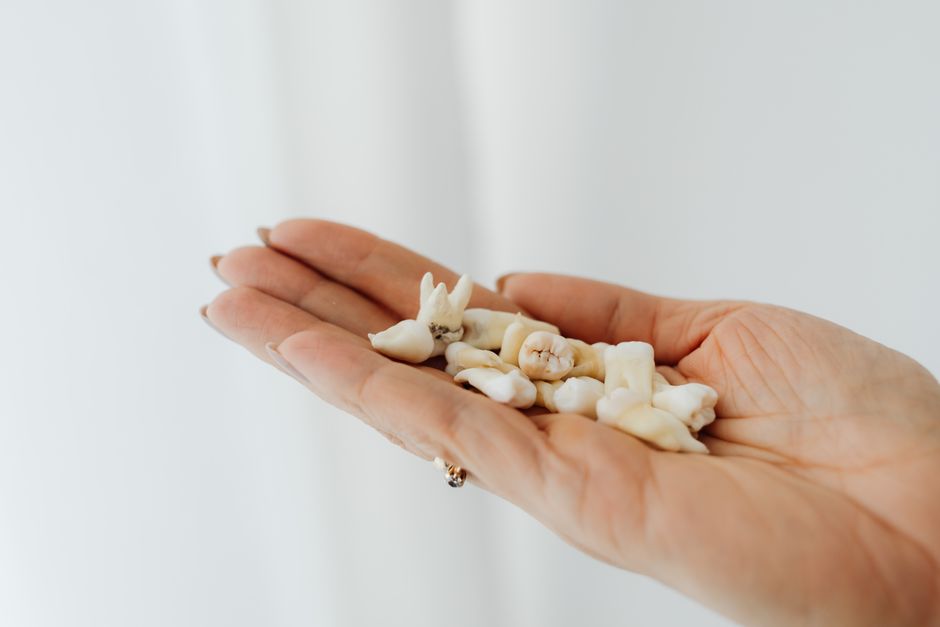
A white patch at the site of a recent tooth extraction is usually a normal part of healing, not a sign that something has gone wrong. In most cases it is fibrin — a protein that forms a protective layer over the socket while new tissue grows underneath. Less often, white tissue can point to food debris, a condition called dry socket, or an infection. The look of the site, the timing, and whether you feel pain are what separate ordinary healing from a problem worth a call to your dentist.
Why Is My Tooth Extraction Site White?
The white or pale yellowish material you see is fibrin, a protein your body produces as part of the clotting process. After a tooth comes out, blood fills the socket and clots. That clot is gradually replaced by a fibrin mesh that covers the wound and protects the tissue forming beneath it.
Fibrin is whitish by nature. When it sits over a dark socket, it often looks like a soft white or cream-colored patch. It can appear within the first day or two and usually stays for a week or more as healing continues.
This layer is doing real work. It seals the socket from bacteria and food, and it acts as a scaffold for the gum tissue and bone that gradually fill the space. Dentists often describe it as a natural bandage. It is not pus, and it is not a sign of infection on its own.
One detail people rarely hear: the white layer can look uneven or patchy, and it may change slightly day to day. That variation is normal. Healing tissue does not look uniform the way a healed gum does.
What Does a Normal Healing Extraction Site Look Like?
A healing socket changes over the first couple of weeks, and knowing the usual sequence helps you judge what you are seeing.
- First 24 hours: a dark red blood clot fills the socket.
- Days 2 to 3: a white or cream-colored fibrin layer forms over the clot. Some mild swelling and tenderness is common.
- First week: the white layer stays in place. The gum edges begin to close inward. Discomfort should be easing, not worsening.
- Weeks 2 and beyond: the white layer gradually thins as new gum tissue covers the site. The socket slowly fills in over the following months.
The key signal is the direction of your symptoms. Normal healing means steady improvement. Pain that is mild on day one and still mild on day four is expected. Pain that gets worse after day two or three deserves attention.
When Is White Tissue a Sign of a Problem?
White tissue becomes a concern when it comes with pain that is severe or getting worse, a bad taste, fever, or swelling that increases instead of settling. In those cases the white material may be something other than normal fibrin.
Dry socket is the most common complication after an extraction. It happens when the blood clot is dislodged or fails to form, leaving the socket exposed. The bone and nerve endings underneath become irritated. Dry socket typically causes intense, throbbing pain that can spread to your ear, and it often starts a few days after the extraction rather than immediately. The socket may look white or grayish because the protective clot is missing — but the defining feature is the pain, not the color.
Infection is less common than dry socket but possible. Signs include pus (which tends to be thicker and more yellow-green than fibrin), increasing swelling, fever, and a foul taste or odor that does not clear with rinsing. A white coating alone, without these other signs, is not enough to call it an infection.
Food debris can also look white and sit in the socket. Soft foods like bread, rice, or dairy can lodge in the opening. This is usually harmless but can be mistaken for tissue.
If you are unsure which of these you are looking at, that uncertainty is a good reason to contact your dentist. A quick visual check is straightforward for a clinician and hard to do accurately in a bathroom mirror.
Should You Remove the White Layer?
No. Leave it alone. The fibrin layer is part of the healing process, and scraping or picking at it can disturb the tissue underneath and delay recovery.
This is where a lot of people get into trouble. The white layer can feel odd, and the urge to clean it out is strong. But removing it can expose the socket and, in some cases, contribute to the clot being lost — which is exactly the situation that leads to dry socket.
The same caution applies to rinsing. Vigorous rinsing, spitting, or swishing in the first day or two can dislodge the clot. Gentle care is the goal, not aggressive cleaning. Follow whatever specific instructions your dentist gave you, since aftercare guidance can vary with the type of extraction and your medical history.
How Should You Care for the Site While It Heals?
General aftercare for an extraction focuses on protecting the clot and keeping the area reasonably clean without disturbing it. Your dentist’s instructions take priority — what follows is the broad, widely taught approach, not a substitute for their guidance.
- Avoid vigorous rinsing, spitting, and drinking through a straw in the first day or so, since suction can pull the clot loose.
- Skip smoking, which is strongly linked to slower healing and a higher risk of dry socket.
- Choose soft foods and chew on the opposite side for the first few days.
- Keep the area gently clean as advised. Many dentists suggest gentle saltwater rinses starting a day or so after the extraction, but timing varies, so confirm with your own dentist.
- Take pain medication only as directed, and check with a pharmacist or your dentist before combining anything with other medicines.
Call your dentist if you have severe pain, pain that worsens after the first few days, heavy bleeding that does not stop, fever, or swelling that keeps growing. These are signs to have checked rather than to wait out.
What If the White Patch Appears Later or Lasts a Long Time?
A white area that shows up well after the extraction, or one that persists for several weeks without improving, is worth having looked at. Most of the time it is still part of normal healing or a harmless bit of debris. But persistent white patches in the mouth can occasionally reflect other conditions, and a dentist can tell the difference in person far better than any description can.
Timing matters here. Fibrin in the first week or two is expected. A white patch that is unchanged at four to six weeks, or one that appears in a socket that had already seemed healed, should be checked. This is not a reason to panic — it is a reason to get a clear answer.
One clarification worth making: a white patch is not automatically a sign of poor hygiene or of something you did wrong. Healing tissue simply looks white. The color itself is neutral information. It is the company it keeps — pain, fever, odor, or a lack of improvement — that tells you whether to worry.
How Long Does It Take for the Site to Look Normal Again?
The visible white layer usually fades over one to two weeks as new gum tissue grows across the site. The gum surface often looks close to normal within a few weeks, though the socket underneath continues filling with bone for several months.
That longer timeline is normal and usually invisible. You may notice a small dip or soft spot where the tooth was for a while after the surface looks healed. That is the bone and tissue remodeling underneath, and it is expected.
Frequently Asked Questions
Is it normal for a tooth extraction site to be white?
Yes, a white or cream-colored layer is usually normal fibrin that protects the healing socket. It typically appears within the first couple of days and fades over one to two weeks.
How can I tell if the white stuff is fibrin or an infection?
Fibrin alone is not painful and does not come with fever, spreading swelling, or a foul odor. Infection more often brings pus, increasing swelling, fever, and a bad taste that does not clear with rinsing.
Should I brush or scrape the white layer off?
No, leave it in place so the tissue underneath can heal. Disturbing it can expose the socket and raise the risk of complications like dry socket.
When should I call my dentist about a white extraction site?
Call if you have severe or worsening pain, fever, heavy bleeding, spreading swelling, or a white patch that is unchanged after several weeks. A quick check is the safest way to rule out a problem.
