
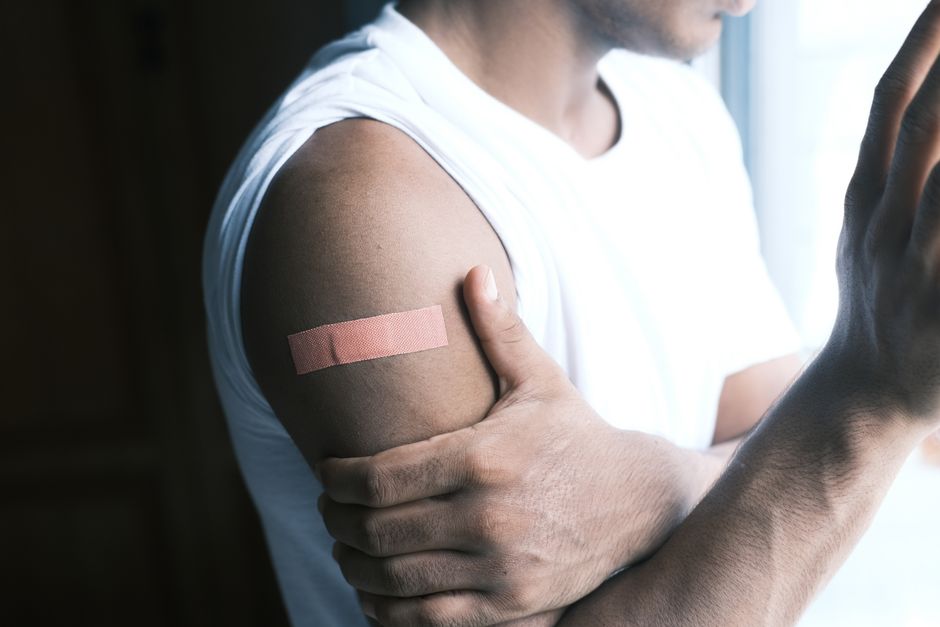
If you’ve ever peeled off a bandage and found a pale, white patch underneath, you’re not imagining it. That white mark is usually caused by trapped moisture, not by the bandage bleaching your skin or “pulling out” pigment. The skin under an adhesive bandage sits in a warm, sealed environment, and moisture from sweat can’t escape. When that moisture builds up, the top layer of skin absorbs water, swells, and changes how it reflects light — which makes it look white or wrinkled. The color almost always returns to normal on its own within a short time.
Why Is My Skin White After A Bandaid?
The white appearance comes from a process called maceration. Your skin’s outer layer, the stratum corneum, is designed to hold some water, but a bandage traps far more than usual. As that layer soaks up moisture, the cells swell and the surface becomes soft and pale.
There’s a second factor too. Adhesive on the bandage can leave a thin residue behind. That residue may look like a white film or flaky patch. It’s not pigment loss — it’s just leftover adhesive sitting on the surface.
So the white color is a temporary change in how the skin looks, not a change in the skin itself. Melanocytes, the cells that make pigment, sit deeper in the skin and are not affected by a bandage sitting on the surface.
How Long Does the White Mark Last?
In most cases, the color returns within minutes to a few hours once the bandage is off and the skin dries. If the skin was heavily macerated — soft, wrinkled, and waterlogged — it may take a day or so for the surface to look completely normal again.
During that time, the skin may feel softer or look slightly shiny. That’s normal. Letting it air out is usually all that’s needed.
If a pale patch is still there after several days, something else may be going on. A mark that doesn’t fade is worth a closer look, because it may not be simple moisture-related whitening.
Is It Pigment Loss or Just Moisture?
This is the most common worry, and the two things look very different once you know what to check. Moisture-related whitening is temporary, sits on the surface, and fades as the skin dries. True pigment loss, called depigmentation, is a deeper change that does not fade on its own.
Here’s a simple way to think about the difference:
- Moisture whitening: soft, wrinkled, or slightly shiny skin; fades within hours; feels damp or clammy when the bandage comes off.
- Adhesive residue: a thin white or flaky film on the surface; wipes or washes away; skin underneath looks normal.
- True depigmentation: a sharply defined pale or white patch; does not fade; often has a different texture or border than the surrounding skin.
A bandage does not remove pigment. It cannot reach the melanocytes that sit in the deeper layers of the epidermis. So if you’re seeing a lasting white patch, the bandage is unlikely to be the cause — it may simply have been the thing covering a spot that was already there.





What Causes Skin to Turn White Under a Bandage?
Three things account for almost all cases. Understanding each one helps you tell whether you need to do anything at all.
Trapped moisture. This is the big one. A bandage holds in sweat and water vapor. The outer skin layer absorbs it, swells, and looks pale. This is the same reason your fingertips wrinkle in the bath.
Adhesive residue. Many bandages use a sticky backing that leaves a faint film. That film can look white or chalky. It usually comes off with gentle washing.
Pressure or reduced blood flow. A bandage wrapped too tightly can press on small blood vessels and make the area look pale. This is less common with standard adhesive bandages and more likely with tight wraps or elastic bandages. If a bandage is tight enough to cause numbness, tingling, or cool skin, remove it.
When Should You Worry About a White Patch?
Most white marks after a bandage are harmless and short-lived. A few situations are worth a doctor’s attention.
See a clinician if the pale area:
- Does not fade after several days
- Keeps spreading or gets larger
- Has a sharp, defined border unlike the surrounding skin
- Comes with itching, burning, or pain
- Appears along with similar patches elsewhere on your body
A lasting, well-defined white patch can have causes unrelated to the bandage. One example is vitiligo, a condition where the immune system affects pigment-producing cells. Another is a fungal infection that can cause lighter patches on the skin. These are different problems with different treatments, and a doctor can tell them apart. This article can’t diagnose you, and a bandage is rarely the real cause of a permanent change.
Can a Bandage Allergy Cause White Skin?
An allergic reaction to bandage adhesive usually causes redness, itching, and sometimes small bumps or blisters — not white skin. The reaction is more often a red, irritated rash than a pale patch.
That said, a healing blister or an area of irritated skin can look lighter or different in color as it recovers. If you notice a rash, swelling, or itching under or around where the bandage was, that points to irritation or allergy rather than moisture whitening.
If you react to standard bandages, adhesive-free or hypoallergenic options may help. Some people do better with paper tape or silicone-based adhesives. If reactions are frequent or severe, talk to a clinician.
How Do You Prevent the White Mark?
You can reduce how much the skin whitens by limiting moisture buildup under the bandage.
- Change the bandage regularly so moisture doesn’t collect.
- Keep the area clean and dry before applying a new bandage.
- Choose a bandage size that covers the wound without trapping extra skin.
- Avoid wrapping too tightly.
- Let the skin air out between bandage changes when practical.
These steps lower the chance of maceration. They don’t guarantee the skin won’t look pale when you take the bandage off, but they can make it less noticeable and help the skin recover faster.
Does White Skin Under a Bandage Mean Infection?
No. A pale, moist patch by itself is not a sign of infection. Infection has a different set of signs.
Watch for increased redness, warmth, swelling, pus, a bad smell, or pain that gets worse rather than better. A fever with a wound is also a reason to get medical care. Those signs matter far more than a temporary white color.
If a wound looks clean, the surrounding skin is normal in color, and the only issue is a pale patch where the bandage sat, infection is unlikely. When in doubt, have a clinician look at it. That’s always reasonable with a wound that isn’t healing as expected.
What About White Skin After Other Adhesives?
The same thing happens with medical tape, adhesive dressings, and even some stick-on patches. Any adhesive that seals the skin and traps moisture can cause maceration and a pale look.
It also happens with waterproof bandages, which tend to trap more moisture than breathable ones. If you notice white skin often, switching to a more breathable dressing may reduce it. The underlying reason is the same: water in, water stuck.
Frequently Asked Questions
Why is my skin white after a bandaid?
Trapped moisture under the bandage causes the top layer of skin to absorb water and look pale, a process called maceration. Adhesive residue can also leave a white film on the surface.
Does a bandage remove pigment from your skin?
No. A bandage sits on the surface and cannot reach the pigment-producing cells deeper in the skin. Any lasting white patch has another cause and should be checked by a doctor.
How long does white skin under a bandage take to go away?
It usually fades within minutes to a few hours once the bandage is off and the skin dries. Heavily waterlogged skin may take a day or so to look normal again.
When should I see a doctor about a white patch on my skin?
See a doctor if the patch does not fade after several days, keeps spreading, has a sharp border, or comes with itching, burning, or pain. A lasting pale patch can have causes unrelated to the bandage.
