
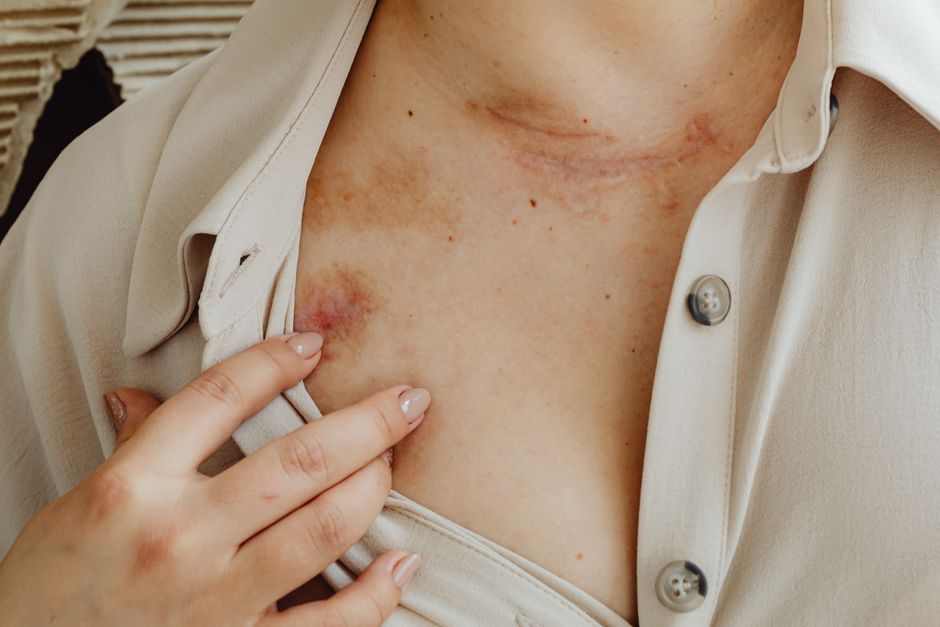
A scar that sits below the surface of the skin is called an indented scar, or atrophic scar. It forms when the body produces less collagen than it needs to fill in a wound during healing. The result is a small pit, dip, or depression. Indented scars are common after acne, chickenpox, and certain injuries. They are not a sign that something went wrong with your health, and several treatments can soften their appearance.
Understanding why a scar sinks inward starts with how skin repairs itself. When you get a wound, your body lays down collagen to close the gap. Sometimes it lays down too little. The skin heals over, but the surface stays lower than the surrounding tissue. That is the whole mechanism in plain terms.
Why Is My Scar Indented Causes Types Treatments?
An indented scar happens when collagen production falls short during the healing process. Collagen is the protein that gives skin its structure and volume. When a wound heals with less collagen than the surrounding skin, the surface dips inward. This is the opposite of a raised scar, where the body produces extra collagen.
Several things can tip the balance toward too little collagen:
- Acne. Deep inflammation from cystic acne can destroy tissue faster than the body can rebuild it. This is the most common cause of indented facial scars.
- Chickenpox. Chickenpox blisters that are scratched or become infected can leave small pits, especially on the face.
- Surgery or trauma. Wounds that heal slowly or become infected are more likely to leave a depression.
- Genetics. Some people simply produce less collagen in response to injury. If close relatives have indented scars, you may be more likely to develop them too.
- Age and skin thickness. Thinner skin, which becomes more common with age, may show depressions more clearly.
One point worth clarifying: an indented scar is not the same as a wound that has not finished healing. A true scar is mature tissue. If a wound is still open or changing, that is a different situation and worth showing to a doctor.
What Are the Different Types of Indented Scars?
Dermatologists sort indented scars by their shape and how deep they sit. The type matters because it affects which treatments are likely to help. Acne scars in particular are classified into three main groups.
Ice pick scars
These are narrow, deep pits that look like a small puncture. They are the most common type of acne scar and can be hard to treat because they go deep into the skin. Ice pick scars are common on the cheeks.
Boxcar scars
Boxcar scars have a flat bottom and steep, defined edges, similar to a small crater. They can be shallow or deep. They tend to respond better to resurfacing treatments than ice pick scars because the base is broader.
Rolling scars
Rolling scars have a sloping edge and give the skin a wavy, uneven look. They form when fibrous bands of tissue pull the skin down from below. The surface itself may not be deeply pitted, but the contour is uneven.
Scars from chickenpox or injury are often described more simply as atrophic scars, without the acne-specific labels. The underlying cause is the same: a shortfall of collagen during healing.
Can Indented Scars Be Treated?
Indented scars can often be improved, but complete removal is uncommon. Most treatments aim to raise the surface, stimulate new collagen, or release the tissue pulling the skin down. Results vary widely depending on scar type, depth, skin tone, and how the skin responds.
It is worth being honest here: no treatment reliably erases an indented scar. Many people see meaningful improvement, but the goal is usually softening the appearance rather than making the scar disappear. Anyone promising a complete cure is overselling.
Common approaches include:
- Laser resurfacing. Fractional lasers remove thin layers of skin and prompt collagen production. This is among the more studied options for acne scars, though results vary and multiple sessions are often needed.
- Microneedling. Fine needles create tiny injuries that trigger collagen. Some studies suggest modest improvement, particularly for rolling and boxcar scars. Evidence for deep ice pick scars is weaker.
- Chemical peels. These remove surface skin and may help shallow scars. Deep scars respond less well.
- Subcision. A small needle or blade is used to release the fibrous bands pulling the skin down. This is often used for rolling scars.
- Dermal fillers. Injections can temporarily raise a depression. The effect fades over months and requires repeat treatment.
- Punch excision or punch grafting. For deep ice pick scars, a doctor may remove the scar and close the area or replace it with a small graft of healthy skin.
Many dermatologists combine treatments rather than relying on one. The right approach depends on scar type and should be decided with a clinician who can see your skin. Some treatments carry risks, including changes in skin color, especially in people with darker skin tones, so a qualified provider matters.
Do Over-the-Counter Products Fix Indented Scars?
No over-the-counter cream or serum has been shown to fill in an indented scar. This is one of the most common misunderstandings about scar care. Creams, oils, and silicone gels may help with the color or texture of a scar, but they do not restore lost volume or raise a depression.
The reason is structural. An indented scar is a change in the skin’s architecture, not just its surface. A topical product sits on the surface and cannot rebuild the collagen scaffolding underneath. Products marketed as “scar fillers” or “collagen boosters” in a jar have no clinical evidence supporting that claim.
Silicone gel and sheeting do have evidence for improving the appearance of some scars, particularly raised ones, and are sometimes used after surgery. Their role in indented scars is much less clear. If you are considering a product, it is reasonable to ask what specific evidence supports it for your scar type.
When Should You See a Doctor About an Indented Scar?
Most indented scars are harmless and mainly a cosmetic concern. There are times, though, when a professional evaluation is worthwhile.
- The scar is new and the wound is not healing as expected.
- You notice a scar changing shape, color, or size over time.
- The scar is tender, itchy, or painful.
- You have active acne that is leaving new indented scars. Treating the acne can help prevent more from forming.
- The appearance is affecting your confidence or daily life.
Prevention deserves a mention. Since indented scars form when inflammation or injury outpaces healing, reducing that inflammation matters. For acne, that means getting effective treatment rather than picking or squeezing. For wounds, keeping them clean and protected supports better healing. This does not guarantee a scar-free result, but it lowers the odds of a deep depression forming.
It is also fair to say that many people live comfortably with indented scars and choose no treatment at all. That is a valid choice. Treatment is optional, and the decision rests on how much the scar bothers you, not on any medical necessity.
Frequently Asked Questions
Why is my scar indented instead of raised?
An indented scar forms when the body produces less collagen than needed to fill the wound, leaving a depression. A raised scar is the opposite, caused by extra collagen.
Can indented scars go away on their own?
Indented scars usually do not fade completely on their own, though some soften slightly over time. Most people need treatment if they want a noticeable change.
What is the best treatment for indented acne scars?
There is no single best treatment, because results depend on scar type and skin. Laser resurfacing, microneedling, subcision, and fillers are common options, and dermatologists often combine them.
Do scar creams work on indented scars?
No over-the-counter cream has been shown to fill in an indented scar. Topical products may affect color or texture but cannot restore lost volume beneath the skin.
