
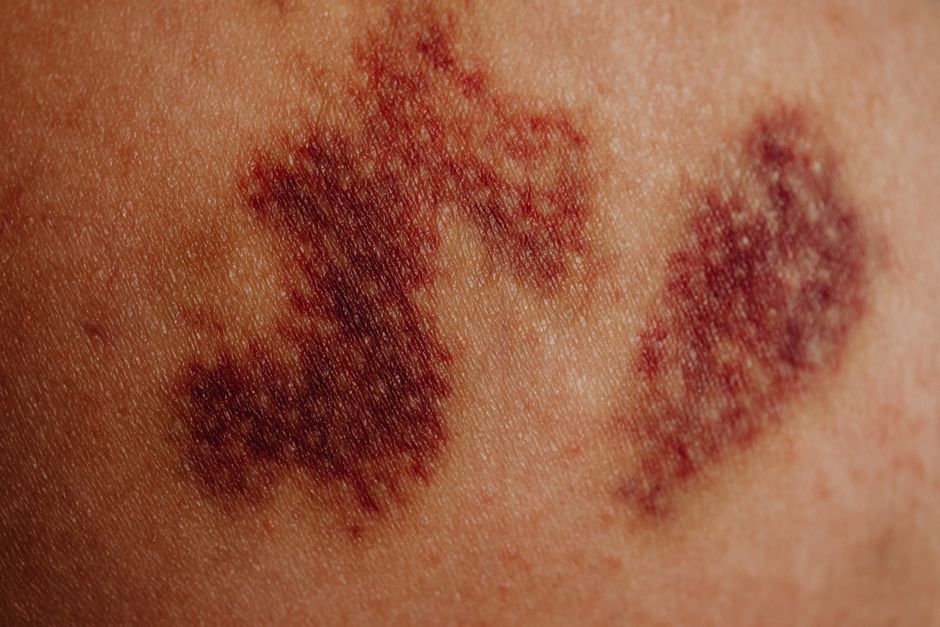
A rash that turns purple is not a color change you should wait out. It usually means blood is leaking into the skin, and that can point to anything from a harmless bruise to a medical emergency. The most important thing to know is whether the purple spots fade when you press on them. If they stay purple under pressure, get medical care right away.
Why Is My Rash Turning Purple And When To Worry?
Skin turns purple when blood escapes from small vessels and pools in the tissue. Doctors call this purpura. The color comes from red blood cells breaking down under the skin, not from the rash itself changing shade.
The single most useful test you can do at home is the pressure test. Press a clear glass or your fingertip firmly against the spot.
- If it fades and turns pale, then refills with color, the blood is still inside the vessels. This is called blanching. It is usually less urgent.
- If it stays purple and does not fade at all, blood has leaked outside the vessels. This is called non-blanching. It needs prompt medical attention.
Non-blanching purple spots are the finding clinicians take most seriously. They can signal a problem with platelets, the tiny cells that help blood clot, or with the blood vessels themselves. In some cases they point to a serious infection or a bleeding disorder.
Blanching purple or red areas are often caused by inflammation, which widens blood vessels and brings more blood to the area. That is a different situation and usually less alarming. But color alone does not tell you the cause. Only an exam and sometimes blood tests can.
What Does It Mean If The Purple Spots Do Not Fade When Pressed?
Non-blanching spots mean bleeding under the skin. There are several broad reasons this happens, and they are not equally serious.
The first category is a low platelet count. Platelets are the cell fragments that plug small leaks in blood vessels. When they drop too low, tiny bleeds appear in the skin. This can happen from a viral illness, a medication, an immune problem, or a bone marrow condition. A common example in children is immune thrombocytopenia, where the body attacks its own platelets.
The second category is a problem with the vessels themselves. The vessel walls can become leaky or inflamed. This happens in certain infections, inflammatory conditions, and reactions to some drugs. The platelets may be normal, but the walls still leak.
The third category is a clotting problem. The proteins that form clots can be low or working poorly. This is less common than the first two but can be serious.
The pattern and location of the spots give clues. Small pinpoint dots are called petechiae. Larger flat patches are called purpura. Raised, tender, or spreading spots are a bigger concern than flat ones that stay put. Spots that appear suddenly across the body, or that come with fever, confusion, or feeling very unwell, are the ones that need emergency care.
When Is A Purple Rash A Medical Emergency?
A non-blanching rash with fever and a person who looks seriously ill is a medical emergency. This combination can be a sign of a bloodstream infection, and it needs immediate evaluation.
Call emergency services or go to an emergency department right away if a purple rash appears with any of these:
- Fever, especially with chills or shaking
- Feeling very unwell, drowsy, confused, or hard to wake
- Rapid breathing or a racing heart
- Cold, pale, or mottled hands and feet
- Spots that are spreading quickly or getting bigger by the hour
- Severe headache, stiff neck, or sensitivity to light
- Bleeding from the gums, nose, or elsewhere that will not stop
- Vomiting, or a rash that starts as red and turns dark purple or black
One specific pattern worth knowing is a rash that starts as small red spots and quickly becomes larger purple or black patches, sometimes with raised or blister-like areas. This can be a sign of a serious infection that damages blood vessels. It is not something to watch at home.
In newborns and infants, any non-blanching rash should be checked promptly. Babies can become seriously ill faster than older children and adults, and their symptoms can be harder to read.
What Causes A Rash To Turn Purple Without Fever?
Not every purple rash is an emergency. Many are caused by minor bleeding under the skin from everyday events.
A bruise is the most common example. Trauma, a bump, or even scratching can break small vessels and cause a purple mark. Bruises normally change color over days, going from red to purple to green to yellow as the blood breaks down. This color progression is a normal healing pattern.
Other causes without fever include:
- Certain medications, including some blood thinners and steroids
- Low platelet counts that develop slowly over time
- Vitamin C deficiency, which is rare in the United States but weakens blood vessels
- Inflammatory conditions that make vessel walls leaky
- Pressure or straining, which can cause small spots on the face or eyes
- Age-related skin changes that make vessels more fragile
Some of these are harmless. Others, like a slowly falling platelet count, need a doctor’s attention even without fever. The key point is that a non-blanching rash without an obvious cause deserves a medical look, even when you feel fine.
How Do Doctors Tell What Is Causing A Purple Rash?
Doctors start with the pressure test and a careful look at the pattern, location, and how fast the spots appeared. They also ask about recent illness, new medications, and any bleeding elsewhere.
A blood test is often the next step. A complete blood count measures platelets and other blood cells. If platelets are low, further testing may look for the cause. Sometimes a small skin sample is taken to examine the vessels directly.
Your job before the visit is simple. Note when the rash started, whether it fades under pressure, and whether you have other symptoms. Take a photo in good light, because rashes can change quickly. Bring a list of all medications and supplements.
What Should You Do While Waiting For Care?
Do not press hard or scratch at the spots, and do not apply ice or heat to a rash you have not had checked. If the person is seriously unwell, skip the home care and seek emergency help.
If the rash is non-blanching but the person feels well, call your doctor or a nurse line for guidance the same day. Do not wait several days to see if it clears on its own.
Avoid taking aspirin or other blood thinners unless a doctor has told you to, since they can make bleeding worse. If you are already prescribed a blood thinner, do not stop it on your own. Call your doctor instead.
The bottom line is that purple color in a rash is a signal, not a diagnosis. The pressure test tells you the most important thing quickly. Non-blanching spots need prompt care. Blanching spots are often less urgent but still worth a look if they persist or come with other symptoms.
Frequently Asked Questions
Why is my rash turning purple?
A rash turns purple when blood leaks from small vessels into the skin, a condition called purpura. This can result from low platelets, leaky vessel walls, or a clotting problem.
How do I know if a purple rash is serious?
Press a clear glass against it. If the spot stays purple and does not fade, it is non-blanching and needs prompt medical care, especially with fever or feeling unwell.
Can a purple rash be harmless?
Yes. A simple bruise is the most common harmless cause and normally changes color over days as it heals. Any non-blanching rash without a clear cause should still be checked.
When should I go to the emergency room for a purple rash?
Go right away if a purple rash appears with fever, confusion, rapid breathing, spreading spots, or a person who looks seriously ill. These signs can point to a bloodstream infection.
