
Bright green poop usually means one of two things: food moved through your digestive tract too quickly, or you ate something green. In most cases it clears up on its own within a day or two. It is rarely a sign of something serious, though a few specific causes are worth knowing about.
The green color comes from bile, a yellow-green fluid your liver makes to help digest fat. Bile normally turns brown in your colon. When it does not get enough time there, it stays green.
Why Is My Poop Bright Green? Causes And Concerns
Bile is the starting point for every explanation. Your liver produces it continuously, stores it in the gallbladder, and releases it into the small intestine when you eat. Bile is yellow-green at the start. As it travels through your intestines, bacteria break it down and chemical changes turn it brown. That is the normal color of stool.
Bright green stool means bile did not complete that journey. Either it moved too fast, or something green was added along the way. Almost every cause fits one of those two categories.
The most common reason is diarrhea. When food and waste move through your system faster than usual, bile does not have time to turn brown. This is why green stool often shows up during a stomach bug, food poisoning, or any short bout of loose stools. The green color itself is not the problem. It is a side effect of speed.
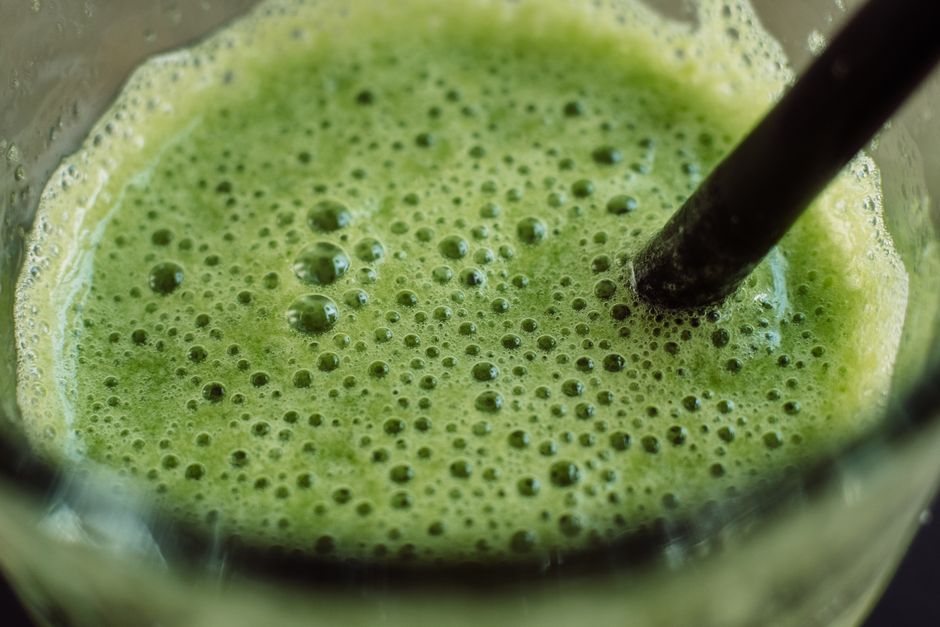
Diet is the other big category. Foods with heavy green pigment can pass through largely intact, especially if you eat a lot of them. Artificial green food coloring can do the same thing. If you ate a large salad, drank a green smoothie, or had something with green dye, that is a strong candidate.
Some medications and supplements can turn stool green as well. Iron supplements are a common one, though they more often turn stool black. Antibiotics can change gut bacteria and shift stool color in either direction.
What Foods and Drinks Turn Poop Green?
Chlorophyll, the pigment that makes plants green, is the main dietary culprit. Your body does not fully break it down, so it passes through and colors what comes out.
Foods and drinks that commonly cause green stool include:
- Leafy greens like spinach, kale, and collard greens
- Broccoli, asparagus, and green beans
- Green apples, kiwi, and avocado
- Matcha, wheatgrass, and spirulina
- Green smoothies and green juices
- Pistachio pudding, lime gelatin, and other foods with green dye
- Black licorice (it contains compounds that can affect stool color)
The amount matters more than the specific food. A small side salad probably will not change anything. A large green smoothie every morning might. If you recently started eating more greens or added a green supplement, that timing is a useful clue.
Artificial dyes are worth a separate mention. Food colorings used in candy, drinks, and desserts can pass through your system and show up in your stool. This is harmless but can be startling if you do not expect it.
When Does Green Poop Signal a Digestive Problem?
Green stool from food or a short bout of diarrhea is not a concern. The picture changes when green stool keeps showing up without a clear dietary reason, or when it comes with other symptoms.
Ongoing green stool can sometimes reflect a problem with how your body absorbs nutrients. Celiac disease, Crohn’s disease, and other conditions that affect the small intestine can change how bile and food move through your system. These conditions usually come with more than just color changes. Watch for persistent diarrhea, weight loss, fatigue, or belly pain.
Some medications can cause green stool as a side effect. Certain antibiotics, laxatives, and medications that affect bile flow are on that list. If you started a new medication and noticed a color change, mention it to your doctor or pharmacist.
Parasitic infections and bacterial infections can also cause green stool, usually along with diarrhea and cramping. These are less common in the United States than in other parts of the world, but they happen.
One condition worth knowing about is bile acid malabsorption. In this condition, bile acids are not reabsorbed properly in the small intestine and reach the colon in larger amounts. This can cause chronic diarrhea and green stool. It is more common than many people realize, and it is diagnosed with a specific test, not by stool color alone.
What Does Green Poop Look Like in Babies and Children?
Green stool is common in babies and usually normal. A newborn’s first stools, called meconium, are dark green to black. That is expected and not a concern.
Breastfed babies often have greenish-yellow stool. Formula-fed babies may have stool that ranges from yellow to green depending on the formula. If a baby is feeding well, gaining weight, and acting normally, green stool is rarely a problem.
In older children, the same causes apply as in adults: green foods, food dye, and short bouts of diarrhea. Green stool alone is not a reason to worry. Call a pediatrician if a child has green stool along with fever, vomiting, blood in the stool, or signs of dehydration.
One note for parents: some parents worry that green stool means the baby is not getting enough to eat. That concern comes from an old idea about foremilk and hindmilk balance. The evidence for that specific link is weak. If a baby is gaining weight and having regular wet diapers, feeding is likely fine.
Does Green Poop Mean Something Is Wrong With My Liver or Gallbladder?
Liver and gallbladder problems can change stool color, but they usually do not cause bright green stool. They more often cause pale, clay-colored, or greasy stool.
That is because these conditions reduce bile flow. Less bile means less color, not more. Bright green stool is usually a sign of bile moving too fast, not too slowly.
There is one exception. If the gallbladder releases a large amount of bile at once, or if bile moves through quickly, stool can appear green. This can happen after certain meals or after gallbladder removal. It is usually not a sign of liver disease on its own.
Signs that do point to a liver or gallbladder problem include yellowing of the skin or eyes, dark urine, pain in the upper right belly, and stool that is pale or floating. If you have those symptoms, see a doctor.
When Should You See a Doctor About Green Poop?
Green stool by itself is rarely a reason to see a doctor. The color is a symptom, not a diagnosis, and most causes are harmless and short-lived.
See a doctor if green stool lasts more than a few days without a clear cause, or if it comes with any of these:
- Diarrhea that lasts more than two days in adults
- Blood in the stool or black, tarry stool
- Severe or worsening belly pain
- Fever
- Unexplained weight loss
- Signs of dehydration, such as dizziness, dry mouth, or little urine
- Yellowing of the skin or eyes
If you are not sure whether your situation needs attention, a quick call to your doctor’s office can help. It is better to ask than to guess.
How Do You Stop Green Poop?
If a food or dye is the cause, stopping that food will usually return stool to normal within a day or two. No treatment is needed.
If diarrhea is the cause, the focus should be on treating the diarrhea, not the color. Drink fluids, replace electrolytes, and let it run its course if it is mild. Green stool will resolve once your digestion returns to normal.
If a medication is the cause, do not stop it on your own. Talk to your doctor or pharmacist first. Some medications need to be tapered or switched carefully.
If green stool keeps coming back without a clear reason, that is worth a medical visit. A doctor can check for conditions like bile acid malabsorption, celiac disease, or an infection. These are diagnosed with specific tests, not by color alone.
The bottom line: bright green poop is usually a message about speed or diet, not danger. Pay attention to how long it lasts and what comes with it. When in doubt, ask a doctor.
Frequently Asked Questions
Why is my poop bright green?
Bright green poop usually means bile moved through your digestive tract too quickly to turn brown, or you ate something with green pigment or dye. Diarrhea and green foods are the most common causes.
Is bright green poop a sign of cancer?
No, green stool by itself is not a sign of cancer. Colon cancer more often causes blood in the stool, changes in bowel habits lasting weeks, or unexplained weight loss.
How long does green poop last?
Green poop from food or a short bout of diarrhea usually clears up within a day or two. If it lasts more than a few days without a clear cause, see a doctor.
Can green poop mean I have a parasite?
Parasitic infections can cause green stool, usually along with diarrhea and cramping. This is uncommon in the United States, and a doctor can test for it if other causes are ruled out.
