
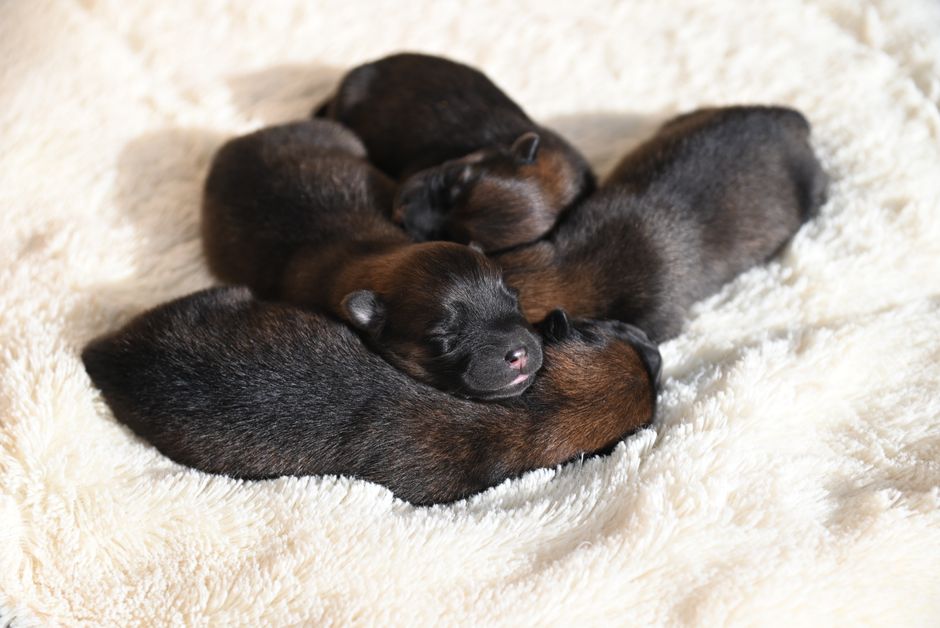
A newborn puppy breathing with its mouth open is not normal, and it needs attention right away. Newborns under about two weeks old cannot pant to cool themselves and cannot breathe through their mouths as a backup. Open-mouth breathing at this age usually points to a real problem: a blocked airway, fluid in the lungs, low oxygen, or a serious infection. In most cases this is a signal to call a veterinarian now, not to wait and watch.
That single fact matters more than any other in this article. A puppy that is only days old depends almost entirely on breathing through its nose. When the mouth is open, something is interfering with that. The sections below explain why, what to look for, and what you can safely do while you get help.
Why Is My Newborn Puppy Breathing With Mouth Open?
A newborn puppy breathes through its nose because its airway and nervous system are not yet set up for mouth breathing. The reflex that switches adult dogs to open-mouth panting for heat loss does not work in the first weeks of life. So open-mouth breathing in a newborn is a sign of distress, not temperature control.
Several things can cause it. The most common categories are:
- Airway blockage. Mucus, fluid, or a bit of membrane can block the small nasal passages. A puppy that cannot clear its nose will often open its mouth trying to get air.
- Fluid in the lungs. Puppies born by cesarean section, or those that had a difficult delivery, may have fluid that was not squeezed out of the lungs during birth. This makes breathing hard and fast.
- Low oxygen. A puppy that did not breathe well right after birth can have low oxygen levels, which drives frantic open-mouth breathing.
- Infection. Newborns have weak immune systems. A bacterial infection can move quickly and cause labored breathing.
- Being too cold. A chilled newborn can become weak and breathe abnormally. Cold is a genuine emergency in newborns.
- Birth defects. Some puppies are born with structural problems in the airway, lungs, or heart that make normal breathing impossible.
One clarification that catches many owners: a puppy that is warm and active but holding its mouth slightly open after feeding is not the same as one struggling to breathe. The difference is effort. A distressed puppy works hard to breathe. Its sides heave, its gums may look pale or blue, and it is not nursing well. That picture means urgent care.
How Can I Tell If My Newborn Puppy Is in Trouble?
Look at effort, color, and behavior together. A newborn in respiratory distress usually shows more than one sign at once, and the signs get worse over minutes, not days.
Warning signs that mean call a veterinarian immediately:
- Breathing that is fast and labored, with the belly or sides moving hard with each breath
- Gums or tongue that look pale, gray, or blue instead of pink
- Grunting or a clicking sound with each breath
- Open-mouth breathing that continues after the nose is cleared
- Weakness, limpness, or a puppy that will not nurse
- Feeling cold to the touch
- Flopping or gasping
Normal newborn breathing is quiet and mostly through the nose. Newborns do breathe faster than adult dogs, and their rate varies with activity and temperature, so do not rely on a single number. Watch the pattern instead. Steady, quiet, effortless breathing is what you want. Noisy, effortful, open-mouth breathing is not.
If the puppy is also cold, warming it gently matters. A chilled newborn cannot regulate its own body temperature, and warming is often the first step before anything else. Use a warm (not hot) heat source and a towel, and keep the puppy away from direct drafts. Do this while you are arranging veterinary help, not instead of it.
What Should I Do Right Now?
Stay calm, keep the puppy warm, and get veterinary guidance fast. Newborns decline quickly, and time matters. Call your veterinarian or an emergency animal hospital and describe what you see.
A few safe steps while you wait:
- Clear visible mucus or fluid gently from the nose and mouth with a clean, soft cloth. Do not push anything into the nostrils.
- Keep the puppy warm and close to its mother if she is calm and caring for it.
- Do not hold the puppy upside down or shake it. These are not safe methods for clearing airways and can cause harm.
- Do not give any medication, including human cold or breathing medicines. They are not safe for newborns and can be fatal.
- Do not try to feed a puppy that is struggling to breathe. A puppy that cannot breathe well cannot safely swallow.
If the puppy stops breathing, this is a life-threatening emergency. Call for veterinary help immediately. Do not attempt complicated rescue breathing on your own unless a veterinarian has walked you through it, because newborns are fragile and incorrect technique can cause injury.
What Causes Open-Mouth Breathing in Puppies Beyond the Newborn Stage?
Once puppies are a few weeks old, open-mouth breathing can mean different things. By around three to four weeks, puppies begin to develop the ability to pant for cooling, though they are still not fully mature. After that point, open-mouth breathing is often normal heat regulation, especially in warm weather or after activity.
In older puppies, open-mouth breathing can also be a sign of:
- Overheating or heat stress
- Pain or anxiety
- Respiratory infection
- Heart or lung problems
- Anemia
The key difference is context. A healthy older puppy that pants after play and settles quickly is usually fine. A puppy that pants at rest, pants constantly, or looks distressed needs a veterinary exam. Age changes the meaning of the same sign, and that is the single most useful thing to understand here.
Can I Prevent Breathing Problems in Newborn Puppies?
You cannot prevent every cause, but good newborn care lowers risk. The most important factors are warmth, cleanliness, and quick response to any change.
- Keep the whelping area warm and free of drafts. Newborns cannot maintain their own body temperature.
- Make sure each puppy nurses soon after birth and stays with the mother.
- Keep the area clean to reduce infection risk.
- Watch newborns closely in the first days, especially after a difficult birth or cesarean section.
- Have a veterinarian examine the litter if anything seems off.
If you are breeding, talk with your veterinarian before the birth about what to expect and when to call. Planning ahead makes a fast response possible when minutes count.
The Bottom Line
Open-mouth breathing in a newborn puppy is a warning sign, not a normal behavior. Newborns cannot pant for cooling and cannot switch to mouth breathing as a backup, so this sign usually means the puppy is struggling to get air. Treat it as urgent. Clear the nose gently, keep the puppy warm, avoid unsafe home remedies, and contact a veterinarian right away.
For older puppies, the same sign can be normal cooling or a sign of a problem. Age and context decide which. When in doubt, a quick call to your veterinarian is always the safer choice.
Frequently Asked Questions
Is it normal for a newborn puppy to breathe with its mouth open?
No. Newborns cannot pant for cooling and cannot breathe through their mouths as a backup, so open-mouth breathing at this age usually signals a problem. Contact a veterinarian right away.
Why does my newborn puppy have its mouth open and look weak?
Weakness with open-mouth breathing often points to low oxygen, infection, or being too cold. These are emergencies in newborns, so call a veterinarian immediately while keeping the puppy warm.
At what age can puppies pant to cool down?
Puppies start to develop the ability to pant for cooling at a few weeks old, though they are not fully mature. Before that, open-mouth breathing is not normal heat regulation.
Should I clear my newborn puppy’s nose if it is breathing with its mouth open?
You can gently wipe visible mucus from the nose and mouth with a clean cloth, but do not push anything into the nostrils. Call a veterinarian and keep the puppy warm while you wait.
