
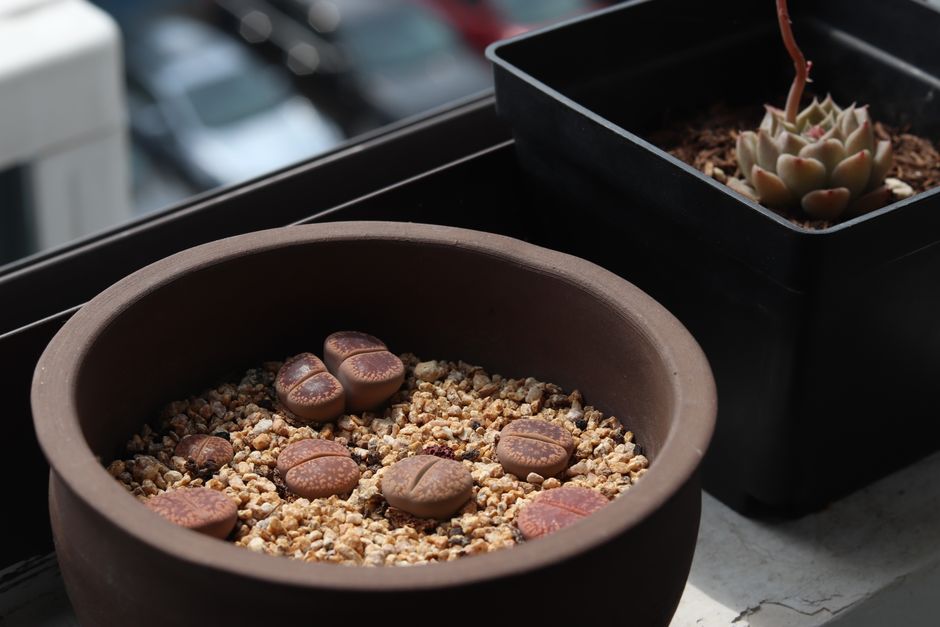
If your lithops feels soft and squishy, the most likely cause is overwatering, which leads to root rot. A healthy lithops should feel firm and hard, like a smooth stone. When the inner leaves turn mushy or translucent, the plant is holding too much water and its roots are likely failing.
Why Is My Lithops Squishy And How Do I Fix It? Root Causes
Squishy lithops are almost always a water problem. These plants evolved in rocky deserts where rain falls rarely and heavily. Their thick leaves store water for months. When you water them too often, the cells take in more water than they can hold. The leaves swell, crack, and eventually turn to mush.
Overwatering does not just make the leaves soft. It creates the perfect environment for rot. Bacteria and fungi thrive in wet soil. Once they reach the roots, the plant cannot take up water or nutrients. The rot spreads upward into the leaves. By the time you notice the squish, the damage is often already deep.
How Can I Tell If My Lithops Is Overwatered or Dehydrated?
This is the most common confusion. Both overwatered and underwatered lithops can feel soft. But the two conditions look and feel different.
An overwatered lithops feels mushy and wet. The leaves may look swollen, shiny, or slightly translucent. They may have cracks or blisters. If you squeeze gently, fluid may leak out. The plant may also have a dark or sunken spot at the base where it meets the soil.
A dehydrated lithops feels wrinkly and shriveled, not mushy. The leaves look deflated, like a raisin. The plant may feel slightly soft but it will be dry to the touch, not wet. Dehydrated lithops recover quickly with one good watering. Overwatered lithops need surgery and time.
What Does Root Rot Look Like in a Lithops?
Root rot is the internal damage that follows overwatering. You cannot see it from the outside until it is advanced. If you suspect rot, gently lift the plant from the pot and examine the roots.
Healthy lithops roots are pale, firm, and slightly springy. Rotting roots are dark brown or black, soft, and may smell bad. They may pull apart easily when touched. In severe cases, the taproot itself — the thick central root — turns brown and mushy. If the taproot is rotten, the plant has very little chance of survival.




How Do I Save a Lithops With Root Rot?
Act quickly. The longer rot sits, the more of the plant it destroys.
First, remove the lithops from its pot. Brush off all the soil so you can see the roots clearly. Use clean scissors or a knife to cut away every dark, soft, or smelly root. Cut into healthy tissue. If you are unsure whether a root is healthy, cut it. Leave only firm, pale tissue behind.
Let the plant dry completely before repotting. Place it on a paper towel in a dry, shaded spot for 2 to 3 days. This allows the cut surfaces to callus over. A callus is a dry protective layer that keeps bacteria from entering the wounds.
Repot into fresh, dry, well-draining soil. Lithops need a gritty mix — something like cactus soil mixed with perlite or coarse sand. Do not water after repotting. Wait at least a week, then water lightly if the plant shows signs of thirst. If the roots were badly damaged, wait even longer.
How Often Should I Water a Lithops?
Lithops have a strict seasonal watering schedule. They do not need water on a calendar. They need water based on their growth cycle.
In general, water only during the active growing season — typically autumn and spring. During winter, lithops go dormant and need almost no water. During summer, they rest and should stay completely dry.
Between waterings, the soil must dry out fully. Lithops are native to areas where the soil stays dry for weeks or months. Their roots are adapted to long dry spells. Watering every week is too much. Most lithops do well with watering every 2 to 4 weeks during active growth, and not at all during dormancy.
The most reliable rule is this: only water when the leaves start to wrinkle slightly at the top. If the leaves are still plump and firm, the plant does not need water.
What Kind of Soil and Pot Do Lithops Need?
Soil and pot choice are as important as watering. Lithops cannot survive in standard potting soil. It holds too much moisture and stays wet too long.
Use a coarse, gritty mix that drains instantly. A good mix contains about 70 to 80 percent inorganic material — perlite, pumice, coarse sand, or small gravel. The rest can be a small amount of cactus soil or compost. The goal is soil that dries within a day or two after watering.
The pot matters too. Choose a pot with a drainage hole. A pot without drainage traps water at the bottom, which guarantees root rot. Terracotta pots are ideal because they allow moisture to evaporate through the walls. Plastic pots hold moisture longer and require more careful watering.
Repot your lithops every 2 to 3 years. Fresh soil provides nutrients and better drainage. When you repot, check the roots for any signs of rot or damage.
What Does a Normal Lithops Growth Cycle Look Like?
Understanding the growth cycle helps you avoid both overwatering and underwatering. Lithops follow a predictable yearly pattern.
In autumn, the plant begins active growth. It produces new leaves from the center. This is the main growing season, and the plant can handle occasional waterings.
In winter, growth slows. The new leaves continue to develop slowly. Water sparingly or not at all, depending on your climate and indoor conditions.
In spring, the old outer leaves begin to shrivel and dry. The new pair of leaves inside takes over. This is a normal process — the old leaves are transferring their stored water and nutrients to the new ones. Do not remove the old leaves. Let them dry completely and fall off on their own.
In summer, lithops enter dormancy. They rest during the hottest months. They need no water during this time. The plant may look slightly wrinkled, but that is normal. Watering a dormant lithops is one of the fastest ways to kill it.
Can a Squishy Lithops Recover on Its Own?
Sometimes, but rarely. If the squish is mild and the roots are still healthy, the plant may recover once the soil dries out. The damaged leaf tissue may scar or shrivel, but the plant can produce new leaves in the next growth cycle.
If the squish is severe — if the leaves are translucent, leaking, or falling apart — the plant will not recover on its own. You must intervene. Remove the damaged tissue, treat the roots, and repot in dry soil. Without intervention, rot spreads and kills the plant.
Do not water a squishy lithops hoping it will recover. That is the opposite of what it needs. The plant needs dry conditions, not more water.
How Do I Prevent Squishy Lithops in the Future?
Prevention is straightforward once you understand the plant. Follow these rules consistently.
Water only during active growth. Reduce watering during winter and stop completely during summer dormancy. Check the soil before watering — if it is damp, wait. Watch the leaves — if they are plump and firm, the plant is not thirsty.
Use gritty, fast-draining soil and a pot with a drainage hole. Keep the plant in bright, direct light. Lithops need strong sunlight to stay compact and firm. A stretched, pale lithops is getting too little light and too much water.
Finally, resist the urge to fuss. Lithops are slow plants that thrive on neglect. They do not need frequent attention. The most common cause of death for these plants is kindness expressed as overwatering.
Frequently Asked Questions
Why is my lithops soft and mushy?
Soft, mushy lithops are almost always overwatered. The leaves have absorbed too much water and the roots are likely rotting.
Can a squishy lithops be saved?
Yes, if the rot has not reached the taproot. Remove the damaged roots, let the plant dry for several days, and repot in dry, gritty soil.
How do I know if my lithops needs water?
Water only when the leaves develop wrinkles at the top and feel slightly deflated. Plump, firm leaves mean the plant does not need water.
How often should lithops be watered?
Every 2 to 4 weeks during the active growing season in autumn and spring, and not at all during summer dormancy. Always let the soil dry completely between waterings.
