
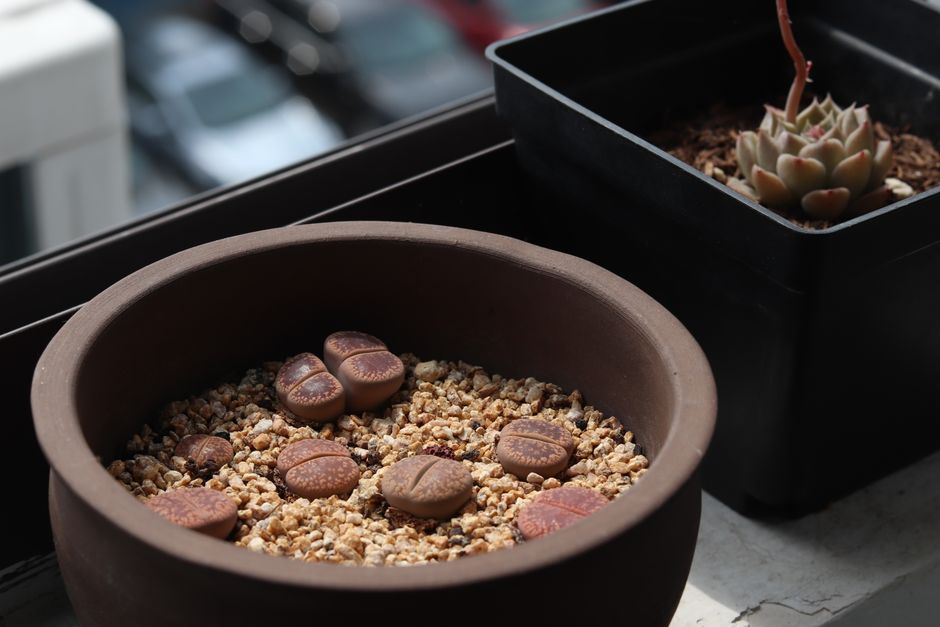
A lithops that is dying usually shows one of a few clear signs: mushy brown tissue, a wrinkled and sunken body that will not plump up, or a soft pale base where the plant meets the soil. Most lithops deaths come from too much water, not too little. These plants are built for dry conditions, and their normal growth cycle includes periods when they look shrunken and half-dead on purpose. Learning to tell a healthy dormant lithops from a rotting one is the single most useful skill for keeping them alive.
Why Is My Lithops Dying? Understanding the Plant First
Lithops are small succulent plants native to southern Africa. They grow mostly buried in the ground with only a flat top surface exposed. That top has translucent windows that let light into the plant for photosynthesis. The rest of the body stays under the soil surface.
This unusual anatomy explains almost every problem people have with them. A lithops is not a typical houseplant. It has a strict annual cycle: it grows new leaves in winter or spring, the old leaves dry up and get absorbed, it flowers in autumn, and it goes dormant in the hottest part of summer. During dormancy the plant shrivels and looks bad. That is normal.
The most common mistake is treating a lithops like a regular succulent. Regular succulents tolerate more water and more frequent watering. Lithops do not. Their root systems are small and shallow, and their bodies store water efficiently. Extra water has nowhere to go and creates conditions for rot.
Light and Soil Basics
Lithops need very bright light, ideally several hours of direct sun. They also need extremely well-draining soil. Standard potting mix holds too much moisture. Most growers use a mix that is mostly mineral — pumice, perlite, coarse sand, or grit — with very little organic material.
If your lithops is in regular potting soil, that alone can cause problems over time. The soil stays wet too long, and the roots sit in moisture they cannot handle.
What Are the Signs a Lithops Is Dying?
The signs fall into two groups: signs of too much water and signs of too little. They can look similar at first, which is why people misread them.
Signs of overwatering and rot:
- Soft, mushy, or squishy body, especially at the base
- Brown or black discoloration spreading from the bottom up
- A translucent, watery look to the tissue
- Skin that splits easily or leaks fluid when touched
- A bad smell from the soil or plant
- The plant tipping over or detaching from its roots
Signs of underwatering or dormancy:
- A wrinkled, sunken top surface
- The plant shrinking down into the soil
- Firm but deflated sides
- No soft spots, no discoloration, no smell
The key difference is texture and color. A thirsty lithops is wrinkled but firm and normal-colored. A rotting lithops is soft, discolored, and often smells. If you press gently and the tissue gives way like a wet sponge, that is rot. If it feels like a slightly deflated rubber ball, that is likely thirst or dormancy.
How Do I Tell Rot From Normal Dormancy?
Dormancy is the most misread stage. During the hottest weeks of summer, many lithops stop growing and shrink. The top wrinkles. The plant pulls down. To a new owner it looks like the plant is failing.
It is not. This is a survival response. The plant is reducing its exposed surface to limit water loss. Watering heavily during this period is one of the fastest ways to kill a lithops, because the plant is not actively taking up water and the soil stays wet.
To tell the difference, check three things: firmness, color, and smell. Dormant lithops stay firm and keep their normal gray, green, brown, or reddish color, depending on the species. Rotting lithops go soft, darken, and often develop an odor.
Another clue is timing. If the plant looks shrunken during its normal dormant season and has been dry, dormancy is likely. If it looks bad right after you watered, or during a cool wet period, rot is more likely.





What Causes Lithops to Rot?
Rot in lithops is usually caused by prolonged moisture around the base of the plant. Several factors feed into this.
Overwatering. Watering on a fixed schedule instead of responding to the plant’s cycle is the most common cause. Lithops do not need water year-round.
Poor drainage. Soil that holds water, pots without drainage holes, or a saucer that keeps the pot sitting in water all create the same problem.
Wrong season. Watering during dormancy, or during the period when old leaves are being absorbed, adds moisture the plant cannot use.
Cool, humid conditions. Low light and cool temperatures slow evaporation. Soil stays wet longer. This is especially risky indoors in winter.
Damage. Cracks, splits, or insect damage give rot organisms an entry point. Once inside, the tissue breaks down quickly.
Fungal and bacterial rots both occur in lithops. It is often not possible to tell which one is at work without lab testing, and the practical response is similar either way. The plant tissue is breaking down, and the damage is usually irreversible once it reaches the core.
Can a Rotting Lithops Be Saved?
Sometimes, but only if the rot is caught early and has not reached the center of the plant. Once the core is soft and discolored, the plant cannot be saved.
If you catch it early, the approach is to remove the plant from the soil, cut away all soft and discolored tissue with a clean blade, and let the remaining healthy section dry and callus over. The cut surface needs to form a dry, healed layer before it goes back into soil. In practice, this works best when a portion of firm, normal-colored tissue remains.
This is not a guaranteed fix. Many attempts fail, especially when the rot started at the base and moved upward. It is worth trying only when there is clearly healthy tissue left.
If the plant is fully mushy or the rot has reached the growing point in the center, discard it. Leaving a rotting plant in the pot can spread problems to nearby plants if the soil stays wet.
How Should I Water a Lithops to Prevent This?
Watering is where most people go wrong, so it deserves care. There is no single schedule that works for every lithops, because the plant’s needs change through the year and depend on your climate, light, and soil.
The general pattern most growers follow is to water lightly during active growth, hold back during dormancy, and stop watering while old leaves are being absorbed. The new leaves draw moisture from the old ones. Watering during that transition can cause the old leaves to swell and split, or trap moisture around the new growth.
Rather than following a calendar, watch the plant. Water when the top is slightly wrinkled and the plant is in an active growth phase. Do not water when the plant is firm, when it is dormant, or when it is absorbing old leaves.
When you do water, water thoroughly and then let the soil dry completely. A shallow sprinkle that keeps the top of the soil damp is worse than a full watering followed by a long dry period, because it keeps moisture around the base without reaching the deeper roots.
What About Pests and Other Problems?
Lithops are not heavily troubled by pests, but a few can cause damage that leads to bigger problems.
Mealybugs and root mealybugs sometimes appear, showing up as small white cottony clusters on the plant or in the soil. They feed on the plant and can weaken it. Scale insects can also attach to the body. Any pest that breaks the plant’s surface creates an opening for rot.
Fungus gnats are more a sign of a problem than a cause. They breed in consistently moist soil, which is exactly the condition lithops do not want. If you see them, the soil is staying too wet.
Sunburn is another issue. A lithops moved suddenly into strong direct sun can develop pale, scarred patches. This is damage, not rot, and it does not spread. Introduce brighter light gradually.
When Should You Give Up on a Lithops?
Give up when the plant is fully soft, dark, and collapsing, or when the rot has reached the center. At that point there is no healthy tissue to save, and continuing to water or treat it will not help.
It is also reasonable to give up when a plant has been declining for a long time with no new growth, even with correct care. Lithops are slow, so patience is normal. But a plant that has been soft and discolored for weeks is not recovering.
The reassuring part is that most lithops deaths are preventable once you understand the cycle. The plant is not fragile. It is just adapted to a rhythm that is very different from most houseplants. Match that rhythm and a lithops can live for many years.
Frequently Asked Questions
Why is my lithops mushy?
A mushy lithops almost always means rot from too much water. Firm but wrinkled tissue points to thirst or dormancy instead.
Can a lithops recover from root rot?
Only if the rot is caught early and healthy tissue remains after the damaged parts are removed. Once the rot reaches the center of the plant, it cannot be saved.
How often should I water a lithops?
There is no fixed schedule, because watering depends on the plant’s growth stage and your conditions. Water only during active growth when the top is slightly wrinkled, and stop during dormancy and leaf absorption.
Why is my lithops shrinking?
Shrinking is normal during dormancy and while old leaves are being absorbed. If the plant is also soft, dark, or smelly, that points to rot rather than normal shrinkage.
