
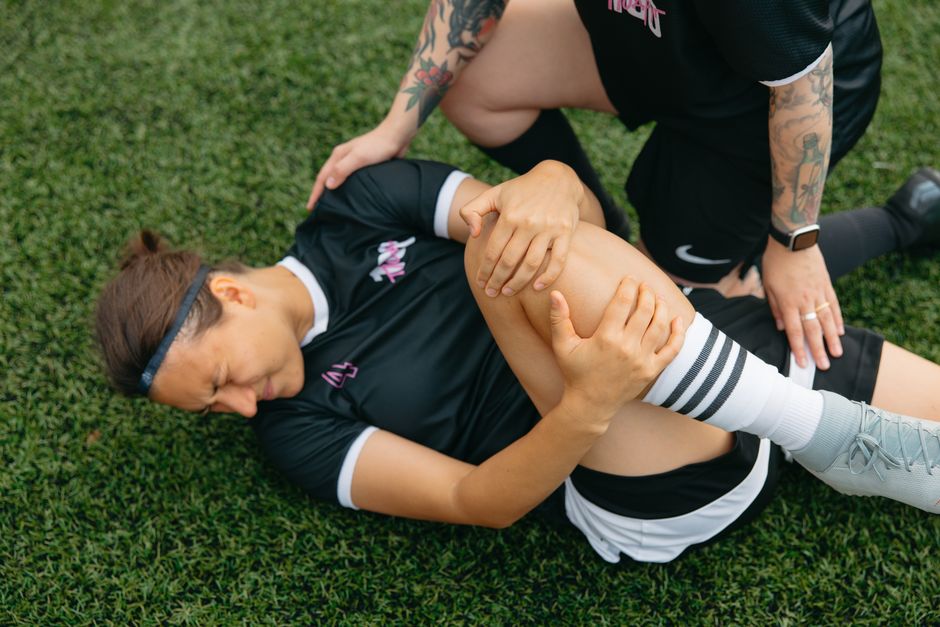
A clicking knee that also hurts usually means something inside the joint is not moving smoothly. The most common causes are kneecap tracking problems, worn cartilage, a meniscus tear, or osteoarthritis. Clicking on its own is often harmless, but clicking combined with pain is a signal worth paying attention to.
Why Is My Knee Clicking And Hurting?
Sound and pain together point to a mechanical problem inside the joint. The knee is a hinge joint where the thigh bone, shin bone, and kneecap meet. Cartilage covers the ends of these bones. Two menisci — pads of tough cartilage — sit between the thigh and shin bones to cushion and stabilize the joint.
When any of these structures roughen, tear, or shift out of place, movement can produce a click, pop, or grinding sound. Pain happens when the same problem irritates the joint lining, the cartilage, or nearby soft tissue.
Clicking without pain is common and usually not a concern. Many people have knees that pop for years with no underlying disease. The picture changes when the sound arrives with pain, swelling, locking, or a feeling that the knee might give way.
One clarification worth making: the noise itself is not the problem. It is a symptom. Treating the sound is not the goal. Understanding what produces it is.
What Causes a Knee to Click and Hurt?
Several distinct conditions can produce this combination. They differ in where the problem sits and how it behaves.
Kneecap tracking problems
The kneecap glides in a groove at the end of the thigh bone. If it tracks slightly off center, it can rub against the groove and create a cracking or clicking sensation. This is sometimes called patellofemoral pain syndrome. Pain tends to be felt around or behind the kneecap, especially when climbing stairs, squatting, or sitting for long periods.
Cartilage wear and osteoarthritis
Osteoarthritis is the breakdown of cartilage that cushions the joint. As cartilage thins, bone surfaces come closer together and move less smoothly. This produces a grinding or creaking sound, often described as crepitus. Pain in osteoarthritis typically worsens with activity and eases with rest, and it tends to develop gradually over months or years.
Meniscus tears
The meniscus can tear from a sudden twist or from gradual wear. A tear may cause a click or catching sensation, along with pain along the joint line, swelling, and sometimes a feeling that the knee is locking. Tears from injury are more common in younger people. Degenerative tears become more common with age.
Ligament injuries
Ligaments hold the knee together. An injury to the anterior cruciate ligament or other ligaments can cause a pop at the moment of injury, followed by pain and instability. This is different from the repetitive clicking that develops over time.
Bursitis and inflammation
Fluid-filled sacs called bursae reduce friction around the joint. When they become inflamed, movement can feel rough and painful. Bursitis usually causes localized swelling and tenderness rather than a sharp click.
When Should You Take a Clicking, Painful Knee Seriously?
Some signs point to a problem that needs medical evaluation rather than watchful waiting.
- The knee locks or catches and cannot fully straighten
- Swelling appears quickly after an injury
- The knee gives way when you put weight on it
- Pain is severe or steadily worsening
- You cannot bear weight on the leg
- There is redness, warmth, or fever alongside the pain
The last item on that list matters. A hot, swollen, painful joint with fever can signal infection, which is a medical emergency. That combination needs urgent care, not a wait-and-see approach.
For pain that is mild and stable, it is reasonable to monitor it. For pain that interferes with daily activity, limits walking, or persists for more than a few weeks, a clinical evaluation is the sensible step.
How Do Doctors Tell These Causes Apart?
Doctors rely mostly on the history and physical exam. When the pain started, what movement brings it on, whether there was an injury, and whether the knee swells all narrow the possibilities.
During the exam, a clinician moves the knee through its range, presses along the joint line, and tests the ligaments. This hands-on assessment often identifies the likely source without imaging.
Imaging is used selectively. X-rays show bone and can reveal osteoarthritis through joint space narrowing and bone changes. They do not show cartilage or menisci directly. MRI can show soft tissues like menisci and ligaments, but it is not needed for every painful knee. Many findings on MRI — including some meniscus tears — appear in people with no pain at all, so imaging results must be read alongside symptoms.
That last point is worth sitting with. A scan can find something without that something being the cause of the pain.
What Helps a Painful, Clicking Knee?
Treatment depends on the cause, so the first step is getting the right diagnosis. For many common causes, the general approach overlaps.
For kneecap tracking problems and mild osteoarthritis, guided exercise is the mainstay. Strengthening the muscles around the hip and thigh can improve how the kneecap moves and reduce pain. This is well supported for patellofemoral pain and for knee osteoarthritis.
Weight management matters for knee osteoarthritis. Excess body weight increases load across the joint, and losing weight can reduce pain and improve function. This is one of the more consistent findings in the osteoarthritis literature.
For meniscus tears, treatment varies. Some tears heal or settle with physical therapy. Others, particularly those causing locking or persistent mechanical symptoms, may need surgical evaluation. Whether surgery helps depends heavily on the type of tear and the person’s circumstances — this is an area where practice has shifted, and not every tear needs an operation.
Pain relievers and anti-inflammatory medications can reduce symptoms. These carry their own risks, especially with long-term use, so they are best discussed with a clinician rather than used indefinitely on your own.
Injections of corticosteroids can reduce inflammation short term. Their benefit tends to be temporary. Other injectable treatments are marketed for knee pain, but the evidence for many of them is limited or mixed, and they should not be assumed effective.
Can You Prevent Knee Clicking and Pain?
Not all causes are preventable. Injuries and age-related cartilage changes are not fully within anyone’s control. Some factors are.
Keeping the muscles around the knee and hip strong supports joint stability. Staying at a healthy body weight reduces load on the knee. Avoiding sudden increases in activity — the kind that spikes training volume or introduces new movements too fast — lowers injury risk. Warming up before intense activity and using proper technique in sports can help too.
There is no proven way to stop normal age-related cartilage change. Claims that a supplement or device prevents knee osteoarthritis are not supported by strong evidence. If a product promises to rebuild cartilage, that claim outruns what the science currently shows.
Does the Sound Itself Matter?
For most people, no. Crepitus — the grinding or cracking sensation in a joint — is common and often painless. Research has found that many people with knee crepitus have no arthritis and no pain.
What matters is the combination. Sound plus pain, swelling, locking, or instability is the pattern that deserves attention. Sound alone, in a knee that feels stable and does not hurt, is usually not a reason for concern.
This is where a lot of worry gets misplaced. People fixate on the noise. Clinicians focus on function — how the knee moves, whether it hurts, and whether it holds up under load.
Frequently Asked Questions
Is a clicking knee always a sign of arthritis?
No. Clicking without pain is common and often harmless, and many people with knee noise have no arthritis. Arthritis is more likely when clicking comes with pain, stiffness, swelling, or reduced movement.
Can a meniscus tear cause clicking and pain?
Yes. A meniscus tear can cause a catching or clicking sensation along with pain, swelling, and sometimes locking. Not all tears need surgery, and treatment depends on the type and severity of the tear.
When should I see a doctor for a painful clicking knee?
See a doctor if the knee locks, gives way, swells quickly after injury, or if pain is severe or keeps getting worse. Pain that limits daily activity or lasts more than a few weeks also warrants an evaluation.
Can exercise stop my knee from clicking?
Exercise can reduce pain and improve how the knee functions, especially in kneecap tracking problems and osteoarthritis. It does not reliably stop the clicking sound itself, and the sound is not the main thing to treat.
