
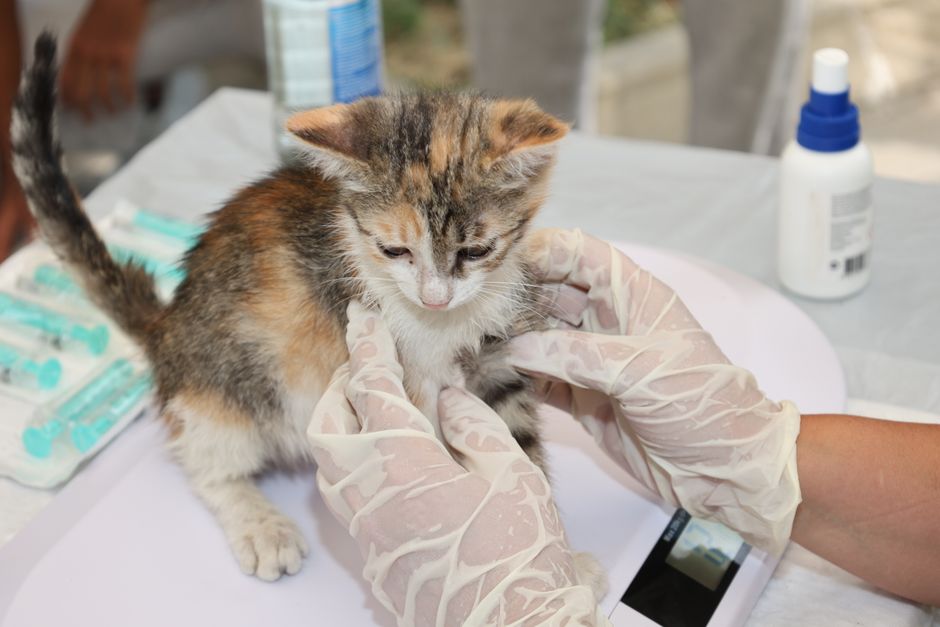
A kitten breathing fast while sleeping is usually normal. Kittens have faster resting heart rates and breathing rates than adult cats, and their small bodies lose heat quickly, so their breathing can look rapid and shallow during rest. In most cases, what looks alarming is simply the physiology of a very young animal.
That said, breathing rate is one of the most useful things you can observe at home. Knowing what is normal, what changes with sleep stage, and what warrants a call to a veterinarian helps you respond appropriately without panic.
Why Is My Kitten Breathing Fast While Sleeping?
Kittens breathe faster than adult cats because their metabolic rate is higher relative to their body size. A small body uses oxygen quickly, and the respiratory system has to keep up. During sleep, breathing should be regular and quiet, but it will still look quicker than an adult cat’s.
Body temperature regulation matters here too. Very young kittens have a limited ability to control their own body temperature, and their breathing can shift as they warm up or cool down. A kitten sleeping in a warm spot may breathe a little faster than one stretched out on a cool floor.
Sleep stage is the other big factor. Cats cycle through light sleep and deeper sleep, and during dreaming their breathing can become irregular, faster, or briefly pause. You may see whisker twitching, paw movement, or ear flicks at the same time. That combination points to normal dream sleep, not a breathing problem.
One clarification worth knowing: a sleeping kitten’s breathing rate is not the same as an adult cat’s. Comparing the two directly leads to unnecessary worry. The reference point should be the kitten’s own baseline when calm and resting.
What Is a Normal Breathing Rate for a Sleeping Kitten?
Veterinary references generally describe a normal resting respiratory rate for cats in the range of roughly 15 to 30 breaths per minute, and kittens tend to sit at the higher end of that range or somewhat above it. Kittens are small and their breathing is often shallow, which makes counting harder.
Counting breaths is straightforward once you know how. Watch the chest or belly rise and fall, and count each rise as one breath. Count for a full 30 seconds and multiply by two, or count for a full minute if the kitten will stay still. Do this when the kitten is genuinely asleep or resting quietly, not after play.
A few practical points make the count more reliable:
- Count when the kitten is fully settled, not just lying down after activity.
- Watch the chest wall rather than the nose, since nose movement can be misleading.
- Repeat the count a few times over several days to learn your kitten’s usual range.
- Note the number and the date so you can describe changes accurately to a vet.
Your kitten’s individual baseline matters more than a single number. A kitten that consistently breathes at the upper end of normal while sleeping is different from one whose rate has clearly increased from its own usual pattern.
When Does Fast Breathing During Sleep Signal a Problem?
Fast breathing on its own, in a sleeping kitten, is rarely the first sign of trouble. Breathing that stays fast while the kitten is awake and at rest is more concerning. So is breathing that looks labored rather than just quick.
Signs that warrant a veterinary call include:
- Visible effort with each breath, such as the belly pulling in sharply or the sides heaving.
- Breathing with the mouth open while at rest.
- Noisy breathing, wheezing, or a sound that was not there before.
- Breathing that stays rapid when the kitten is awake and calm.
- Gums that look pale, blue, or gray rather than pink.
- Lethargy, refusal to eat, or weakness alongside the fast breathing.
Any of these together with rapid breathing should prompt a call to a veterinarian promptly. Kittens can decline quickly when something is wrong, and early assessment is far easier than waiting.
One honest note on causes: rapid or labored breathing in a kitten can have several possible sources, including respiratory infection, fluid in or around the lungs, heart problems, anemia, fever, or pain. These look similar to an owner and cannot be sorted out by observation alone. A veterinarian examining the kitten is the only reliable way to tell them apart.





Is It Normal for a Kitten to Twitch and Breathe Fast While Dreaming?
Yes. Twitching, paw paddling, whisker movement, and faster or irregular breathing during sleep are common and generally reflect normal dream sleep. Cats enter a stage similar to REM sleep, and their bodies show it.
During this stage, breathing can speed up, slow down, or briefly pause. The kitten may make small sounds or suckle in its sleep. None of this is usually a sign of a problem.
The useful distinction is what happens when the kitten wakes. A kitten in normal dream sleep wakes easily and returns to normal breathing and behavior within moments. A kitten in distress is harder to rouse, stays limp, or continues to breathe with visible effort after waking. That difference is more informative than anything you see during sleep itself.
What Else Can Make a Sleeping Kitten Breathe Faster?
Warmth is a common and often overlooked factor. Kittens lose heat easily and also overheat easily. A kitten sleeping against a heat source, in a warm bed, or in a closed room on a hot day may breathe faster as its body manages temperature.
Recent activity matters too. A kitten that has just finished a hard play session may still be breathing quickly as it drifts off. Give it several minutes to settle before judging the rate.
Stress and new surroundings can also raise breathing rate, even in sleep if the kitten is not fully relaxed. A kitten in a new home, after a vet visit, or following a disruption may sleep more lightly and breathe faster.
Fever is another possibility. A kitten with an infection or inflammation may breathe faster, and this is usually accompanied by other signs such as reduced appetite, lethargy, or feeling warm to the touch. A veterinarian can measure temperature accurately; a hand on the fur is not a reliable check.
How Can I Tell the Difference Between Normal and Abnormal Breathing?
The clearest way is to watch the whole kitten, not just the rate. Normal breathing in a sleeping kitten is quiet, regular, and effortless. The chest moves gently, the kitten looks relaxed, and waking brings an immediate return to normal activity.
Abnormal breathing looks different in quality, not just speed. Effort is the key word. Belly movement that is exaggerated, nostrils flaring, the head and neck extended, or a kitten that seems to be working to breathe are all signs to take seriously.
A simple comparison helps:
| Feature | Usually normal | Worth a vet call |
|---|---|---|
| Rate while asleep | Fast but steady, similar each time you check | Clearly faster than the kitten’s usual baseline |
| Effort | Gentle chest movement, no visible strain | Belly pulling in, nostrils flaring, neck extended |
| Noise | Silent or very soft | Wheezing, clicking, or audible effort |
| On waking | Wakes easily, breathes normally within moments | Slow to rouse, stays limp, or continues to struggle |
| Gum color | Pink | Pale, blue, or gray |
If you are unsure, call your veterinarian and describe what you see. Describing the effort, the rate you counted, and how the kitten behaves when awake gives them useful information. It is always reasonable to ask.
Should I Wake a Sleeping Kitten to Check Its Breathing?
No, not routinely. Sleep is important for a growing kitten, and waking it repeatedly to check breathing creates stress for both of you. Observe without disturbing when you can.
If something looks genuinely wrong, waking the kitten is reasonable, because how it responds tells you a lot. A kitten that wakes normally and breathes comfortably is reassuring. One that does not should be assessed by a veterinarian.
For most owners, the practical approach is simple: learn your kitten’s normal sleeping breathing over the first few weeks, check it occasionally when the kitten is calm, and act on changes in effort or behavior rather than on speed alone.
Frequently Asked Questions
Why is my kitten breathing fast while sleeping?
Kittens have higher metabolic rates and smaller bodies than adult cats, so their resting breathing is naturally faster. Sleep stage, warmth, and recent play can raise it further without any problem.
What is a normal breathing rate for a sleeping kitten?
Veterinary references describe a normal resting rate for cats of roughly 15 to 30 breaths per minute, with kittens often at the higher end. Learn your kitten’s own baseline by counting when it is calm and asleep.
When should I worry about my kitten’s fast breathing?
Worry when breathing looks labored rather than just quick, when it stays fast while the kitten is awake and resting, or when it comes with lethargy, poor appetite, or pale gums. Call a veterinarian promptly in those cases.
Is it normal for kittens to twitch and breathe fast during sleep?
Yes, twitching and irregular or faster breathing during dream sleep are common and usually normal. A kitten that wakes easily and breathes normally afterward is generally fine.
