
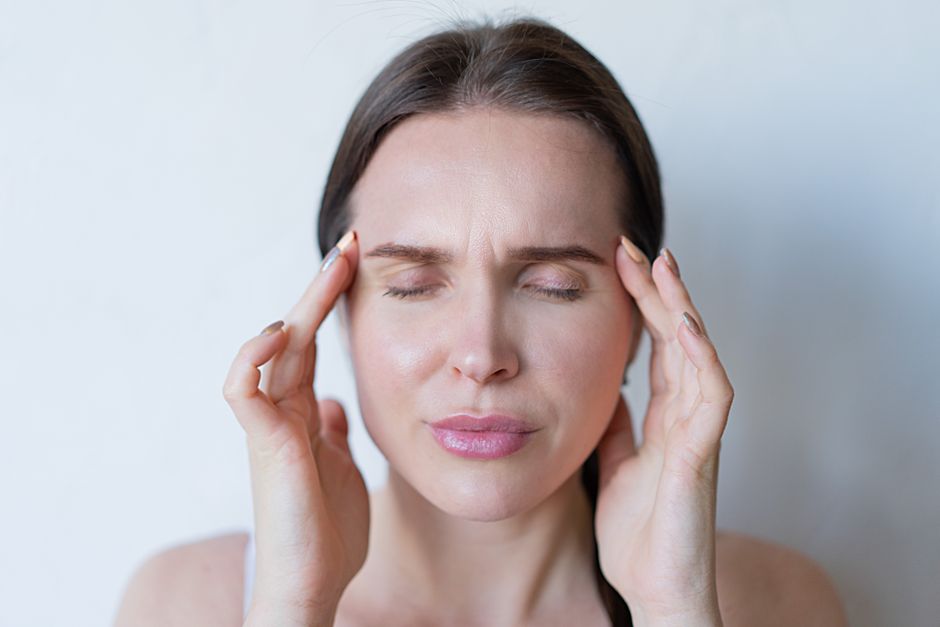
Feeling a rhythmic throb in your head that doesn’t hurt is more common than most people realize, and in the vast majority of cases it is not a sign of anything dangerous. The sensation usually comes from blood flowing through the arteries near your temples, jaw, or the back of your neck, and from the normal pulsing of blood with every heartbeat. When you notice it without pain, it typically means your circulation is working normally and your attention has simply landed on a sensation that is always there in the background.
That said, a new or changing pulsation deserves attention, especially if it comes with other symptoms. This article explains what causes a painless head pulse, when it is normal, and when it is worth a call to a doctor.
Why Is My Head Pulsating But No Pain?
Your heart beats roughly 60 to 100 times per minute at rest. Each beat pushes a wave of blood through your arteries. Some of those arteries sit close to the surface of your skin and bone, particularly at the temples, behind the jaw, and at the back of the head. When blood volume or pressure rises even slightly, you can feel that wave as a pulse.
Pain requires a different trigger. Head pain usually involves irritation or dilation of pain-sensitive structures, nerve activation, or inflammation. A pulse without pain means the blood vessel is doing its normal job but the surrounding tissue is not sending pain signals. That is why the two sensations often travel separately.
Several everyday situations make a painless pulse easier to notice:
- Lying down, which increases blood flow to the head
- After exercise, when heart output is still elevated
- During pregnancy, when blood volume rises substantially
- In moments of anxiety or stress, when heart rate climbs
- In a quiet room, where there are fewer distractions
In these cases the pulse is a normal response to a normal change in your body. It becomes worth investigating when it appears suddenly, changes character, or arrives with other symptoms.
What Causes a Pulsating Sensation in the Head Without Pain?
The most common cause is simply heightened awareness of normal blood flow. This is not a diagnosis. It is a description of what is happening.
Blood pressure plays a role. When blood pressure rises, the force of each heartbeat against the artery wall increases. Some people feel this as a throb in the temples or the back of the neck. Blood pressure that is consistently elevated is a medical issue, but the sensation itself is not proof of high blood pressure. Only a measurement can confirm that.
Anemia is another possible contributor. When red blood cells are low, the heart may pump harder to deliver enough oxygen, and that extra effort can be felt as a stronger pulse. This is more likely if you also feel tired, short of breath, or unusually pale.
Fever and infection can raise heart rate and blood flow, making a pulse more noticeable. So can dehydration, low blood sugar, and thyroid conditions that speed up the heart.
Some people have arteries that sit closer to the skin surface near the temple. This is simply anatomy, not disease. A pulse felt there is often just the superficial temporal artery doing its job.
Finally, stress and anxiety can make you more sensitive to body sensations. This is a real effect, not imagined. The brain under stress pays more attention to internal signals, including heartbeat and blood flow.
Could It Be a Sign of Something More Serious?
A painless head pulse on its own is rarely a sign of a serious condition. However, there are situations where it should be evaluated.
Giant cell arteritis is an inflammation of blood vessels, most often in the temples, that occurs mainly in adults over 50. It typically causes headache, scalp tenderness, and jaw pain when chewing, but the temporal artery can also feel prominent or pulsing. This condition needs prompt medical attention because it can affect vision. A painless pulse alone is not enough to suggest it, but a pulse with scalp tenderness or vision changes should be checked quickly.
Carotid artery issues can sometimes produce a sensation or sound in the neck or head. A narrowed carotid artery may cause a whooshing sound called a bruit, which a doctor can hear with a stethoscope. This is not something you can diagnose yourself.
Pulsatile tinnitus is a specific condition where a person hears a rhythmic sound in one or both ears that matches their heartbeat. Unlike ordinary tinnitus, which is often a ringing, pulsatile tinnitus has a vascular cause in many cases. Some of those causes are benign, but others require imaging to rule out. Anyone with persistent pulsatile tinnitus should see a doctor.
Very rarely, a pulsating sensation without pain can relate to a vascular malformation or an aneurysm. These are uncommon, and they usually produce other symptoms. The presence of a pulse alone is not a reason to assume the worst, but new, persistent, or one-sided symptoms should always be evaluated.





When Should You See a Doctor About a Head Pulse?
See a doctor if the pulsation is new, has changed, or comes with any of the following:
- Vision changes, double vision, or sudden vision loss
- Severe or unusual headache
- Weakness, numbness, or trouble speaking
- Scalp tenderness or pain when chewing
- A rhythmic sound in one ear that will not stop
- Dizziness, fainting, or a racing heart
- Symptoms that are worse on one side of the head or neck
Any of these warrant prompt medical attention, not because a painless pulse is inherently dangerous, but because the combination of symptoms can point to something that needs evaluation.
If the pulse is mild, occasional, and happens only in situations like lying down or after exercise, it is usually not a concern. Bring it up at your next routine visit if it bothers you, but it does not require emergency care.
How Is a Painless Head Pulse Evaluated?
Doctors approach this by looking for causes rather than treating the sensation itself. The first step is usually a physical exam, including checking blood pressure in both arms, listening to the neck arteries with a stethoscope, and feeling the temporal arteries.
Blood tests may be ordered to check for anemia, thyroid function, blood sugar, and markers of inflammation. If pulsatile tinnitus or a vascular cause is suspected, imaging such as an ultrasound, CT scan, or MRI may be used.
In many cases, no cause is found because there is nothing wrong. The pulse is normal, and the awareness of it is what changed. This is a real and common outcome, not a failure of the workup.
What Can Make a Head Pulse More Noticeable?
Several everyday factors can increase how strongly you feel your pulse:
- Caffeine, which raises heart rate and blood pressure
- Alcohol, which dilates blood vessels
- Nicotine, which affects blood vessel tone and heart rate
- Poor sleep, which raises stress hormones
- Dehydration, which reduces blood volume and makes the heart work harder
- High-sodium meals, which can raise blood pressure temporarily
None of these cause a pulse on their own, but they can make an existing pulse easier to feel. Reducing them may reduce how often you notice it, though no clinical trial has confirmed that cutting caffeine eliminates the sensation.
One non-obvious point: the pulse you feel is often not where the problem is. A throb at the temple may reflect blood pressure changes happening elsewhere in the body. The location of the sensation does not reliably point to the source.
Does a Head Pulse Without Pain Mean High Blood Pressure?
No. A pulsating sensation is not a reliable sign of high blood pressure. Many people with hypertension feel nothing at all, which is why it is called a silent condition. Others with normal blood pressure feel their pulse clearly.
The only way to know your blood pressure is to measure it. Normal resting blood pressure is generally considered to be below 120/80 mm Hg, though your doctor’s target may differ based on your health history. If you are concerned, a home monitor or a clinic visit will give you a real answer.
If you do have high blood pressure, treating it is important for reasons that go far beyond a head pulse. It affects the heart, kidneys, brain, and blood vessels over time. The sensation is not the reason to treat it. The measurement is.
Frequently Asked Questions
Why does my head pulsate but not hurt?
You are likely feeling the normal flow of blood through arteries near the surface of your head, which becomes easier to notice when blood pressure or heart rate rises. Pain requires a separate trigger, so a pulse without pain usually means the blood vessel is working normally.
Is a pulsating head without pain dangerous?
On its own, it is rarely dangerous. It becomes a concern if it is new, persistent, one-sided, or comes with vision changes, scalp tenderness, weakness, or a rhythmic sound in one ear.
Can anxiety cause a pulsing sensation in the head?
Yes. Anxiety raises heart rate and makes the brain more aware of internal body signals, including blood flow. This is a real physiological effect, not imagined.
When should I worry about a pulse in my head?
See a doctor if the pulse is new or changing, affects one side, or comes with vision problems, severe headache, trouble speaking, or a heartbeat-like sound in your ear. A mild pulse that only appears when lying down or after exercise is usually not a concern.
