
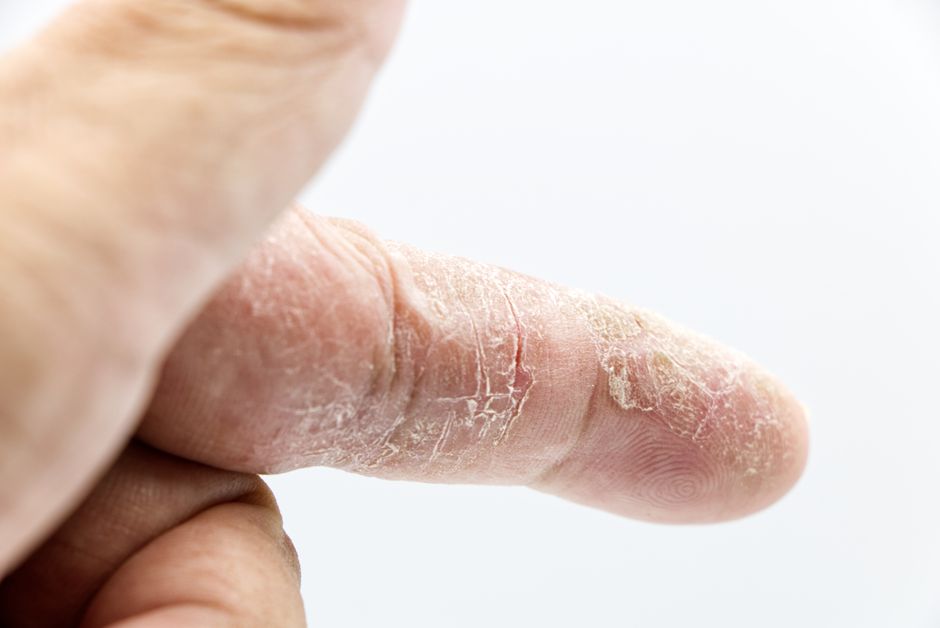
Peeling skin on your hands is usually the outer layer of the epidermis shedding after it has been damaged, dried out, or inflamed. The most common causes are irritant contact dermatitis from soaps and cleaning products, dry skin, and hand eczema. Less often, peeling points to an infection, an allergic reaction, a skin condition like psoriasis, or a reaction to a medication. Treatment depends entirely on the cause, which is why a moisturizer alone often fails.
What Causes Skin to Peel on the Hands?
The skin on your hands is built to take a beating. It has a thicker outer layer than most of your body, and it constantly renews itself. When that renewal process speeds up or the skin barrier breaks down, the top layer separates and flakes off.
The causes fall into a few broad groups.
- Irritant contact dermatitis. The most common cause by far. Repeated exposure to soap, detergent, hand sanitizer, dishwashing liquid, or solvents strips oils from the skin and damages the barrier.
- Dry skin (xerosis). Cold weather, low humidity, and frequent washing pull moisture out of the skin. Dry skin cracks and peels.
- Hand eczema (dyshidrotic eczema or atopic dermatitis). An inflammatory condition that causes itching, small blisters, and peeling.
- Allergic contact dermatitis. A delayed reaction to something touching the skin, such as nickel, rubber gloves, fragrances, or certain preservatives.
- Fungal infections. Tinea manuum is a fungal infection of the hand that can cause peeling, often on the palm.
- Psoriasis. An autoimmune condition that speeds up skin cell turnover, leading to scaling and peeling.
- Keratolysis exfoliativa. A harmless condition where the skin on the palms peels in small circular patches, often in warm weather.
- Medication reactions. Some drugs can cause peeling skin as a side effect.
Less common causes include vitamin deficiencies, thyroid disease, and, rarely, a more serious drug reaction that requires urgent care.
Why Is My Hand Skin Peeling Off Causes Fixes
Fixing peeling hands starts with identifying what is driving it. The fix for dry skin is different from the fix for a fungal infection or eczema.
If the peeling follows a pattern — worse after cleaning, worse in winter, itchy, blistering, or only on one hand — that pattern is a clue. A dermatologist can often tell the difference just by looking, and sometimes with a skin scraping or patch test.
Here is how the main causes are typically managed. This is general information, not a personal treatment plan. A clinician who examines your hands can give you advice that fits your situation.
Irritant contact dermatitis and dry skin
The core fix is to stop the irritation and rebuild the skin barrier. That means switching to a gentle, fragrance-free cleanser, wearing gloves for wet work and cleaning, and moisturizing often. Thick ointments and creams hold moisture better than thin lotions. Applying moisturizer right after washing, while the skin is still slightly damp, helps trap water in.
Some clinicians recommend short courses of an over-the-counter hydrocortisone cream for inflamed, itchy patches. This is common practice, though it works best for mild inflammation and is not a fix for infection or psoriasis.
Hand eczema
Eczema is an inflammatory condition, so moisturizing alone usually is not enough. Treatment often includes prescription topical steroids or other anti-inflammatory creams. For more stubborn cases, a dermatologist may recommend prescription options or, in severe cases, systemic treatment. Avoiding triggers — harsh soaps, certain fabrics, stress — matters as much as medication.
Fungal infection
Tinea manuum needs an antifungal medication, not a moisturizer. A steroid cream can actually make a fungal infection worse by suppressing the immune response. If peeling is one-sided and you also have athlete’s foot, that combination is a classic clue for a dermatologist.
Psoriasis
Psoriasis is managed with prescription treatments, which may include topical medications, light therapy, or systemic drugs depending on severity. Moisturizing helps with comfort but does not treat the underlying condition.
When Should Peeling Hands Worry You?
Most peeling hands are not dangerous. But some signs mean you should see a doctor rather than treat it at home.
- Peeling that spreads quickly or covers large areas
- Blistering, open sores, or signs of infection like pus, warmth, or spreading redness
- Peeling along with fever, chills, or feeling unwell
- Peeling that starts after a new medication
- Peeling that does not improve after a few weeks of gentle care
- Peeling that involves the mouth, eyes, or genitals along with the skin
The last two points matter. A drug reaction that causes skin peeling and involves mucous membranes can be a medical emergency. If peeling is widespread and you feel sick, seek care right away.
For most people, though, the honest answer is that peeling hands are annoying but not serious. The challenge is figuring out which cause applies to you.
What Makes Peeling Hands Worse?
Certain habits and exposures keep the skin barrier broken, so it never has a chance to heal.
Frequent hand washing with hot water and harsh soap is a major one. So is using alcohol-based sanitizer repeatedly without moisturizing. Cleaning products, especially without gloves, strip oils from the skin. Cold, dry air pulls moisture out. So does taking long, hot showers.
Another factor people overlook: scratching and picking. Peeling skin is tempting to pull, but picking removes more of the protective layer and can lead to cracking, bleeding, and infection.
Stress is a real trigger for eczema flares, even though the mechanism is not fully understood. Some evidence links psychological stress to worsening of inflammatory skin conditions.
How Can You Care for Peeling Hands at Home?
Home care works best when it targets the actual cause. If the cause is irritation or dryness, these steps help most people.
- Wash with lukewarm water and a mild, fragrance-free cleanser.
- Pat hands dry instead of rubbing.
- Apply a thick moisturizer or ointment several times a day, especially after washing and before bed.
- Wear cotton-lined gloves for cleaning and for tasks that involve water or chemicals.
- Use a humidifier in dry weather.
- Avoid products with fragrance, alcohol, or harsh preservatives.
If these steps do not help within a few weeks, or if the peeling is itchy, blistering, or one-sided, that is a signal to get it looked at. Home care cannot fix a fungal infection or psoriasis, and using the wrong product can delay the right treatment.
One clarification worth making: peeling skin is not the same as shedding dead skin on purpose. Peels and exfoliants remove the top layer by design. Spontaneous peeling is your skin reacting to something. Treating it like a cosmetic issue usually misses the point.
Does Diet or a Vitamin Deficiency Cause Peeling Hands?
Vitamin deficiencies can cause skin changes, but they are a rare cause of peeling hands in people who eat a varied diet. Severe deficiency of certain B vitamins, vitamin A, or zinc can affect the skin. These deficiencies are more likely with restricted diets, certain medical conditions, or alcohol use disorder.
If you suspect a deficiency, a blood test is the way to find out. Taking supplements without a confirmed deficiency is not likely to help peeling hands and can cause harm in high doses.
Most peeling hands are not about diet. They are about what your hands touch and how your skin responds.
Frequently Asked Questions
Why is the skin on my hands peeling off in layers?
Peeling in layers usually means the outer skin has been damaged or inflamed and is separating from the layer below. Common causes are irritant contact dermatitis, dry skin, and hand eczema.
What vitamin deficiency causes peeling skin on hands?
Deficiencies in certain B vitamins, vitamin A, or zinc can affect the skin, but they are a rare cause of peeling hands. A blood test is the only reliable way to know.
Is peeling skin on hands a sign of something serious?
Most cases are not serious and come from irritation, dryness, or eczema. Peeling with fever, blisters, or involvement of the mouth or eyes needs urgent medical care.
How long does peeling skin on hands take to heal?
With the right care, mild irritation and dryness often improve within a few weeks. If peeling does not improve after a few weeks of gentle care, see a doctor to check for other causes.
