
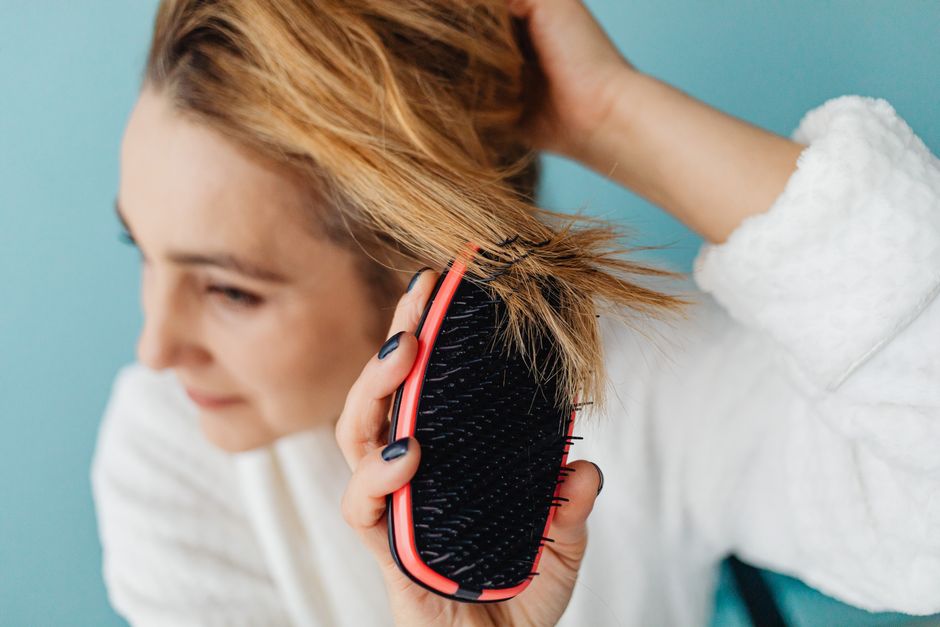
Noticing your hair getting lighter on its own can be surprising. It may start as a few golden strands around your temples or a gradual shift in your overall shade. While many people associate blonde hair with youth, natural lightening in adulthood is common and usually has a clear biological explanation. The most frequent causes are sun exposure, hormonal changes, and the natural aging process of your hair follicles.
What Causes Natural Hair Lightening in Adults?
Your hair color comes from a pigment called melanin. Cells called melanocytes produce this pigment and transfer it to your hair strands as they grow. When those cells slow down or stop producing melanin, your hair grows in lighter or even gray.
Natural lightening happens in a few distinct ways. Sun exposure bleaches the melanin already in your hair. Hormones can shift how much pigment your follicles produce. And age gradually reduces melanin output across your entire scalp.
These three processes explain most cases of hair turning blonde without dye. Each works differently, and understanding which one affects you helps clarify what is happening.
How Sun Exposure Lightens Hair Over Time
Sunlight breaks down melanin molecules in your hair shaft. This is a chemical process called photobleaching. The ultraviolet rays in sunlight oxidize the pigment, causing it to lose color.
This is the same process that lightens hair in children during summer months. The difference for adults is that repeated exposure over years produces a cumulative effect. You may not notice it day to day, but each summer adds a little more lightening.
Hair that is already blonde or light brown shows this effect more visibly. Darker hair also lightens, but the change is less obvious. The outer layer of your hair, called the cuticle, determines how quickly this happens. Damaged or porous hair lets UV rays penetrate deeper and bleach faster.
Sunlight does not permanently change the pigment-producing cells in your scalp. The lightening is limited to the hair strands that exist at the time of exposure. New hair growing from your follicles will have your natural color unless another factor is also at play.
Hormonal Changes That Affect Hair Pigment
Hormones influence many aspects of hair growth and color. Thyroid hormones, sex hormones, and stress hormones all interact with melanocytes. When these levels shift, your hair color can change.
Thyroid conditions are a recognized cause of hair changes. Both overactive and underactive thyroid function can alter hair texture and color. Some people report their hair becoming lighter or duller before other thyroid symptoms appear.
Pregnancy and menopause also affect hair pigment. Estrogen changes during these periods can alter melanin production. Some women notice their hair lightens during pregnancy and returns to normal afterward. Others see permanent shifts after menopause.
Stress hormones like cortisol do not directly bleach hair, but chronic stress can disrupt the normal hair growth cycle. This disruption can affect how much pigment new hair receives. The evidence here is less certain, but the connection between stress and hair changes is widely reported.



Age-Related Melanin Reduction
Your melanocytes naturally slow down as you age. This is the same process that causes gray hair, but it happens gradually. Before hair turns completely gray or white, it often passes through a lighter stage.
This transitional phase can look like your hair is turning blonde. Brown hair may shift to a dusty or golden shade. Black hair may develop reddish or amber undertones. This happens because your follicles produce less melanin, but not zero melanin.
Different follicles slow down at different rates. This is why you may see scattered lighter strands rather than an even change across your whole head. The follicles at your temples and crown often change first, which is why these areas commonly show the earliest lightening.
Genetics largely determine when this process begins. If your parents grayed early, you are more likely to see early pigment changes too. This is not something you can prevent, but understanding it helps normalize the experience.
Medical Conditions That Can Lighten Hair
Certain medical conditions can cause hair lightening. These are less common than sun, hormones, or age, but they are worth knowing about.
Vitamin B12 deficiency has been linked to pigment changes in hair. This deficiency affects melanin production and can cause lightening or premature graying. Blood tests can confirm this, and supplementation often reverses the change.
Alopecia areata is an autoimmune condition that causes hair loss. When hair regrows in affected areas, it sometimes comes back lighter or white. This is temporary in many cases, and color can return once the condition resolves.
Protein deficiency can also affect hair color. Hair is made of protein, and severe deficiency disrupts the entire hair growth process, including pigment production. This is rare in developed countries but can occur with eating disorders or severe digestive conditions.
Is Natural Hair Lightening Permanent?
The permanence depends on the cause. Sun-bleached hair remains light until that hair grows out and is cut. The new hair growing from your scalp will have your natural color if no other factor is present.
Hormonal lightening can be permanent or temporary. If the hormonal shift resolves, your pigment production may return to normal. If the shift is permanent, like menopause, the lighter color may persist.
Age-related lightening is permanent. Once your melanocytes slow down, they do not recover. This is a natural part of aging and not a sign of illness.
If your hair lightening is caused by a deficiency or medical condition, treating that condition may restore your original color. This is why it is worth mentioning to your doctor if the change is sudden or accompanied by other symptoms.
When to See a Doctor About Hair Color Changes
Gradual lightening over years is almost always normal. Sudden or patchy lightening deserves more attention. If you notice your hair changing color rapidly, or if the change is limited to one area, a medical evaluation is reasonable.
See your doctor if the lightening comes with hair loss, scalp irritation, fatigue, or unexplained weight changes. These symptoms together could point to a thyroid condition, nutritional deficiency, or autoimmune issue.
A simple blood test can check your thyroid function, vitamin B12 levels, and iron levels. These are the most common nutritional and hormonal causes of hair pigment changes.
Most of the time, natural hair lightening is not a medical concern. It is a normal biological process. But sudden changes always warrant a conversation with a healthcare provider to rule out treatable causes.
Frequently Asked Questions
Why is my hair turning blonde naturally without sun exposure?
Hormonal changes and age-related melanin reduction are the most likely causes of lightening without sun exposure. Thyroid conditions or vitamin deficiencies can also cause this and are worth checking with a blood test.
Can stress make your hair turn lighter?
Chronic stress can disrupt the hair growth cycle and affect new hair pigment, but it does not directly bleach existing hair. Some research suggests stress affects melanocyte function, though the evidence is not fully conclusive.
Is it normal for hair to lighten with age before it turns gray?
Yes, many people pass through a lighter phase before their hair turns gray or white. This transitional stage happens because melanocytes gradually reduce pigment production rather than stopping all at once.
Will hair color come back after a vitamin deficiency is treated?
In many cases, treating the underlying deficiency restores normal hair color. New hair growth will carry the pigment once your body has the nutrients it needs to produce melanin properly.
