
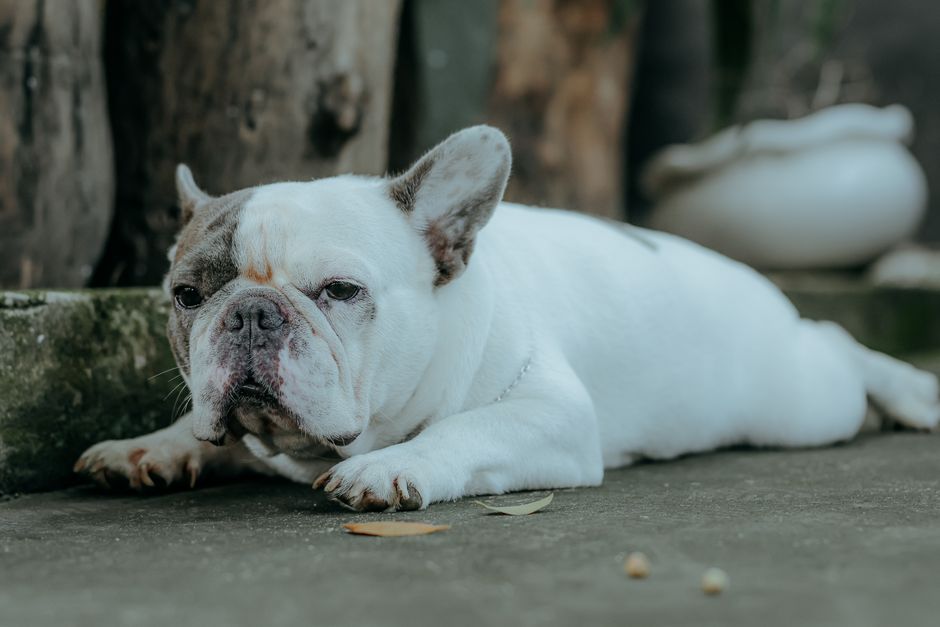
If your French bulldog breathes fast while sleeping, the most likely reason is his flat-faced anatomy. Frenchies are a brachycephalic breed, meaning shortened skull and narrowed airways. That makes every breath more work, even during sleep. A fast sleeping breathing rate is often normal for the breed, but it can also be a sign that breathing is being obstructed. Learning to tell the difference matters.
Why Is My Frenchie Breathing So Fast While Sleeping?
Sleep is when breathing should slow down. In most dogs, it does. In Frenchies, the anatomy keeps the work of breathing higher than it should be, and that can show up as a faster resting rate.
Three things drive this. First, the nasal openings are often narrow. Second, the soft palate is frequently too long and thick for the shortened mouth. Third, the trachea can be under-sized. Together these narrow the airway at several points. The body compensates by moving air faster and with more effort.
There is another layer. During sleep, especially deep sleep, the muscles that hold the upper airway open relax. In a dog with a crowded airway, that relaxation narrows things further. The result can be louder, faster, or more labored breathing. Some Frenchies also have brief pauses in breathing during sleep, a pattern that resembles sleep apnea in people.
It helps to know that Frenchies are not all affected to the same degree. Some have mild narrowing and sleep quietly. Others have significant obstruction. A fast rate alone does not tell you which group your dog is in. The pattern and the effort around each breath do.
What Counts as a Normal Sleeping Breathing Rate for a French Bulldog?
Veterinarians often use a resting breathing rate as a simple home measure. The general benchmark for a healthy adult dog at rest is under about 30 breaths per minute. That figure comes from veterinary practice rather than a single large study, so treat it as a useful guide, not a hard line.
For Frenchies, the number matters less than how the breathing looks. A dog breathing 25 times a minute with a relaxed chest and no noise is doing fine. A dog breathing 20 times a minute with visible effort and a pulled-in belly is not. Count the rate, but watch the effort.
To measure at home:
- Wait until your dog is fully asleep and still.
- Watch the chest or belly rise and fall.
- Count each rise-and-fall as one breath.
- Time it for a full 30 seconds, then double it.
- Note the number, the noise, and how hard the chest works.
Do this a few nights in a row so you have a baseline. A single reading tells you little. A trend tells you a lot. If the rate creeps up over weeks, or if effort increases, that is worth showing your vet.
When Is Fast Sleeping Breathing a Warning Sign?
Fast breathing during sleep becomes a concern when it comes with signs of struggle. The body is telling you the airway is not keeping up. Watch for these patterns:
- Loud snoring that stops and starts, with pauses in breathing.
- Gasping, snorting, or waking suddenly to catch a breath.
- The belly pulling in hard with each breath.
- Restlessness, frequent position changes, or trouble settling.
- Blue or gray tint to the tongue or gums.
- Fast breathing that continues while awake and resting.
Some of these need urgent attention. A blue or gray tongue, collapse, or obvious distress is an emergency. Call your vet or an emergency clinic right away. Do not wait to see if it passes.
Breathing that is fast but quiet, with no effort and no pauses, is usually less worrying. Still, it is worth raising at your next vet visit. Frenchies are prone to a cluster of airway problems that vets call brachycephalic obstructive airway syndrome, or BOAS. The condition is progressive in some dogs. Catching it early gives you more options.


What Causes the Fast Breathing in Flat-Faced Dogs?
The short answer is anatomy. Breeding for a flat face and wide head changed the shape of the skull. The soft tissues inside did not shrink to match. The result is a crowded airway.
The main structural issues include:
- Stenotic nares — narrowed nostrils that restrict airflow at the front door.
- Elongated soft palate — tissue that hangs into the airway and vibrates or blocks it.
- Everted laryngeal saccules — small pouches that get pushed out and block airflow.
- Hypoplastic trachea — a windpipe that is narrower than normal.
These problems often overlap. Each one adds resistance. The dog has to work harder for every breath, and that work is most obvious when the muscles relax in sleep. Heat, humidity, exercise, and stress all make it worse because they increase the demand for air.
One point that is easy to miss: the fast breathing is often a downstream effect, not the problem itself. The problem is the narrowed airway. Treating the breathing rate without addressing the cause does not help the dog.
How Is Brachycephalic Airway Syndrome Diagnosed?
A vet starts with the history and a physical exam. They will listen to the breathing, check the nostrils, and look at the gums. They may ask you to describe sleep patterns, snoring, and any pauses you have noticed.
If BOAS is suspected, your vet may recommend further testing. This can include imaging of the airway, bloodwork, and in some cases a procedure to look directly at the upper airway under sedation. A sleep study is not routine in most general practices, but some specialty centers offer it.
Be honest with your vet about what you see at night. Owners often notice things that a short exam misses. A video of your dog sleeping can be genuinely useful. It shows the effort, the noise, and the pauses in a way words cannot.
What Can Help a Frenchie Breathe Better at Night?
There is no single fix, and results vary by dog. Some measures are well established and low risk. Others are widely done but not strongly supported by trials. Here is the honest picture.
Weight matters. Extra body fat adds pressure on the chest and airway. Keeping a Frenchie at a lean body condition is one of the most consistently recommended steps. Your vet can help you set a target weight.
Manage heat and stress. Frenchies struggle to cool themselves. Keep sleeping areas cool and quiet. Avoid exercise in heat. Use a harness rather than a collar to avoid pressure on the throat.
Raise the sleeping surface slightly. Some owners find a gentle head elevation helps. The evidence for this is limited, but it is low risk. Do not use a setup that lets your dog slide or get trapped.
Surgery is an option for some dogs. Procedures to widen the nostrils or shorten the soft palate are common in veterinary practice. Outcomes vary, and not every dog needs surgery. This is a decision to make with a vet who has examined your dog, ideally one experienced with brachycephalic breeds.
What does not help is assuming the fast breathing is just the breed and leaving it alone. Some Frenchies do fine. Others get worse over time. A vet who knows the breed can help you tell which path your dog is on.
The Bottom Line
Fast sleeping breathing in a Frenchie is common and often tied to the breed’s narrowed airway. It can be harmless. It can also be the first sign of a problem that gets worse. The rate is a useful number, but the effort around each breath matters more.
Count the rate, watch the pattern, and note the pauses. If you see struggle, gasping, or color changes, get help fast. If you see a steady pattern you are unsure about, bring it to your vet. You know your dog’s normal better than anyone.
Frequently Asked Questions
Is it normal for a French bulldog to breathe fast while sleeping?
It is common in the breed because of narrowed airways, and many Frenchies breathe fast during sleep without a problem. It is normal only when the breathing is quiet and effortless, so watch for struggle or pauses.
What is a normal sleeping breathing rate for a Frenchie?
Veterinarians generally consider under about 30 breaths per minute a healthy resting rate for an adult dog. For Frenchies, the effort and noise around each breath matter as much as the number.
Should I worry if my Frenchie snores loudly and stops breathing?
Yes. Snoring that stops and starts, with pauses or gasping, is a warning sign of airway obstruction and should be checked by a vet. A blue or gray tongue is an emergency.
Can fast sleeping breathing be fixed?
It depends on the cause. Weight management, cooling, and avoiding throat pressure can help, and some dogs benefit from surgery to open the airway. No single fix works for every dog, so a vet exam is the right first step.
