
A persistently red face that isn’t rosacea usually comes down to one of a handful of causes: visible blood vessels near the skin’s surface, a damaged skin barrier, chronic sun exposure, a low-grade inflammatory skin condition such as seborrheic dermatitis, or a temporary flushing response to heat, food, alcohol, or stress. Rosacea is only one explanation, and it’s diagnosed by pattern and symptoms, not by redness alone. If your face is red but you don’t have the bumps, visible broken vessels, or burning-and-stinging flares that define rosacea, the cause is likely something else entirely.
What Actually Causes a Red Face If It’s Not Rosacea?
Redness on the face almost always traces back to blood flow. When the small blood vessels in the skin widen, more blood moves close to the surface, and the skin looks pink, red, or flushed. That’s the shared mechanism behind most non-rosacea redness.
What differs is why those vessels widen or stay widened. In some people it’s a structural issue — the vessels sit closer to the surface and are more visible. In others it’s an ongoing inflammatory process. In others it’s a barrier problem that lets irritants in and triggers a reactive flush.
Dermatologists generally sort these causes into a few broad groups:
- Vascular causes — visible or dilated blood vessels, or a tendency to flush easily
- Barrier-related causes — irritated or compromised skin that reacts to almost everything
- Inflammatory skin conditions — seborrheic dermatitis, contact dermatitis, eczema
- Environmental and lifestyle triggers — sun damage, heat, alcohol, spicy food, stress
- Systemic or medical causes — less common, but worth knowing about
Most people who ask this question fall into the first three groups. The redness is real and consistent, but it doesn’t fit the rosacea pattern.
How Is Rosacea Different From Other Types of Facial Redness?
Rosacea has a recognizable pattern that separates it from general redness. It tends to affect the central face — cheeks, nose, chin, and forehead — and it usually comes with more than just color.
People with rosacea typically experience flushing episodes, a burning or stinging sensation, and often visible broken blood vessels called telangiectasias. Many also develop small red bumps or pus-filled pimples that look like acne but aren’t. Some develop thickened skin, most often on the nose.
The key distinction is that rosacea is a chronic inflammatory condition with a specific set of features. Plain facial redness — without flushing episodes, without bumps, without visible vessels, and without the stinging — is usually something else.
That said, the two can overlap. Some people have mild rosacea that hasn’t fully declared itself yet. This is one reason a dermatologist’s evaluation matters if redness is persistent, worsening, or bothersome.
Can a Damaged Skin Barrier Make Your Face Look Red?
Yes, and it’s one of the most common reasons people see a red face without rosacea. The skin barrier is the outermost layer of skin — a thin wall of cells and lipids that keeps water in and irritants out. When that wall is damaged, it does both jobs poorly.
A compromised barrier lets irritants penetrate more easily, and the immune system responds with inflammation. That inflammation shows up as redness, stinging, tightness, and sensitivity. The skin may also look shiny or feel rough.
Common causes of barrier damage include:
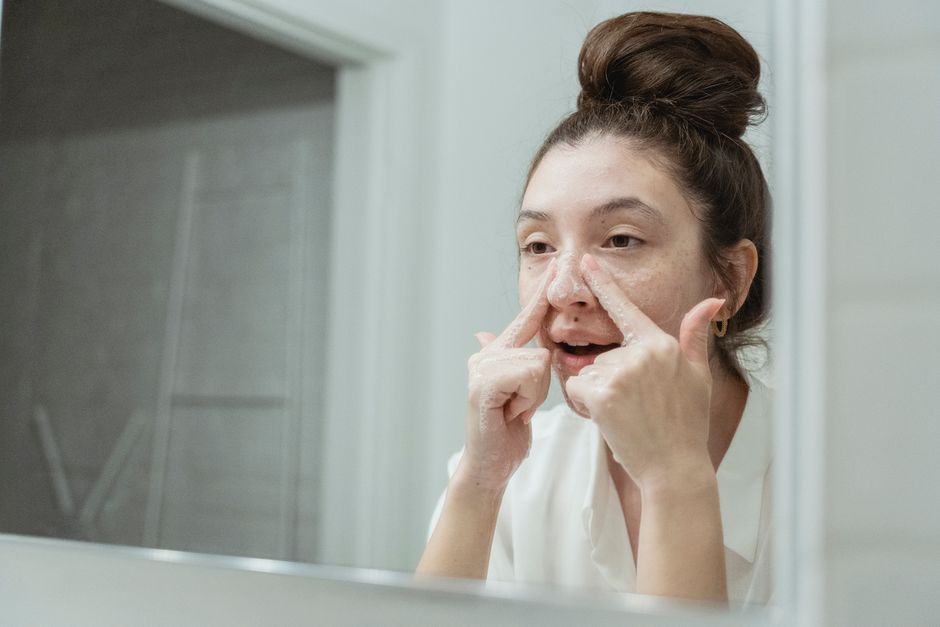
- Over-washing or using harsh cleansers
- Exfoliating too often, especially with acids or scrubs
- Using multiple active ingredients at once (retinoids, acids, vitamin C)
- Cold weather, wind, or dry indoor air
- Hot water and long showers
The tricky part is that many people respond to redness by scrubbing harder or adding more products. That makes it worse. A damaged barrier often improves when you simplify your routine, use gentle cleansers, and give the skin time to repair.





Is Seborrheic Dermatitis Often Mistaken for Rosacea?
Frequently, yes. Seborrheic dermatitis is a common inflammatory condition that causes red, flaky, sometimes itchy patches. It tends to appear where oil glands are concentrated — the sides of the nose, eyebrows, behind the ears, the hairline, and sometimes the chest.
Because it affects the central face, it can look a lot like rosacea at first glance. The difference is the flaking and scaling. Rosacea doesn’t typically produce the greasy, yellowish flakes that seborrheic dermatitis does.
Seborrheic dermatitis is related to a yeast that lives on everyone’s skin, plus an individual immune response to it. It’s not a hygiene problem. It’s also chronic and tends to come and go.
Treatment usually involves antifungal ingredients and anti-inflammatory agents. Some clinicians recommend medicated shampoos and creams, though the exact approach depends on where the condition appears and how severe it is. If flaking is part of your redness, seborrheic dermatitis is worth asking a doctor about.
What Role Does Sun Damage Play in Permanent Facial Redness?
Sun exposure is one of the most underrecognized causes of a persistently red face. Years of UV exposure damage the skin’s blood vessels and connective tissue. The vessels become more visible, and the skin loses some of its ability to regulate blood flow.
People with fair skin, a history of sunburns, or years of outdoor work often develop a baseline pink or red tone that never fully fades. This isn’t a disease — it’s accumulated damage.
Sun damage also weakens the skin barrier and makes the skin more reactive. So it can create a cycle: sun exposure damages the barrier, the barrier lets in more irritants, and the skin stays red.
Daily sun protection is the single most effective way to prevent further damage. That means broad-spectrum sunscreen, shade, and hats. It won’t reverse existing redness, but it can stop it from getting worse.
Which Temporary Triggers Cause Flushing That Looks Like Rosacea?
Many people flush red in response to specific triggers without having rosacea at all. The flush is temporary, but if it happens often enough, it can start to feel constant.
Common flushing triggers include:
- Heat — hot rooms, hot drinks, cooking over a stove
- Alcohol — especially red wine, which contains compounds that dilate blood vessels
- Spicy food — capsaicin activates nerve receptors that widen vessels
- Strong emotions — stress, embarrassment, anger
- Exercise — increased blood flow to the skin
- Certain medications — some blood pressure drugs, niacin, and others
There’s also a condition called idiopathic flushing, where people flush easily for no clear reason. It’s not dangerous, but it can be annoying and socially uncomfortable.
A less common but important cause is mast cell disorders or carcinoid syndrome, which can cause flushing. These are rare. If flushing is severe, sudden, or comes with other symptoms like diarrhea, wheezing, or a rapid heartbeat, that warrants a medical evaluation.
When Should You See a Doctor About a Red Face?
See a doctor if the redness is persistent, worsening, or accompanied by symptoms that don’t fit simple irritation. That includes bumps, pus-filled lesions, thickening skin, or a burning sensation that doesn’t go away.
Also seek care if you have flushing that’s severe or unpredictable, or if redness comes with systemic symptoms like fever, joint pain, or breathing problems. These can point to something beyond the skin.
For most people, though, a red face without rosacea is a manageable skin issue. It often responds to gentle skincare, sun protection, and avoiding known triggers. A dermatologist can help identify the specific cause and rule out conditions that need different treatment.
Frequently Asked Questions
Can you have a red face without having rosacea?
Yes. A red face can come from a damaged skin barrier, sun damage, seborrheic dermatitis, contact dermatitis, or simple flushing triggers like heat and alcohol. Rosacea is only one possible cause and has specific features that distinguish it.
What does a red face without rosacea look like?
It usually appears as a uniform pink or red tone without the bumps, visible broken vessels, or burning flares that characterize rosacea. Flaking may be present if seborrheic dermatitis is involved, or the skin may feel tight and reactive if the barrier is damaged.
Is a red face always a sign of a skin condition?
No. Some people simply have more visible blood vessels or fair skin that flushes easily. However, persistent redness that worsens or comes with other symptoms should be evaluated by a doctor.
Can stress cause a red face that doesn’t go away?
Stress can trigger temporary flushing, but it doesn’t usually cause permanent redness on its own. Ongoing redness is more often linked to barrier damage, sun exposure, or an inflammatory skin condition.
