
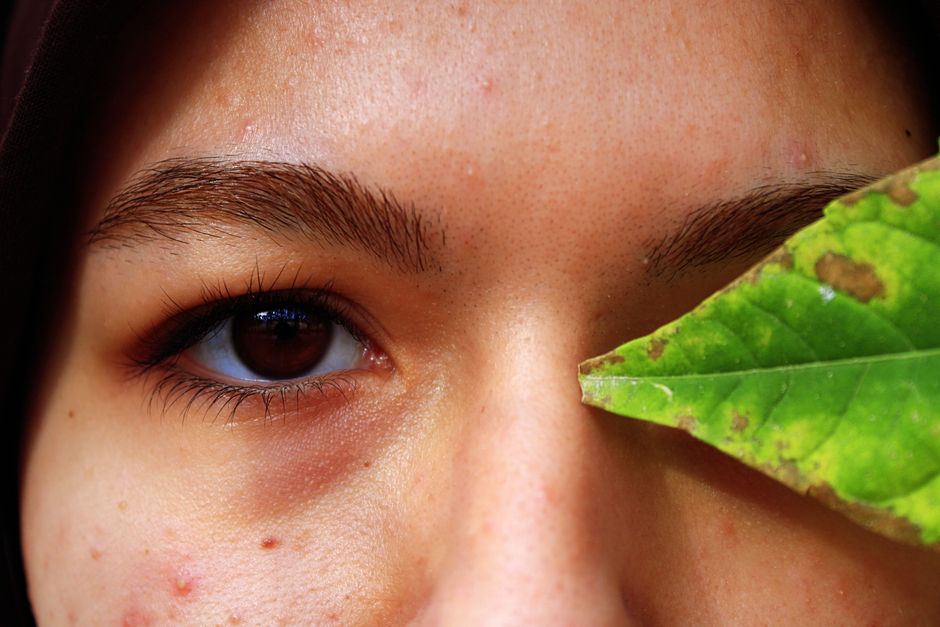
Dry, flaky skin on the eyelid is usually a form of eyelid dermatitis — inflammation of the thin skin around the eye. It can be caused by irritants, allergies, or an underlying skin condition like eczema or seborrheic dermatitis. Because eyelid skin is among the thinnest on the body, it reacts faster and more visibly than skin elsewhere. Treatment depends entirely on the cause, which is why identifying the trigger matters more than reaching for any single cream.
Why Is My Eyelid Dry And Flaky Causes Treatments?
The eyelid has almost no subcutaneous fat and a very thin outer layer. That anatomy explains why the same irritant that barely affects your hands can leave your eyelid red, tight, and peeling.
There are several distinct causes, and they often look similar at first glance. Getting the category right is what determines whether a treatment helps or makes things worse.
- Irritant contact dermatitis — direct damage from a substance. Common triggers include preservatives in cosmetics, nail polish, shampoo, and even airborne particles.
- Allergic contact dermatitis — an immune reaction that develops after repeated exposure. Nail polish ingredients, fragrances, and certain preservatives are frequent culprits.
- Atopic dermatitis — the same eczema that affects other parts of the body can involve the eyelids, especially in people with a personal or family history of allergy or asthma.
- Seborrheic dermatitis — produces greasy, yellowish scales, often along the lash line and eyebrows, and is linked to skin oil and a common yeast that lives on everyone’s skin.
- Blepharitis — inflammation of the eyelid margin, usually near the lashes, often with crusting and redness.
- Dry eye and tear film problems — chronic eye dryness can lead to eyelid skin irritation and rubbing, which worsens the cycle.
- Psoriasis — less common on the eyelid but possible, usually alongside plaques elsewhere.
Two practical points are worth separating here. First, a product you have used for years without trouble can still cause a reaction — allergic contact dermatitis builds up over repeated exposure, so tolerating something in the past does not rule it out. Second, the eyelid is often the first place a nail polish or hair dye allergy shows up, even though the product never touches the eye directly.
What Does Eyelid Dermatitis Actually Look Like?
The appearance gives useful clues about the cause, but overlap is common and self-diagnosis is unreliable.
Irritant and allergic contact dermatitis typically produce redness, scaling, fine cracks, and sometimes swelling. The skin may feel tight or sting, especially when sweating or applying products. Itching is often present but not always.
Seborrheic dermatitis looks different — greasy, yellowish, or whitish flakes rather than dry, powdery scale. It tends to involve the lash line, eyebrows, and sometimes the scalp at the same time. Blepharitis often shows crusting at the base of the lashes and a gritty sensation in the eye.
Atopic eyelid eczema usually brings significant itching and can thicken the skin over time from repeated rubbing. A key warning sign: if only one eyelid is affected and the problem does not improve with basic care, that pattern deserves a professional look. Unilateral, persistent eyelid changes can occasionally signal something that needs evaluation beyond dermatitis.
What Triggers Dry, Flaky Eyelids?
The most common triggers are things people apply near the eye, or things their hands carry to the eye.
Cosmetics and skincare are frequent offenders. Mascara, eyeliner, eyeshadow, makeup removers, moisturizers, and sunscreen can all contain preservatives, fragrances, or resins that trigger reactions. Formaldehyde-releasing preservatives and certain acrylates are well-documented allergens in this context. So is toluene sulfonamide formaldehyde resin, a common ingredient in nail polish that can cause eyelid reactions even when the polish is only on the fingers.
Other everyday triggers include:
- Shampoo, conditioner, and hair spray running into the eye area
- Fragranced laundry detergent on pillowcases
- Rubbing the eyes, which damages the skin barrier
- Airborne irritants like smoke, dust, or strong cleaning fumes
- Dry indoor air, particularly in winter
Underlying conditions also matter. People with rosacea, seborrheic dermatitis, or a history of atopy are more prone to eyelid inflammation. Contact lens wearers may develop irritation from lens solutions or from handling lenses with residue on their fingers.





How Is Dry, Flaky Eyelid Skin Treated?
Treatment starts with removing the trigger. Without that step, most other measures only partially help.
For suspected contact dermatitis, the standard approach is to stop all products that touch the eye area — makeup, moisturizers, cleansers, and anything applied with the fingers — and reintroduce them one at a time after the skin settles. This process can take weeks, and improvement is often gradual. A dermatologist or allergist can perform patch testing to identify specific allergens when the cause is not obvious.
For general eyelid care, gentle measures help:
- Wash with lukewarm water and a mild, fragrance-free cleanser. Avoid scrubbing.
- Apply a plain, fragrance-free moisturizer or an occlusive ointment to support the skin barrier. Some clinicians recommend simple petrolatum-based products because they contain few ingredients.
- Avoid rubbing. Cool compresses can reduce itching and swelling.
- Use fragrance-free laundry detergent and change pillowcases often.
- Keep fingernails short to limit damage from scratching during sleep.
When basic measures are not enough, a clinician may prescribe a topical medication. Low-potency topical corticosteroids are sometimes used short-term on the eyelid, but the eyelid skin absorbs medication readily and prolonged use of steroids near the eye can raise the risk of skin thinning and, rarely, increase eye pressure. This is a situation where short courses under medical guidance are appropriate and self-treating with a leftover steroid cream is not.
Calcineurin inhibitors — tacrolimus and pimecrolimus — are non-steroid options that some clinicians prescribe for eyelid eczema, particularly when longer treatment is needed. They can cause stinging when first applied. For seborrheic dermatitis involving the eyelid margin, treatment often focuses on the scalp and lash line, and medicated cleansers or shampoos may be part of the plan.
If an infection is present, antibiotics or antivirals may be needed. This is not something to guess at. Redness with pus, significant pain, or vision changes should prompt prompt medical attention.
What Should You Avoid Putting On Your Eyelids?
Several common habits make eyelid problems worse.
Avoid hydrocortisone creams bought over the counter for extended use near the eye. They are not designed for that skin, and unsupervised long-term use carries real risks. Avoid products with fragrance, essential oils, or botanical extracts, which frequently trigger reactions. Avoid “natural” labels as a proxy for safety — many plant ingredients are among the more common contact allergens.
Do not use exfoliating acids, retinoids, or strong anti-aging products on the eyelid. The skin is too thin for the concentrations designed for the face. Do not share eye makeup, and replace mascara every few months, since the tube becomes a reservoir for bacteria.
If you wear contact lenses, wash and dry your hands thoroughly before handling them, and check whether your lens solution or the lenses themselves might be part of the problem.
When Should You See A Doctor?
See a clinician if the problem does not improve after a few weeks of removing potential triggers and using gentle care. Also seek care sooner if you notice any of the following:
- Swelling that closes the eye or spreads to the cheek
- Pain, warmth, or pus
- Vision changes, blurring, or light sensitivity
- A single eyelid affected persistently
- A growing lump, ulcer, or sore that does not heal
- Flaking that spreads to other parts of the face or body
These signs do not automatically mean something serious, but they fall outside the typical pattern of simple dermatitis and warrant an examination. A dermatologist or ophthalmologist can distinguish between conditions that look similar but need different treatment.
Can Dry, Flaky Eyelids Be Prevented?
Prevention usually comes down to reducing exposure to irritants and protecting the skin barrier.
Choose fragrance-free, minimal-ingredient products for the eye area. Patch test new cosmetics on the inner forearm for a few days before applying them near the eye. Remove eye makeup gently with a fragrance-free remover, and never scrub. If you use nail polish, consider whether it might be contributing — switching to a polish without toluene sulfonamide formaldehyde resin has resolved eyelid reactions for some people.
Manage underlying conditions. If you have seborrheic dermatitis on the scalp, treating it can reduce eyelid involvement. If you have dry eye, treating the dryness can reduce the irritation that leads to rubbing. Keep indoor air from becoming too dry, especially in winter.
None of this is a guarantee. Eyelid dermatitis often recurs, and the goal is usually management rather than permanent elimination.
Frequently Asked Questions
What causes dry, flaky skin on eyelids?
The most common causes are irritant or allergic contact dermatitis, atopic eczema, seborrheic dermatitis, and blepharitis. Eyelid skin is very thin, so it reacts to irritants and allergens more easily than skin elsewhere on the body.
Is dry, flaky eyelid skin contagious?
No. Eyelid dermatitis is not contagious, and it cannot be passed to another person through touch or shared items. If an infection is present, that is a separate issue and needs medical evaluation.
Can I use hydrocortisone cream on my eyelid?
Only under medical guidance, and generally for short periods. Eyelid skin absorbs medication readily, and prolonged unsupervised steroid use near the eye can thin the skin and, rarely, raise eye pressure.
How long does eyelid dermatitis take to clear up?
With the trigger removed and gentle care, many cases improve over several weeks. Some people need prescription treatment, and recurrence is common, so timelines vary widely.
