
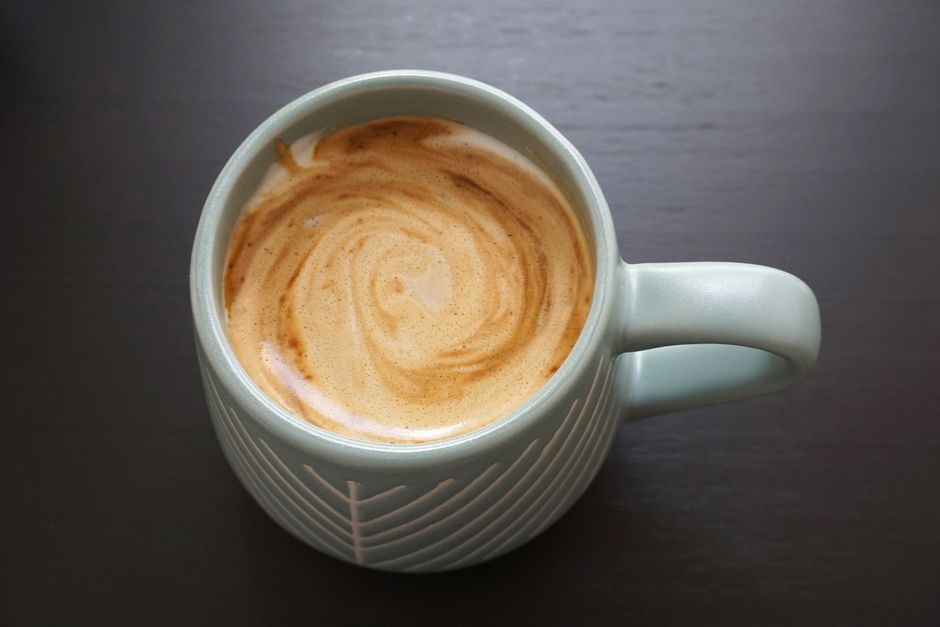
Espresso is foamy because hot water forced through finely ground coffee at high pressure pulls carbon dioxide and oils out of the grounds, and those two things form the layer of bubbles on top called crema. The bubbles are not air whipped in from outside. They are gas that was trapped inside the roasted coffee, released the moment the water hits it.
That thin layer of tan foam is one of the few visible clues about how a shot was made. It tells you something about the coffee, the grind, the freshness, and the pressure. It does not tell you everything, and a lot of what people believe about crema is wrong.
Why Is My Espresso Foamy The Science Behind Crema?
Crema is a foam made of gas bubbles held together by coffee oils and water. The gas is mostly carbon dioxide, with smaller amounts of other compounds produced during roasting.
Green coffee beans contain little gas that matters for crema. Roasting changes that. During roasting, heat triggers chemical reactions that break down sugars and other compounds and generate carbon dioxide inside the bean. Some of it escapes during roasting. A good amount stays trapped in the porous structure of the bean, and it keeps leaking out slowly over the days and weeks after roasting.
When you grind coffee, you expose far more surface area. When hot water under pressure hits those grounds, the trapped carbon dioxide has nowhere to go but out. It comes fast. The water is also dissolving oils and other compounds from the coffee at the same time. Those oils coat the gas bubbles and slow them from popping. The result is a stable layer of foam that sits on top of the shot.
Pressure matters here. Espresso is typically brewed with water pushed through the puck at roughly 9 bar, which is about nine times normal atmospheric pressure. That pressure forces water into the fine particles quickly and drives the gas out in a short burst. Other brewing methods do not produce crema because they do not combine fine grind, high pressure, and fast extraction the same way.
One detail worth knowing: the foam is not purely a coffee thing. It is a physical structure — gas dispersed in liquid, stabilized by surface-active compounds from the coffee. Change the gas, the oils, or the pressure, and the foam changes.
What Is Crema Actually Made Of?
Crema is roughly a mix of carbon dioxide bubbles, water, coffee oils, and dissolved solids. The bubbles are tiny and packed closely together, which is why the layer looks like a dense foam rather than loose suds.
The color comes from the oils and dissolved compounds, not from the gas. Freshly brewed crema is usually a warm tan or reddish-brown. As it sits, it fades toward pale yellow and then white, because the bubbles are draining and collapsing and the darker compounds are settling out.
The oils do real work here. Coffee oils are surface-active, meaning they gather at the boundary between the gas bubble and the surrounding liquid. That coating gives the bubbles enough structure to last more than a few seconds. Without it, the gas would escape almost immediately and you would get no foam at all.
There is a common belief that crema is pure flavor and the best part of the shot. That is not accurate. Crema carries aroma compounds and some oils, but it is also full of carbon dioxide, which tastes sharp and slightly bitter. Many people who taste crema alone find it harsh. Its main value is as a signal, not as the tastiest part of the drink.
Why Does Crema Sometimes Appear and Sometimes Not?
If your espresso has little or no crema, the most common reason is stale coffee. Beans lose carbon dioxide over time, and once most of the gas is gone, there is nothing left to form the foam.
Freshness is the single biggest factor for most home brewers. Coffee that was roasted recently holds more gas. Coffee that has been sitting in a cupboard for months holds very little. This is why a bag of old beans can produce a flat, thin shot even when everything else about the brew is correct.
Other factors matter too:
- Grind size. Too coarse and water flows through too fast to extract much gas. Too fine and the shot may choke or channel.
- Pressure. Espresso machines rely on steady pressure. If the pump or the seal is failing, extraction suffers.
- Water temperature. Water that is too cool extracts less efficiently. Water that is too hot can scorch the coffee.
- Bean type. Robusta beans generally produce more crema than arabica, partly because of differences in compounds and gas content. This is one reason some espresso blends include robusta.
- Roast level. Darker roasts tend to release gas differently than lighter roasts, and the crema can look and behave differently as a result.
None of these factors works alone. A fresh dark roast ground too coarse will still give a weak shot. Old beans at perfect grind and pressure will still fall flat.
Does More Crema Mean Better Espresso?
No. A thick layer of crema is not proof of a good shot, and a thin layer is not proof of a bad one. This is one of the most persistent myths in coffee culture.
Crema mainly tells you that gas was released and that oils were present to hold the bubbles. That can happen with coffee that tastes harsh or unbalanced. It can also be missing from a shot that tastes excellent.
Some professional tasters and baristas actually skim crema off before evaluating a shot, because the carbon dioxide adds a sharp, slightly sour note that gets in the way of tasting the coffee itself. That practice is not universal, and opinions differ, but it shows that crema is not automatically the best part of the drink.
What crema is genuinely useful for is as a rough freshness check and a visual cue during dialing in a grind. If a shot suddenly loses all its foam, something changed — usually the beans got older or the grind drifted. Treat it as one signal among several, not as a score.
Why Does Crema Look Different on Different Coffees?
Crema color and thickness vary a lot between beans, and most of that variation is normal. Darker roasts often produce a darker, sometimes more mottled crema. Lighter roasts can produce a paler, thinner layer. Blends with robusta tend to foam more than pure arabica.
You will also see crema change within a single shot. It starts dense and dark, then thins and lightens as the bubbles drain. A shot that looked rich in the cup can look pale a minute later. That is just the foam breaking down, not a sign that something went wrong.
Some people notice a speckled or tiger-striped pattern in the crema. That striping comes from fine particles and oils being carried up with the foam. It is a normal part of espresso and not a defect.
What About Crema on Other Coffee Drinks?
Crema is specific to espresso and espresso-style brewing. Regular drip coffee does not have it, because drip brewing does not use the pressure needed to force gas out in that way. The foam you sometimes see on drip coffee is usually just bubbles from the pour, not crema.
Moka pot coffee can develop a light foam, but it is not the same as true espresso crema. The pressure in a moka pot is much lower than in an espresso machine. Some of the gas still comes out, and you may see a bit of foam, but it is thinner and less stable.
Aeropress and similar devices can produce a small amount of foam under certain conditions, but again, it is not the same thing. The defining features of crema are high pressure and a very fine grind working together.
Cold brew does not have crema. The cold water and long steep time extract coffee differently, and carbon dioxide does not come out the same way.
Frequently Asked Questions
Why does my espresso have no crema?
The most common cause is stale coffee that has lost most of its carbon dioxide. Check how recently the beans were roasted, then look at grind size, water temperature, and machine pressure.
Is crema a sign of good espresso?
No, crema is not a reliable sign of quality. It shows that gas and oils were present, but a shot can have thick crema and still taste harsh or unbalanced.
Why is crema sometimes white instead of brown?
Crema fades toward pale yellow and white as the bubbles drain and the darker oils and dissolved solids settle out. A shot that starts brown and turns white after a minute is behaving normally.
Does dark roast coffee make more crema?
Dark roasts often produce a darker, sometimes thicker-looking crema, but the relationship is not simple. Freshness, grind, and bean type usually matter more than roast level alone.
