
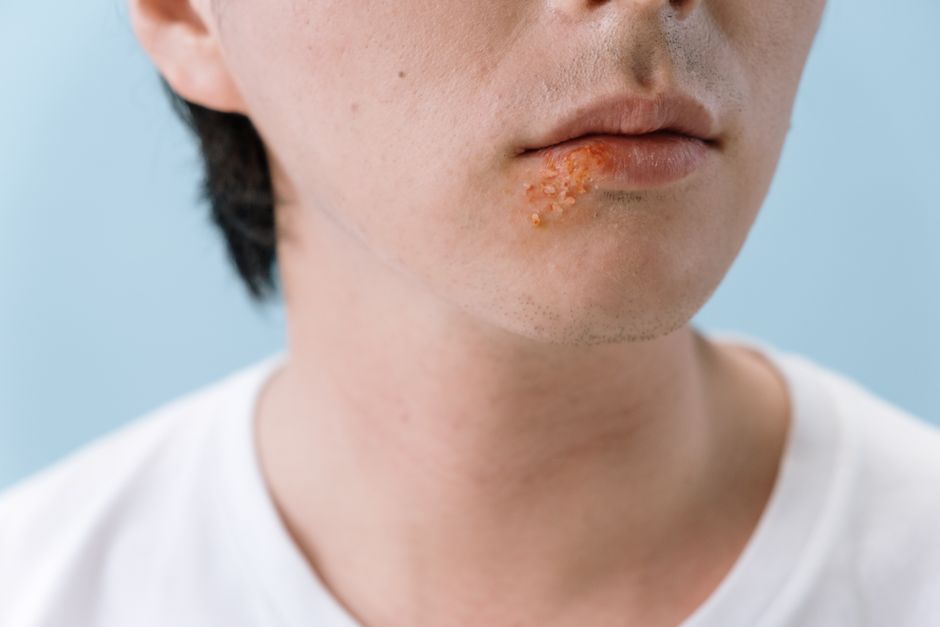
A cold sore that lingers for two weeks or more is not unusual. Most cold sores heal in about 7 to 10 days, but several things can stretch that timeline. The most common reasons are a weakened immune system, repeated trauma to the sore, a secondary bacterial infection, or the normal but slow process of the body clearing the virus from the skin.
Cold sores are caused by herpes simplex virus type 1 (HSV-1) in most cases. Once you have the virus, it stays in your body for life. It hides in nerve cells and can reactivate when your immune system is under pressure. When it does, it travels back to the skin and causes a blister or cluster of blisters. The healing process is not instant because your immune system has to fight the virus at the skin surface while the skin repairs itself.
Understanding why a cold sore takes time to heal can help you know when to wait, when to treat, and when to see a doctor.
What Happens During a Cold Sore Outbreak?
A cold sore goes through distinct stages, and each stage takes time. The full cycle usually runs its course in about one to two weeks.
Stage 1: Tingling or itching. This is called the prodrome. You may feel a tingling, burning, or itching sensation around your lips before you see anything. This stage lasts a few hours to a day. The virus is active in the skin, but no visible sore has formed yet.
Stage 2: Blistering. Small, fluid-filled blisters appear. They may cluster together. This stage usually lasts one to two days.
Stage 3: Weeping and crusting. The blisters break open, release fluid, and form a crust. This is often the most uncomfortable and contagious stage. It can last several days.
Stage 4: Healing. The crust dries, cracks, and eventually falls off. New skin forms underneath. This stage can take several more days.
The virus is not cleared instantly. Your immune system has to recognize the reactivated virus, mount a response, and stop it from spreading. That takes time even in healthy people.
Why Is My Cold Sore Taking So Long To Heal?
Several factors can slow down healing. If your cold sore has lasted longer than usual, one or more of these may apply.
Your immune system is working below its normal level
Your immune system controls how quickly you fight off the virus. Anything that weakens it can lengthen an outbreak. Common causes include:
- Lack of sleep or poor sleep quality
- High stress or emotional strain
- Recent illness such as a cold or flu
- Poor nutrition
- Certain medications that suppress the immune system
- Chronic conditions that affect immune function
When your immune response is slower, the virus has more time to replicate and damage skin cells. That means more time for the sore to heal.
You keep touching or picking at the sore
Every time you touch, rub, or pick at a cold sore, you disrupt the healing skin. This can reopen the blister, spread the virus to nearby skin, and introduce bacteria. A sore that is repeatedly irritated will take longer to crust over and heal.
Hands carry bacteria. Touching a cold sore can transfer bacteria into the open blister, leading to a secondary infection. That brings us to the next point.
You have a secondary bacterial infection
A cold sore is a viral infection. But the open blister is a doorway for bacteria. If bacteria get in, you can develop a secondary infection. Signs include:
- Increased redness, swelling, or warmth around the sore
- Thick yellow or green pus
- Pain that gets worse instead of better
- Fever or swollen lymph nodes
A bacterial infection needs different treatment than a cold sore alone. If you notice these signs, see a doctor. Antibiotics may be needed.
The sore is in a spot that gets moved a lot
Cold sores on or near the lips are constantly stretched when you talk, eat, or smile. That movement can crack the crust and slow healing. Sores inside the nose or on the chin may heal differently depending on how much the area moves.
You started treatment late
Antiviral medications work best when started at the first sign of tingling, before blisters form. If you wait until the sore is fully developed, the medication can still help but may not shorten the outbreak as much. This is not a failure on your part. It is simply how the medication works.
How Long Should a Cold Sore Normally Last?
A typical cold sore heals in about 7 to 10 days in healthy people. Some people heal faster, in 5 to 6 days. Others take up to 14 days. The range is wide because healing depends on your immune system, the size of the outbreak, and whether you have any complications.
If your cold sore lasts longer than 14 days, or if it gets worse instead of better, you should see a doctor. That is not a normal timeline for a simple cold sore.





What Can Make a Cold Sore Heal Faster?
There is no way to make a cold sore disappear overnight. But some steps can help it heal on the shorter end of the normal range.
Start antiviral medication early. Prescription antivirals like acyclovir, valacyclovir, and famciclovir are the most effective treatments for cold sores. They work by slowing the virus’s ability to replicate. Research consistently shows that when started within the first 24 hours of symptoms, they can shorten healing time and reduce pain. Over-the-counter antiviral creams are available, but they are generally less effective than oral antivirals. Some clinicians recommend them for mild outbreaks, but the evidence for their benefit is modest.
Keep the area clean and dry. Wash gently with mild soap and water. Pat dry with a clean towel. Do not scrub.
Use a lip balm or petroleum jelly. This can prevent cracking and reduce pain. Use a clean cotton swab to apply it, not your finger, to avoid spreading the virus.
Avoid triggers. If you know that sun exposure, stress, or lack of sleep triggers your cold sores, try to manage those factors. This will not heal the current sore, but it may reduce how often you get them.
Do not share items. Cold sores are contagious from the first tingle until the sore is completely healed. Avoid kissing, sharing utensils, towels, or lip balm.
When Should You See a Doctor for a Cold Sore?
Most cold sores do not need medical care. But you should see a doctor if:
- The sore lasts longer than 14 days
- You have a weakened immune system due to a condition or medication
- You have frequent outbreaks (more than six per year)
- The sore is large, spreading, or extremely painful
- You have signs of a bacterial infection (pus, fever, swollen lymph nodes)
- You have sores inside your mouth or on your gums
- You have eye symptoms such as redness, pain, or blurred vision
Eye involvement is rare but serious. HSV can infect the eye and cause keratitis, which can damage vision if not treated. If you have a cold sore and your eye becomes red or painful, see a doctor right away.
For people with frequent outbreaks, a doctor may prescribe daily antiviral therapy. This is called suppressive therapy. It does not cure the virus, but it can reduce how often outbreaks happen.
Can Stress Really Make a Cold Sore Last Longer?
Yes. Stress affects the immune system. Research shows that psychological stress can reduce the ability of immune cells to respond to viral infections. This does not mean stress alone causes cold sores, but it can make them more likely to reactivate and slower to heal.
The relationship is not fully understood. Some studies find a clear link between stress and outbreak frequency. Others show a weaker connection. The evidence is mixed. What is clear is that stress does not help. Managing stress through sleep, exercise, and relaxation may support your immune system, but it is not a guaranteed way to prevent or shorten cold sores.
Does What You Eat Affect Cold Sore Healing?
There is no specific diet that cures a cold sore. But good nutrition supports immune function. A diet rich in fruits, vegetables, whole grains, and lean protein gives your body the nutrients it needs to fight infections.
Some people believe that foods high in arginine (like chocolate, nuts, and seeds) can trigger cold sores, while foods high in lysine (like dairy, fish, and potatoes) can help. The evidence for this is limited. Some small studies suggest lysine supplements may reduce outbreak frequency, but results are not consistent. No large human trials have confirmed that avoiding arginine or taking lysine reliably shortens a cold sore. If you want to try lysine, talk to your doctor first. It is not a proven treatment.
What About Over-the-Counter Cold Sore Treatments?
Many products claim to speed healing. The evidence varies.
Docosanol cream is an over-the-counter antiviral. Some studies show it can shorten healing by about half a day to a day when started early. The effect is modest.
Lysine creams and supplements have weak evidence. Some people report benefit, but clinical trials have not consistently shown they work.
Zinc oxide creams may help dry out the sore and protect the skin. They do not kill the virus.
Ice or cold compresses can reduce pain and swelling. They do not shorten the outbreak.
No over-the-counter product can cure a cold sore. They may ease symptoms, but the virus runs its course.
Frequently Asked Questions
How long is a cold sore contagious?
A cold sore is contagious from the first tingling sensation until the sore has completely crusted over and healed. This usually lasts about 7 to 10 days.
Can a cold sore last longer than two weeks?
Yes, but it is not typical. A cold sore that lasts longer than 14 days may mean your immune system is weakened, you have a secondary infection, or you need medical treatment.
What happens if you pop a cold sore?
Popping a cold sore can spread the virus to nearby skin, introduce bacteria, and slow healing. It also increases the risk of scarring.
Should I see a doctor for a cold sore that won’t heal?
Yes. If a cold sore lasts more than 14 days, gets worse, or shows signs of infection like pus or fever, see a doctor. Prescription treatment may be needed.
