
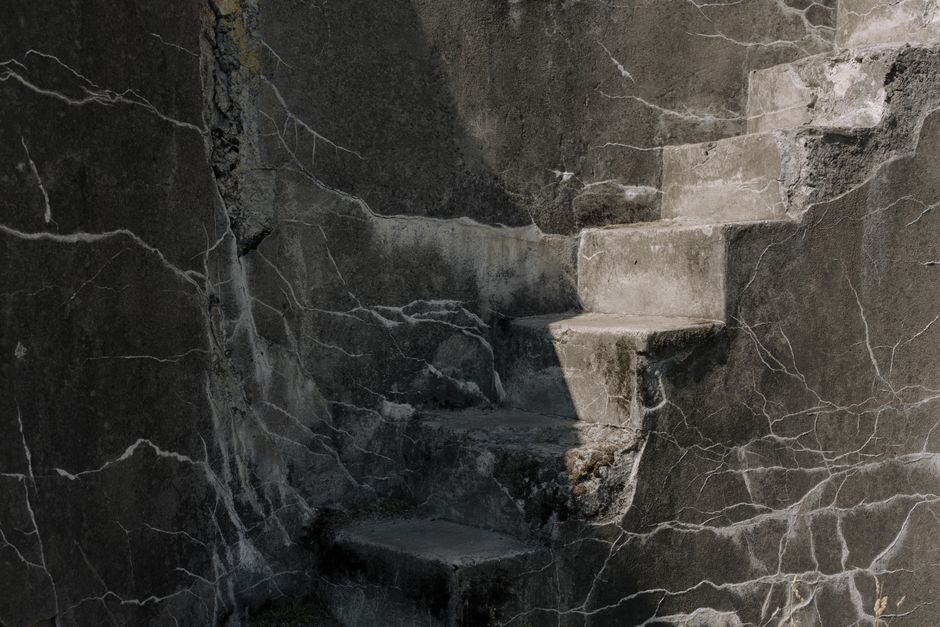
Cement doesn’t crumble on its own. When you see powdery white deposits, flaking surfaces, or chunks breaking off a wall, slab, or foundation, something is actively breaking down the material from the inside or the outside. The most common reasons are water intrusion, chemical attack from salts and acids in soil, freeze-thaw cycles, and poor mixing at the time of installation. Repairs range from simple surface patching for minor cosmetic damage to full removal and recasting when structural integrity is compromised.
Why Is My Cement Crumbling Causes And Repairs?
Cement crumbling — sometimes called spalling, scaling, or dusting depending on the pattern — happens when the hardened cement paste loses its binding ability. That paste is what holds sand and gravel together. Once it breaks down, the aggregate loosens and the surface fails.
The breakdown almost always traces back to one of a few mechanisms. Water is involved in most of them, either as a carrier for dissolved chemicals or as a physical force when it freezes and expands. Understanding which mechanism is at work tells you whether a patch will hold or whether the problem will return.
Water and Freeze-Thaw Damage
Concrete is porous. It contains microscopic channels and air pockets even when it looks solid. In cold climates, water seeps into these pores, freezes, and expands by roughly 9 percent. That expansion exerts pressure on the surrounding cement paste. Repeated cycles of freezing and thawing gradually crack the paste apart.
This is why crumbling often appears first on horizontal surfaces like driveways, steps, and retaining wall caps. Those surfaces stay wet longer and face the sky. Vertical walls that shed water last longer. The damage is mechanical, not chemical — the ice itself does the breaking.
Sulfate and Salt Attack
Soils and groundwater in many parts of the United States contain dissolved sulfates. When sulfate ions penetrate concrete, they react with compounds in the cement paste to form ettringite and gypsum. Both take up more volume than the original material. That internal expansion cracks the paste from within.
Deicing salts create a similar problem. They don’t just lower the freezing point of water — they also increase the number of freeze-thaw cycles a surface experiences and can react chemically with the cement paste. Research published in cement and concrete science journals has consistently linked high salt exposure to accelerated surface deterioration. The effect is worse on concrete that was not air-entrained during mixing.
Poor Mixing and Curing
A weak mix or inadequate curing produces concrete that was never strong enough to begin with. Too much water in the mix is a common mistake. Extra water makes the concrete easier to pour but increases porosity and lowers final strength. The water-to-cement ratio matters more than most people realize.
Curing is the other half. Concrete doesn’t dry to gain strength — it hydrates. The cement particles react with water over days and weeks. If the surface dries out too fast, hydration stops early and the top layer stays weak and dusty. Hot, windy, or sunny conditions make this worse.
Alkali-Silica Reaction
Some aggregates contain reactive silica that reacts with the alkaline pore solution in concrete. The reaction produces a gel that absorbs water and swells. That swelling cracks the concrete from the inside out. You may see map-like cracking patterns on the surface with a white or clear gel oozing from the cracks.
This is less common than freeze-thaw or sulfate damage, but it’s serious when it occurs. Once alkali-silica reaction starts, it cannot be stopped by surface repair. The gel keeps expanding as long as moisture is available.
How Do You Tell What’s Causing the Crumbling?
The pattern and location of the damage point toward the cause. A few observations can narrow it down significantly.
- White powdery surface with no cracking: likely dusting from a weak mix or poor curing
- Flaking or peeling in thin layers: often scaling from freeze-thaw or deicing salts
- Chunks breaking off with exposed aggregate: spalling, often from corrosion of embedded steel or deep freeze-thaw damage
- Map cracking with gel deposits: possible alkali-silica reaction
- White crystalline deposits on the surface: efflorescence — salts carried to the surface by water — which signals water movement through the material
Efflorescence itself is cosmetic. It doesn’t damage concrete. But it’s a reliable sign that water is moving through the material, and that water is what drives most of the damage mechanisms above.
Can Crumbling Cement Be Repaired?
Yes, but the right repair depends on the cause and the depth of damage. Surface repairs work when the problem is cosmetic or limited to the top layer. Structural repairs require removing and replacing the damaged section.
For shallow surface damage — dusting, light scaling, or small spalls less than about a quarter inch deep — a polymer-modified patching compound or a bonding agent followed by a cement-based patching mortar can work. The key is removing all loose material first. Patching over crumbling concrete without removing the weak layer is a waste of time and money. The patch will fail.
For deeper spalls or areas where the aggregate is exposed and loose, you need to cut back to sound concrete, clean the surface, and apply a proper repair mortar. Some clinicians recommend using a bonding agent, though evidence on whether bonding agents improve long-term adhesion in all conditions is mixed. Surface preparation matters more than the specific product in most cases.
If the damage is widespread or if steel reinforcement is corroding, the repair is more involved. Corroding steel expands and pushes the concrete off from behind. You have to remove the concrete around the steel, clean the rust, and treat or replace the bar before patching. If you don’t address the steel, the repair will fail again.





What About Sealing — Does It Prevent Crumbling?
A penetrating sealer can reduce water absorption and slow freeze-thaw damage. It does not make concrete waterproof, and it does not reverse existing damage. It’s a preventive measure, not a repair.
Sealers work best on concrete that is still sound. Applying sealer over crumbling concrete traps moisture underneath and can make things worse. The surface must be clean, dry, and intact before sealing.
Some sealers are film-forming — they create a coating on the surface. These can peel and trap moisture if the concrete isn’t fully dry. Penetrating sealers soak into the pores and react chemically to block water entry while still allowing vapor to escape. For freeze-thaw climates, penetrating sealers are generally the better choice, though the evidence on long-term performance varies by product and conditions.
When Should You Replace Instead of Repair?
Replacement makes more sense than repair when the damage is widespread, when the concrete was poorly mixed to begin with, or when alkali-silica reaction is confirmed. In those cases, patching is a temporary fix on a material that will keep failing.
Signs that replacement may be the better option include:
- Crumbling across large areas, not just isolated spots
- Deep cracks that go through the slab or wall
- Visible rust staining along cracks, suggesting steel corrosion
- Previous repairs that have already failed
- Map cracking with gel deposits
For structural elements — foundations, load-bearing walls, columns — any significant crumbling warrants evaluation by a structural engineer. Surface repairs on a structural element can mask a problem that affects safety.
What Makes Some Cement Last Longer Than Others?
Mix design, curing, and air entrainment are the three biggest factors. Air-entrained concrete contains tiny air bubbles that give water a place to expand when it freezes. This is standard practice for concrete exposed to freeze-thaw cycles in the United States, and it makes a measurable difference in durability.
Water-to-cement ratio is the other major variable. Lower ratios produce stronger, less porous concrete. But there’s a trade-off — mixes that are too dry are hard to place and finish. The right balance depends on the application.
Proper curing — keeping the concrete moist for the first several days after placement — allows hydration to continue and produces a denser, stronger surface. This step is often skipped in residential work, and it shows up years later as surface dusting and scaling.
Frequently Asked Questions
Why is my cement turning to powder?
Powdery cement surfaces usually mean the concrete was mixed with too much water or didn’t cure properly, leaving the top layer weak and under-hydrated. This is called dusting, and it’s a surface problem rather than a structural one in most cases.
Can you repair crumbling concrete without replacing it?
Yes, if the damage is limited to the surface and the underlying concrete is still sound. You need to remove all loose material, clean the surface, and apply a proper repair mortar. If the damage is deep or widespread, replacement is usually the more reliable option.
Does sealing concrete stop it from crumbling?
A penetrating sealer can reduce water absorption and slow freeze-thaw damage, but it cannot reverse existing crumbling. Sealer works as prevention on sound concrete, not as a repair for concrete that is already failing.
What causes concrete to crumble in cold climates?
Freeze-thaw cycles are the main cause. Water enters the pores of the concrete, freezes, expands by about 9 percent, and gradually cracks the cement paste apart. Air-entrained concrete resists this damage far better than non-air-entrained concrete.
