
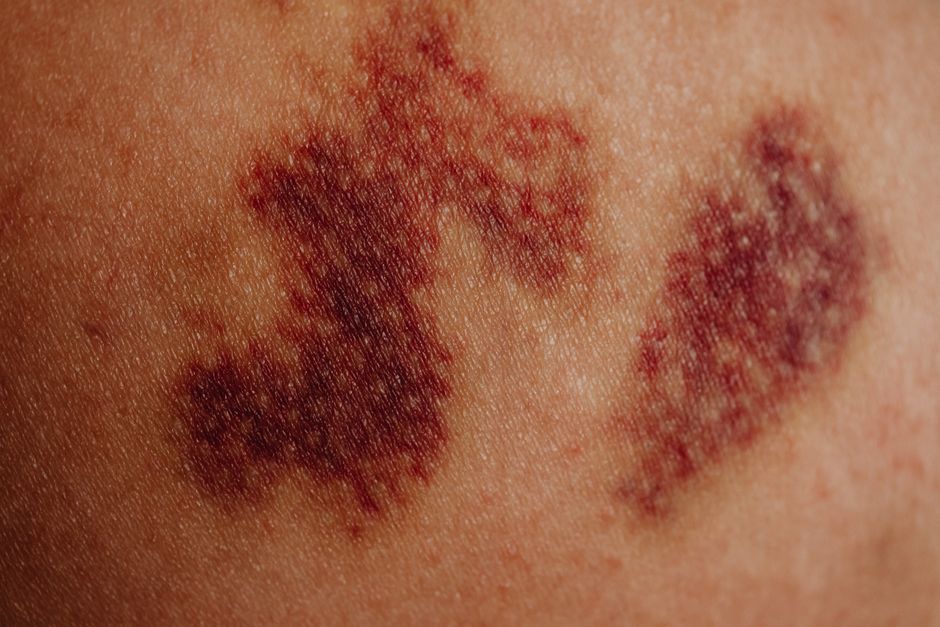
A bruise that turns white in the middle can look alarming, but it is usually a normal part of the healing process. This happens when blood pools under the skin and then begins to break down and reabsorb, which can create a pale or white center as the surrounding area continues to heal. While most white-centered bruises are harmless, there are specific situations where you should have a doctor look at it.
Why Does the Center of My Bruise Turn White?
The white appearance in the middle of a bruise is often a sign that the healing process is working as it should. When you get a bruise, small blood vessels under the skin break and leak blood into the surrounding tissue. That pooled blood is what creates the classic black-and-blue mark.
As the body clears that blood, the center of the bruise is usually the first area to clear. This is because the body sends specialized cells to break down and remove the leaked blood. The white or pale color you see is the skin returning to its normal tone in that spot while the edges of the bruise still contain blood that has not yet been cleared.
This pattern is especially common in bruises that are several days old. A bruise that is white in the middle and still purple or yellow around the edges is typically in the later stages of healing.
When Is a White Bruise a Sign of Something Serious?
Most of the time, a white center in a bruise is not a cause for concern. However, there are cases where a white spot inside a bruise signals an infection or another problem. You should watch for these warning signs:
- Increasing pain or tenderness in the bruised area
- Redness or red streaks spreading outward from the bruise
- Warmth around the bruise that feels hot to the touch
- Swelling that gets worse instead of better
- Fever or chills
- Pus or fluid draining from the area
If you notice any of these symptoms, you should see a doctor. An infection inside a bruise is called an abscess, and it often appears as a white or yellow center because of pus collecting under the skin. This is different from the normal pale center of a healing bruise and requires medical treatment.
What Is a Hematoma and How Is It Different?
A hematoma is a larger collection of blood that forms a lump or firm mass under the skin. While a regular bruise spreads out flat, a hematoma stays in one place and feels raised. Hematomas can also develop a white or pale center as they heal.
When a hematoma begins to break down, the center can become soft and feel like it has liquid inside. This is called liquefaction, and it is a normal part of the healing process. The body slowly reabsorbs the liquid blood over time, which can take several weeks.
Some hematomas need medical attention. If a hematoma is very large, keeps growing, or is extremely painful, a doctor may need to drain it. This is not something you should attempt at home, as it carries a risk of infection.





Could the White Area Be a Scar or Skin Change?
Sometimes what looks like a white center in a bruise is actually a different skin change that happens at the same time. For example, if the injury that caused the bruise also damaged the skin itself, you might see a small area of dead or damaged tissue. This can appear white or pale before it scabs over.
Another possibility is a condition called vitiligo, which causes patches of skin to lose their pigment. Vitiligo is not caused by bruising, but a bruise can make an existing patch of vitiligo more noticeable. If you notice a white patch that remains after the bruise has completely healed, it may be worth mentioning to a dermatologist.
In rare cases, a white bump inside a bruise could be a cyst or a small tumor. These are not common, but they are another reason to have a doctor examine any bruise that does not heal normally or has an unusual appearance.
How Long Does It Take for a Bruise to Heal?
The healing time for a bruise depends on how severe the injury was and where it is on your body. Most bruises follow a predictable color timeline:
- First 1-2 days: Red or purple color from fresh blood
- Days 2-5: Dark blue or black as the blood settles
- Days 5-10: Green or yellow as the body breaks down the blood
- Days 10-14: Fading brown or pale color as the bruise clears
Bruises on the legs and feet often take longer to heal because gravity makes it harder for the body to clear the blood. Bruises on the face and head tend to heal faster because of better blood flow to that area.
If a bruise has not significantly improved after two weeks, or if it is still painful, you should have it evaluated. Some bruises that do not heal may indicate an underlying bleeding disorder or a deficiency in certain vitamins, such as vitamin C or vitamin K.
How Can I Help a Bruise Heal Faster?
There is no way to make a bruise disappear instantly, but there are steps that can help the healing process along. These methods are supported by clinical evidence and are commonly recommended by doctors.
Applying a cold compress in the first 24 to 48 hours after the injury can reduce blood flow to the area and limit the size of the bruise. After the first two days, applying a warm compress can help increase blood flow and speed up the reabsorption of the pooled blood.
Elevating the bruised area above the level of your heart can also help. This reduces blood flow to the area and allows the body to clear the blood more quickly. Over-the-counter pain relievers can help with discomfort, but you should avoid aspirin because it thins the blood and can make bruising worse.
Arnica gel or cream is sometimes used for bruises, and some research suggests it may reduce bruise size and pain. The evidence is limited, however, and arnica should not be applied to broken skin. If you are considering any topical treatment, it is always wise to check with a pharmacist or doctor first.
When Should I See a Doctor About a Bruise?
Most bruises do not require medical care, but there are situations where you should seek professional advice. You should see a doctor if you have any of these signs:
- The bruise is larger than your palm
- The bruise is on your head, neck, or eye
- The bruise does not improve after two weeks
- You have frequent bruises that appear without any known injury
- You have a family history of bleeding disorders
- You are taking blood thinners or anticoagulant medications
- The bruise is accompanied by severe pain or swelling
Frequent bruising without a clear cause can be a sign of an underlying condition such as a platelet disorder, a clotting factor deficiency, or liver disease. These conditions require proper medical evaluation and are not something to diagnose on your own.
If you are taking blood thinners like warfarin or apixaban, you should be especially careful with bruises. A bruise that grows rapidly or becomes very large while on these medications can indicate internal bleeding and should be checked promptly.
Can a White Bruise Be a Sign of Skin Cancer?
Skin cancer does not typically look like a bruise, but there are rare types of skin cancer that can appear as a bruise-like spot. A white center in a bruise is not a common sign of skin cancer, and most white-centered bruises are completely benign.
However, if you have a spot on your skin that looks like a bruise but does not change or heal over several weeks, it is worth having it examined. The ABCDE rule for melanoma checks for asymmetry, irregular borders, uneven color, large diameter, and evolution over time. A spot that changes or does not heal should always be checked by a dermatologist.
It is important to remember that the vast majority of bruises, including those with white centers, are not cancer. But being aware of changes in your skin and getting them checked when they persist is a reasonable precaution.
Frequently Asked Questions
Is a white center in a bruise normal?
Yes, a white center is often a normal part of healing. It means the body is clearing the pooled blood from the area, and the skin is returning to its normal color.
What does an infected bruise look like?
An infected bruise may have a white or yellow center filled with pus, along with redness, warmth, swelling, and increasing pain. If you see red streaks or develop a fever, seek medical care immediately.
How long does it take for a bruise to turn white?
Most bruises begin to fade and show a pale center between day five and day ten. Larger bruises or those on the legs may take longer.
Should I pop a white bump in a bruise?
No, you should never pop or drain a white bump in a bruise. This can introduce bacteria and cause a serious infection. If the bump is painful or growing, see a doctor.
