
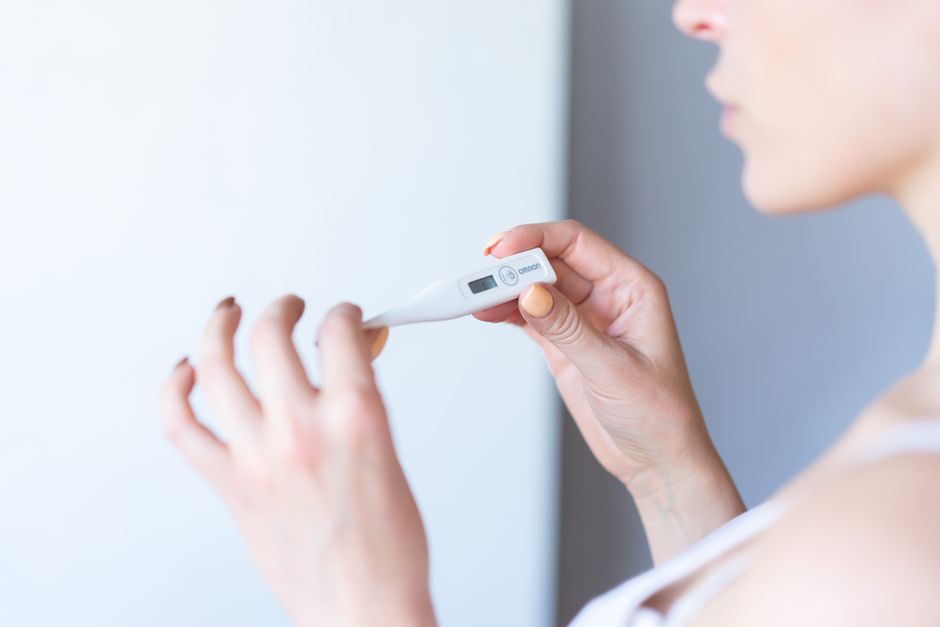
Feeling hot when you don’t have a fever is more common than most people realize. The most frequent reason is hormonal change, especially shifts in estrogen and progesterone that affect how your body controls its own temperature. Other causes include thyroid problems, anxiety, certain medications, and normal reactions to food, exercise, or a warm room. A true fever is different: it means your body’s internal set point has actually been raised, usually by infection.
If your skin feels hot but a thermometer reads normal, you are likely dealing with one of several well-understood causes. Here is what is actually going on.
Why Is My Body Hot Fever Hormones And More: The Reason
Your body has a thermostat, and it sits in a region of the brain called the hypothalamus. That thermostat works by balancing heat production against heat loss. When it decides you are too warm, it sends signals to widen blood vessels near your skin and to start sweating. When it decides you are too cold, it narrows those vessels and triggers shivering to make heat.
A fever happens when the hypothalamus deliberately raises its target temperature. This is usually triggered by chemicals called pyrogens, which the immune system releases in response to infection or inflammation. Because the set point itself has moved up, you actually feel cold and start shivering even though your temperature is climbing. That is why chills often come before a fever peaks.
Feeling hot without a fever is a different process. Here the set point has not changed. Instead, something is pushing more heat to your skin, or your body is losing heat less efficiently, or your thermostat is being nudged around by hormones or other signals. The sensation is real. The mechanism is just not the same as a fever.
This distinction matters because it changes what you should do. A fever is a sign your immune system is responding to something. Feeling hot without a fever is usually a sign of a hormonal, metabolic, or environmental trigger.
How Do Hormones Cause Hot Flashes and Night Sweats?
Estrogen and progesterone influence the hypothalamus and how sensitive it is to small changes in core temperature. When these hormone levels rise and fall, the thermostat can become unstable. The result is a narrow “thermoneutral zone” — the range of internal temperatures your body is comfortable with. When that range shrinks, small shifts that would normally go unnoticed can trigger a full heat-loss response.
That response is what people experience as a hot flash: a sudden wave of heat, often in the face, neck, and chest, sometimes followed by sweating and then chills. Night sweats are the same event happening during sleep.
This is most associated with perimenopause and menopause, when estrogen levels decline and fluctuate. But it is not only about low estrogen. The transition itself — the swinging up and down — is often what triggers symptoms. That is why some people have hot flashes early in perimenopause while their estrogen is still relatively high.
Other hormonal states can do the same thing. Thyroid hormone affects how much heat your body produces. When thyroid levels are too high, as in hyperthyroidism, the body runs hotter and people often feel warm, sweat more, and lose weight. Pregnancy, puberty, and the days around ovulation can also shift temperature regulation.
One clarification that surprises people: hot flashes are not caused by “too much heat” in the body. Core body temperature is usually normal. The problem is the control system reacting as if you were overheating.
What Else Makes You Feel Hot Without a Fever?
Hormones are the most common explanation, but they are not the only one. Several other factors reliably make people feel hot.
- Anxiety and panic. The stress response releases adrenaline, which increases heart rate, blood flow, and sweating. A panic attack can produce intense heat and flushing that feels exactly like a hot flash.
- Medications. Some antidepressants, blood pressure medications, and hormone treatments list flushing or sweating as side effects. This is a known effect, not a rare one.
- Alcohol and spicy food. Both can widen blood vessels and trigger sweating in some people.
- Blood sugar swings. Low blood sugar can cause sweating, shakiness, and a feeling of warmth.
- Overactive thyroid. As noted above, this raises heat production directly.
- Environment and clothing. Sometimes the simplest answer is the right one.
If you are also losing weight without trying, having heart palpitations, or feeling unusually anxious alongside the heat, a thyroid issue or another medical cause becomes more likely and is worth checking with a clinician.





When Is Feeling Hot a Sign of Something Serious?
Most hot flashes and heat sensations are not dangerous. But some patterns deserve medical attention.
See a doctor if you have a fever above 103°F (39.4°C), a fever lasting more than three days, or a fever with a stiff neck, confusion, rash, or trouble breathing. These can signal a serious infection.
For heat without fever, get evaluated if the episodes are frequent enough to disrupt your sleep or daily life, if they started suddenly and have no clear explanation, or if they come with weight loss, palpitations, or mood changes.
If you are taking medication and notice new flushing or sweating, mention it to your prescriber. Do not stop a prescribed medication on your own.
How Are Hormonal Hot Flashes Treated?
Treatment depends on how much the symptoms affect your life and on your individual health history. This is a decision to make with a clinician, not from a general article.
For bothersome menopause symptoms, systemic hormone therapy with estrogen remains the most effective option supported by evidence for moderate to severe hot flashes in appropriate candidates. It also carries real risks, including for some people an increased risk of certain cancers and blood clots, which is why eligibility and duration matter and are decided case by case.
Non-hormonal prescription options exist as well. Some antidepressants and certain other medications have been studied for hot flashes and are used when hormone therapy is not suitable. Results vary between people.
Lifestyle measures are commonly suggested and may help some people. These include keeping the room cool, dressing in layers, avoiding known triggers like alcohol and spicy food, and managing stress. The evidence for these steps is generally weaker than for medication, so they are best seen as supportive rather than a fix.
For thyroid problems, blood sugar issues, or medication side effects, the treatment is to address the underlying cause. That is why an accurate diagnosis comes first.
Fever vs. Feeling Hot: What Is the Difference?
The table below summarizes the main differences. It is worth reading carefully, because the two situations call for different responses.
| Feature | True Fever | Feeling Hot Without Fever |
|---|---|---|
| Set point in the brain | Raised | Normal |
| Measured temperature | Above normal | Usually normal |
| Common trigger | Infection, inflammation | Hormones, anxiety, medication, thyroid |
| Typical feeling | Chills, shivering, then heat | Sudden heat, flushing, sweating |
| Main response | Treat the cause; monitor | Identify the trigger |
Normal body temperature is often cited as 98.6°F (37°C), but it varies through the day and between people. A reading slightly above that is not automatically a fever. Context matters.
Frequently Asked Questions
Why does my body feel hot but I don’t have a fever?
Your brain’s thermostat is likely being nudged by hormones, stress, medication, or another trigger rather than by infection. The heat sensation is real even though your measured temperature stays normal.
Can hormones make you feel hot without a fever?
Yes. Shifts in estrogen and progesterone can narrow the range of temperatures your body tolerates, triggering hot flashes and night sweats. Thyroid hormone can also raise heat production directly.
When should I worry about feeling hot all the time?
Get evaluated if the heat disrupts your sleep or daily life, started suddenly, or comes with weight loss, palpitations, or mood changes. A fever above 103°F (39.4°C) or lasting more than three days also needs medical attention.
Is feeling hot a sign of menopause?
It can be, especially during perimenopause when hormone levels swing. But hot flashes also occur with thyroid problems, anxiety, and some medications, so the symptom alone does not confirm menopause.
