
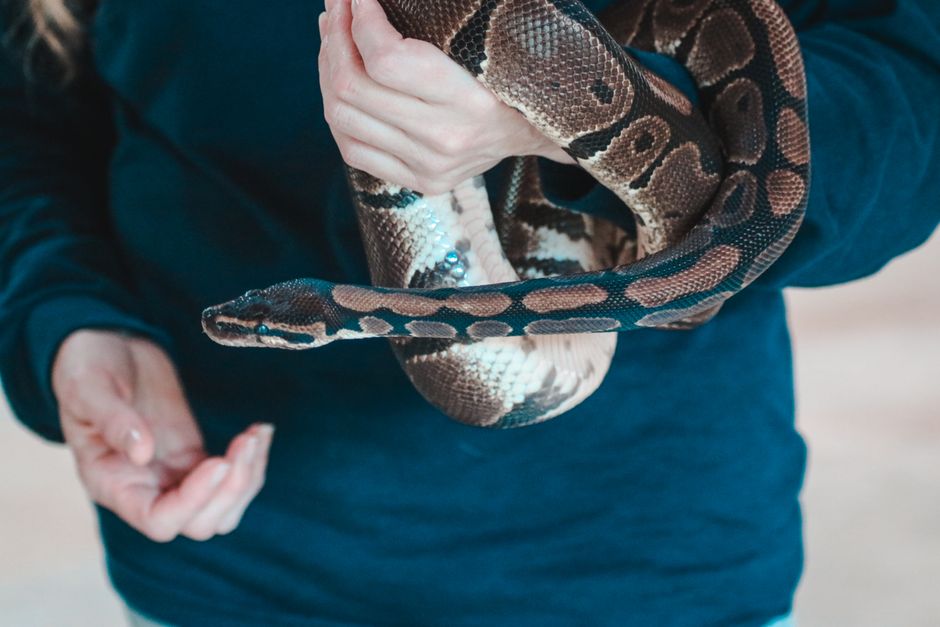
If your ball python spends nearly all its time hidden, that is normal behavior for the species — not a sign something is wrong. Ball pythons are crepuscular and nocturnal, meaning they are most active around dawn, dusk, and at night. In the wild they spend the hottest daylight hours inside termite mounds, rodent burrows, and other underground retreats. A ball python that hides all day is doing exactly what millions of years of evolution programmed it to do.
The question worth asking is not “why is it hiding” but “is it hiding in a way that suggests a problem.” A snake that eats reliably, sheds in one piece, and comes out at night is fine. A snake that hides constantly, refuses food, or seems to be avoiding something in the enclosure is a different situation. This article covers both.
Why Is My Ball Python Always Hiding?
Hiding is the default state for this species, not an exception. Ball pythons are ambush predators that rely on concealment to feel safe. In the wild, a ball python out in the open during daylight is a ball python that is about to be eaten by a hawk, a monitor lizard, or a snake-eating mammal.
The name “ball python” comes from the snake’s defensive posture. When threatened, it curls into a tight ball with its head tucked in the center. This is a prey animal’s instinct, not a predator’s. Your snake is not plotting anything from inside its hide. It is doing what feels safest.
That baseline matters because it changes what counts as a problem. A ball python that spends 20 hours a day in a hide is not necessarily stressed. A ball python that never leaves the hide, even at night, and stops eating, is telling you something.
What Counts as Normal Hiding Behavior?
Normal hiding follows a pattern. Your snake should be visible at some point during the night or early morning, especially when it is hungry or exploring after a meal. It should move between hides, thermoregulate by shifting from the warm side of the enclosure to the cool side, and drink water.
Signs that hiding is normal include:
- Eating consistently on schedule
- Coming out at night, even briefly
- Shedding in one complete piece
- Moving between hides over the course of a week
- Drinking and defecating normally
- Clear eyes and clean vent
If most of those boxes are checked, your snake is behaving like a healthy ball python. Some individuals are simply more secretive than others. A shy snake that eats well is not a sick snake.
Is the Enclosure Making Your Snake Hide More Than It Should?
Captive ball pythons often hide more than wild ones do when the enclosure does not meet their basic needs. The enclosure is the most common reason a ball python hides excessively, and it is also the easiest thing to fix.
Enclosure size
A juvenile ball python in a large, open enclosure will often stay in a hide because the open space feels dangerous. This is why many keepers start young snakes in smaller setups. A large enclosure is not inherently bad, but it needs enough cover, clutter, and multiple hides to feel safe.
Number and placement of hides
At minimum, a ball python needs two hides — one on the warm side and one on the cool side. This allows the snake to thermoregulate without choosing between feeling safe and being at the right temperature. If there is only one hide, or both hides are on the same side, the snake is forced to compromise.
Temperature
Ball pythons need a temperature gradient. A common setup uses a warm-side basking area in the low 90s Fahrenheit and a cool side in the upper 70s. Exact numbers vary by source, so check current care guides for your specific setup. A snake that is too cold will often stay in the warm hide and not move. A snake that is too hot may stay in the cool hide constantly.
Humidity
Low humidity can cause difficult sheds and respiratory irritation. Ball pythons generally do well with humidity in the 50 to 60 percent range, with higher humidity during shedding. A snake that hides more during a shed cycle is normal. Chronic hiding combined with stuck shed or wheezing is not.
Cover and clutter
Open floor space is stressful for ball pythons. Fake plants, cork bark, leaf litter, and additional cover break up the enclosure and let the snake move without feeling exposed. A bare enclosure with two hides and a water bowl is technically functional but tends to produce a snake that rarely comes out.
Handling frequency
Frequent handling — especially in the first weeks after arrival — can push a ball python into hiding. New snakes need time to settle in without being picked up. Give a new arrival at least a week, often longer, with no handling before you start short, calm sessions.





When Does Hiding Point to a Health Problem?
Hiding becomes a health concern when it comes with other symptoms. A ball python that hides and eats normally is likely fine. A ball python that hides and refuses food for weeks is not.
Watch for these warning signs alongside hiding:
- Refusing food for more than a few weeks, especially in a snake that previously ate well
- Labored breathing, wheezing, or open-mouth breathing
- Mucus around the mouth or nostrils
- Stuck shed, especially around the eyes or tail tip
- Weight loss or a visibly thin body
- Lethargy even when handled or offered food
- Unusual lumps, swelling, or discharge
- Soaking in the water bowl constantly, which can indicate mites or overheating
Respiratory infections are one of the more common health issues in captive ball pythons, often linked to low temperatures or low humidity. Mites can also drive a snake to hide more and soak frequently. If you see multiple warning signs, a reptile veterinarian is the right call. Do not wait for the snake to “snap out of it.”
Does Fasting Cause a Ball Python to Hide More?
Ball pythons are known for going off food, sometimes for months, and hiding often increases during these fasts. This is one of the more misunderstood parts of keeping the species.
Fasting is common in ball pythons, particularly in winter, during breeding season, or after a stressful change. A fasting snake may stay in its hide more because it is conserving energy and avoiding activity. That can be normal. It can also be the first sign of a husbandry problem or illness.
The distinction is context. A healthy adult ball python that skips meals for a few weeks in winter and stays mostly hidden is usually fine. A juvenile that stops eating and hides constantly is more concerning, because young snakes have less reserve and grow quickly. Any snake losing weight during a fast needs veterinary attention.
What About a New Ball Python That Won’t Come Out?
A newly acquired ball python hiding for days or even a couple of weeks is expected. Moving to a new enclosure is stressful. The snake does not know its surroundings, does not recognize you, and has no established routine.
The right approach is patience. Put the snake in a properly set up enclosure with correct temperatures, two hides, and water. Then leave it alone. Skip handling. Skip rearranging. Offer food after a few days, and if it refuses, wait and try again. Most new ball pythons settle in and start exploring at night within a week or two.
One detail many keepers miss: a ball python that is active and exploring its enclosure during the day is often the stressed one, not the calm one. A snake that is constantly cruising the glass, pushing at the lid, and refusing to settle is usually a snake that feels unsafe. Hiding is often the better sign in a new arrival.
How Can You Encourage More Natural Activity?
You cannot make a ball python behave like a corn snake or a kingsnake. The species is built to hide. What you can do is create an enclosure where the snake feels safe enough to come out on its own schedule.
Focus on these basics:
- Two hides, one on each temperature zone, sized so the snake fits snugly
- A temperature gradient with a warm spot in the low 90s Fahrenheit and a cooler side in the upper 70s
- Humidity around 50 to 60 percent, higher during shedding
- Enough clutter that the snake can move without being fully exposed
- A consistent day and night light cycle
- Minimal handling during the settling-in period and after meals
If all of that is in place and your snake still hides constantly but eats and sheds normally, you likely have a shy individual. That is a normal ball python. If the hiding comes with appetite loss, breathing issues, or weight loss, treat it as a health concern and get the snake checked.
Frequently Asked Questions
Is it normal for a ball python to hide all day?
Yes. Ball pythons are nocturnal and crepuscular, so hiding during daylight hours is normal behavior for the species. A healthy ball python should still come out at night to explore, drink, and eat.
Why is my ball python hiding and not eating?
Hiding plus appetite loss can be normal during a seasonal fast, but it can also signal a husbandry problem or illness. If the snake is losing weight or showing other symptoms like wheezing or mucus, see a reptile veterinarian.
Does a hiding ball python mean it is stressed?
Not necessarily. Hiding is the species’ default state and often means the snake feels safe. Constant daytime roaming, glass surfing, and refusing to settle are usually stronger signs of stress than hiding.
How long does it take a new ball python to stop hiding?
Most new ball pythons settle in and start exploring at night within one to two weeks if the enclosure is set up correctly. Leave the snake alone during this period and avoid handling until it is eating reliably.
