
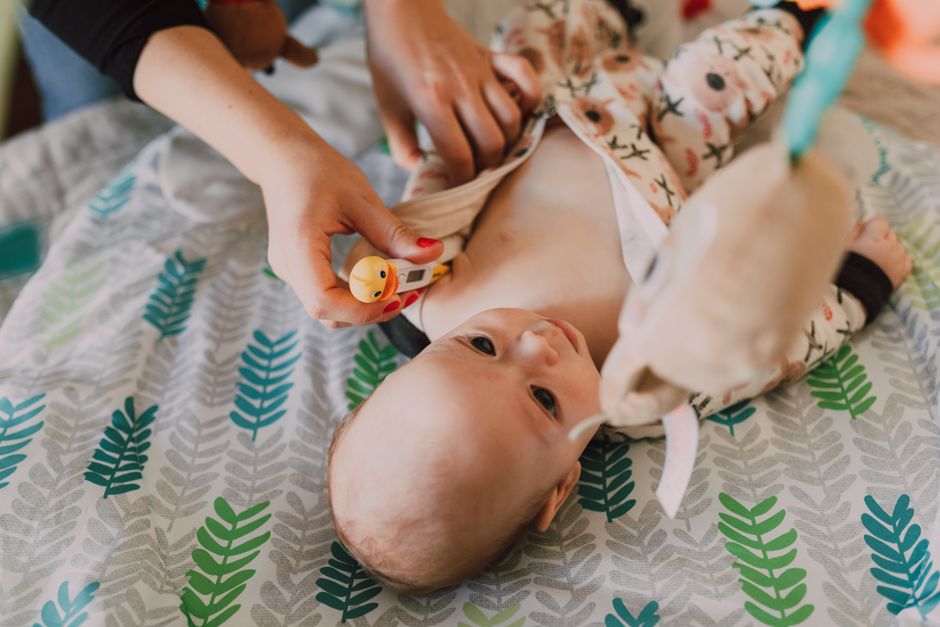
A baby who coughs at night is usually clearing mucus that pooled in the airways while lying flat. The cough is a reflex, not a sign that something is wrong with the lungs. Most nighttime coughing in babies comes from a common cold or postnasal drip and settles on its own within one to two weeks. The main job for parents is keeping the baby comfortable and watching for warning signs that need a doctor.
Why Is My Baby Coughing At Night And What To Do?
Lying down changes how mucus moves. During the day, gravity and swallowing clear drainage from the nose and throat. At night, that drainage collects at the back of the throat and triggers the cough reflex. This is why a baby can sound fine all day and cough steadily after being put down.
A cough is a protective mechanism. It moves material out of the airway. In babies, the reflex is present but weaker than in older children, because the muscles are less developed and the airway is narrower. That narrower airway is also why babies are more likely to need medical attention when breathing becomes labored. Watch the work of breathing rather than the number of coughs.
What is normal for a baby’s nighttime cough
Most coughs from a cold are dry at first, then become wetter as mucus builds. They tend to be worse in the first hour or two after lying down and again in the early morning. A cough that follows this pattern and comes with a runny nose, mild fussiness, and a low fever is typical of a viral respiratory infection. Most viral colds in babies resolve within one to two weeks without treatment.
What Causes Nighttime Coughing in Babies?
Viral infections cause the large majority of coughs in babies. The rest have identifiable patterns that change how the cough sounds or when it happens.
- Common cold and other viral infections. The most common cause. Cough, runny nose, and congestion that worsens when lying flat.
- Postnasal drip. Mucus from the nose and sinuses drains down the throat. This is often the direct trigger for the cough, not the infection itself.
- Dry air. Low humidity dries the airway lining and makes a cough feel worse. Winter heating can lower indoor humidity significantly.
- Gastroesophageal reflux. Some babies cough when stomach contents move up the esophagus. This is more likely with feeding and can happen at night. Reflux-related cough is less common than cold-related cough, and diagnosis is not straightforward.
- Allergens and irritants. Dust mites, pet dander, or tobacco smoke can keep the airway irritated. Smoke exposure in particular raises the risk and severity of respiratory symptoms in babies.
- Asthma. Rare in the first year and difficult to diagnose in babies. A persistent or recurrent cough, especially with wheeze or a family history, is worth raising with a doctor.
One point that surprises many parents: teething does not cause a cough. Teething can cause drooling and mild fussiness, but a cough with teething is a coincidence, not a cause. If your baby has a cough, look for a respiratory cause.
When Is a Baby’s Nighttime Cough a Medical Emergency?
Some coughs need immediate medical attention. The signs below are the ones that matter most. If any are present, call your doctor or emergency services right away.
- Fast or labored breathing, or the skin between the ribs or under the breastbone pulling in with each breath
- Lips or face turning blue or gray
- Pauses in breathing or long gaps between breaths
- A high-pitched or “barking” cough that comes with noisy, strained breathing
- Difficulty feeding or drinking, or fewer wet diapers than usual
- A cough after a choking episode or after swallowing a small object
- Lethargy, unusual sleepiness, or a baby who is hard to wake
- Fever in a baby under 3 months old
Fever in a young infant is a specific concern. Any fever in a baby under 3 months should be checked by a doctor promptly, regardless of how mild the cough seems.





What Can You Do to Ease a Baby’s Nighttime Cough?
Home care for a baby’s cough is mostly about comfort and clearing mucus. No over-the-counter cough or cold medicine is approved for babies and young children. The evidence for these products in young children is weak, and they carry real risk of harm, including serious side effects. Do not give them to a baby.
These approaches are supported by general pediatric guidance:
- Keep the airway moist. A cool-mist humidifier in the room can ease dryness. Clean and dry the humidifier regularly so it does not grow mold or bacteria.
- Saline drops and gentle suction. A few drops of saline in each nostril, followed by a bulb syringe, can clear mucus in a young baby who cannot blow their nose. Use suction sparingly to avoid irritating the lining.
- Hold the baby upright during feeds. This helps drainage and reduces reflux after eating.
- Offer fluids. Breast milk or formula for babies under 6 months. For older babies, small amounts of water are fine. Do not give water to babies under 6 months unless a doctor advises it.
- Keep the room cool and free of smoke. No smoking in the home or car. Smoke exposure makes coughs worse and lasts longer.
Honey is sometimes suggested for coughs and has some evidence in children over 1 year. It is not safe for babies under 1 year because of the risk of infant botulism. Do not give honey to a baby.
Elevating the head of the crib mattress is sometimes suggested, but it is not recommended. Soft bedding and anything that changes the sleep surface raise the risk of suffocation and are not safe for babies. Keep the sleep space flat and clear.
Does a Baby’s Cough Need Medicine?
Most nighttime coughs from a cold do not need medicine. The cough is doing a job. Suppressing it can let mucus sit in the airway, and the medicines that do this are not approved for babies. Antibiotics do not treat viral colds and are not useful unless a doctor finds a bacterial infection.
If a doctor prescribes medicine for a specific diagnosis, such as an infection or asthma, follow their instructions. Do not use leftover prescriptions or medicines meant for older children.
When Should You Call the Doctor?
Call your doctor if the cough lasts more than a few weeks, keeps getting worse, or is accompanied by a fever that does not settle. Also call if your baby is feeding poorly, seems to be working hard to breathe, or has a cough that started suddenly after choking.
For babies under 3 months, a lower threshold applies. Call for any fever, any labored breathing, or a cough that concerns you. Young infants can worsen quickly, and it is better to be checked than to wait.
How Long Does a Nighttime Cough Usually Last?
Most coughs from a viral cold improve within one to two weeks. A cough can linger a little longer than other symptoms because the airway lining takes time to recover. A cough that is still present after several weeks, or one that keeps returning, deserves a doctor’s look.
There is no reliable way to predict an individual baby’s course. Some babies cough for a few days, others for two weeks. What matters more than the exact timeline is the direction: getting better, staying the same, or getting worse.
Frequently Asked Questions
Why is my baby coughing only at night?
Mucus drains down the throat when your baby lies flat, which triggers the cough reflex. This is common with colds and usually improves as the infection clears.
Can I give my baby cough medicine?
No. Over-the-counter cough and cold medicines are not approved for babies and can cause serious harm. Talk to your doctor before giving any medicine to a baby.
Is a nighttime cough in a baby ever an emergency?
Yes, if your baby has fast or labored breathing, blue lips, pauses in breathing, or trouble feeding. Call for emergency help right away if any of these occur.
Does honey help a baby’s cough?
Honey is not safe for babies under 1 year because of the risk of infant botulism. Do not give honey to a baby, even for a cough.
