
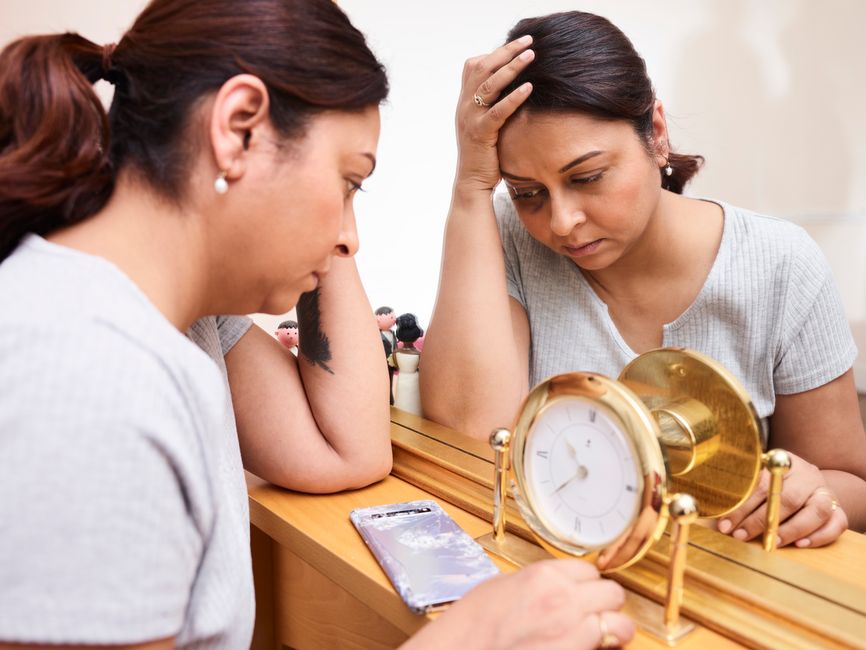
You wake up and the dread is already there. Before you’ve checked your phone or spoken to anyone, your chest feels tight and your mind is running through everything that could go wrong today. Morning anxiety is real, and it has a clear biological explanation. The hormones that help you wake up also push your stress system into gear, and for people prone to anxiety, that daily surge can tip into something that feels much harder to manage.
Several things drive this pattern. Cortisol, your body’s main stress hormone, peaks shortly after waking in what researchers call the cortisol awakening response. Your nervous system shifts from sleep to alert mode. And the quiet of early morning leaves little to distract you from your own thoughts. Together, these factors can make anxiety feel sharper at the start of the day than at any other time.
Why is My Anxiety Worse in the Morning?
The answer comes down to biology and timing. Your body runs on a daily rhythm called the circadian clock, and that clock controls how much cortisol you release. Cortisol follows a predictable curve. It reaches its lowest point in the middle of the night and rises sharply in the first hour after you wake. This is a normal and healthy process. It gives you energy to start the day.
The problem is that cortisol is also a stress hormone. In people with anxiety disorders, the awakening response can be stronger or the body can be more sensitive to it. Research on the cortisol awakening response and anxiety has produced mixed results, and scientists do not fully agree on how consistent the link is. What is clear is that the morning hormone surge is real, and many people with anxiety notice their symptoms most intensely during that window.
There is also a shift in your nervous system. During sleep, your parasympathetic nervous system — the “rest and digest” branch — is more active. When you wake, your sympathetic nervous system, which handles fight-or-flight, comes online quickly. For someone with an anxious brain, that switch can feel like a jolt.
What Triggers Morning Anxiety Specifically?
Several triggers stack on top of the hormonal shift. Knowing them helps you see that the feeling is not random.
- The cortisol spike itself. Even without any external stressor, the waking cortisol rise can trigger physical anxiety symptoms like a racing heart or tense muscles.
- Anticipatory worry. The first waking moments are quiet. With no distraction, your mind often jumps straight to the day ahead and everything it might demand of you.
- Low blood sugar. After a night without food, blood sugar can dip. Some people find that this mimics or worsens anxiety symptoms like shakiness and lightheadedness.
- Poor sleep quality. Not getting enough sleep or waking repeatedly during the night is strongly linked to higher anxiety the next day.
- Alcohol the night before. Alcohol can disrupt sleep and has a rebound effect on the nervous system that some people experience as morning jitters.
- Caffeine timing. If you reach for coffee the moment you wake, caffeine can amplify the physical symptoms of anxiety. Caffeine is a stimulant and can raise heart rate and trigger that wired feeling.
None of these triggers means something is wrong with you. They are ordinary inputs that land on a nervous system that is already primed to be on alert.
Is Morning Anxiety Different From a Panic Attack?
They can overlap, but they are not the same thing. Morning anxiety is a pattern — a general sense of unease, worry, or physical tension that tends to appear after waking. A panic attack is a sudden, intense surge of fear that peaks within minutes and comes with strong physical symptoms like a pounding heart, shortness of breath, chest pain, sweating, and a feeling of losing control.
Some people do experience panic attacks in the morning, including a type sometimes called nocturnal or early-morning panic, where people wake abruptly in a state of intense fear. If that happens to you, it is worth discussing with a doctor or mental health professional, because it can be a feature of panic disorder and there are effective treatments.
One clarification that surprises many people: waking up with a racing heart does not automatically mean you had a panic attack. Your heart rate naturally rises when you wake as part of the normal transition from sleep. It is the interpretation your brain assigns to that sensation that can turn it into fear.
What Can I Do About Morning Anxiety?
The most useful approaches target both the physical surge and the mental spiral. Evidence supports several strategies, though no single method works for everyone.
Give yourself a buffer before the day starts. Many people find that a short, calm routine after waking — before checking messages or news — reduces the sense of being immediately overwhelmed. This is common clinical advice rather than a rigorously tested protocol, but it aligns with what is known about how anticipation fuels anxiety.
Move your body gently. Physical activity is one of the better-supported ways to reduce anxiety over time. Even a short walk or some stretching in the morning can help discharge some of the physical tension.
Eat something. If low blood sugar tends to make you shaky, a balanced breakfast can steady the physical symptoms. This is practical guidance, not a proven anxiety treatment on its own.
Be careful with caffeine. Caffeine can intensify anxiety symptoms in people who are sensitive to it. Some people benefit from delaying their first cup or cutting back. If you notice more jitteriness after coffee, that is worth paying attention to.
Try slow breathing. Deliberately slowing your breathing can activate the parasympathetic nervous system and calm the physical stress response. Slow, diaphragmatic breathing is a widely used and low-risk technique. Its effect on clinical anxiety is modest but real for many people.
Consider therapy. Cognitive behavioral therapy is well established as an effective treatment for anxiety disorders. It helps you change the automatic thoughts that turn a normal morning sensation into a spiral of worry. For many people this is the most durable solution.
When Should I Get Help for Morning Anxiety?
Morning anxiety that happens occasionally is common and usually manageable. It becomes a reason to seek help when it starts to interfere with your daily life.
Consider talking to a doctor or mental health professional if:
- You dread going to sleep because you know how you will feel when you wake.
- The anxiety makes it hard to get out of bed, go to work, or care for yourself or others.
- You have physical symptoms like chest pain, shortness of breath, or a racing heart that worry you.
- You are using alcohol or other substances to manage the feeling.
- The anxiety has lasted for weeks or is getting worse.
Some physical conditions can also cause symptoms that feel like anxiety, including thyroid problems, heart rhythm issues, and low blood sugar. A doctor can help rule these out. This is why persistent or unusual symptoms deserve a medical check rather than being assumed to be “just anxiety.”
Anxiety is treatable. Therapy, and in some cases medication, are well supported by decades of research. Reaching out is not a sign of weakness. It is the same as getting help for any other health condition.
Does Morning Anxiety Go Away on Its Own?
For some people, mild morning anxiety eases as they adjust their routines, improve their sleep, or reduce caffeine and alcohol. For others, especially those with an anxiety disorder, it tends to persist without support. The evidence does not support the idea that it simply fades for everyone.
What the research does show is that anxiety disorders respond well to treatment. Many people see meaningful improvement with therapy, lifestyle changes, or both. The key is not to wait indefinitely if the pattern is disrupting your life. Getting support early tends to make a difference.
Frequently Asked Questions
Why is my anxiety worse in the morning?
Your body releases a surge of cortisol and activates its stress response shortly after waking, which can intensify anxiety symptoms. The quiet of early morning also gives your mind less to distract it from worry.
Is morning anxiety a sign of an anxiety disorder?
Not necessarily. Occasional morning anxiety is common and does not mean you have a disorder. It is worth getting evaluated if it is frequent, intense, or interferes with your daily life.
Should I drink coffee if I have morning anxiety?
Caffeine can worsen anxiety symptoms in sensitive people because it is a stimulant. If you notice more jitteriness after coffee, try reducing it or delaying your first cup and see how you feel.
When should I see a doctor for morning anxiety?
See a doctor if the anxiety disrupts your work, sleep, or relationships, or if you have physical symptoms like chest pain or a racing heart. A doctor can rule out medical causes and discuss treatment options.
