
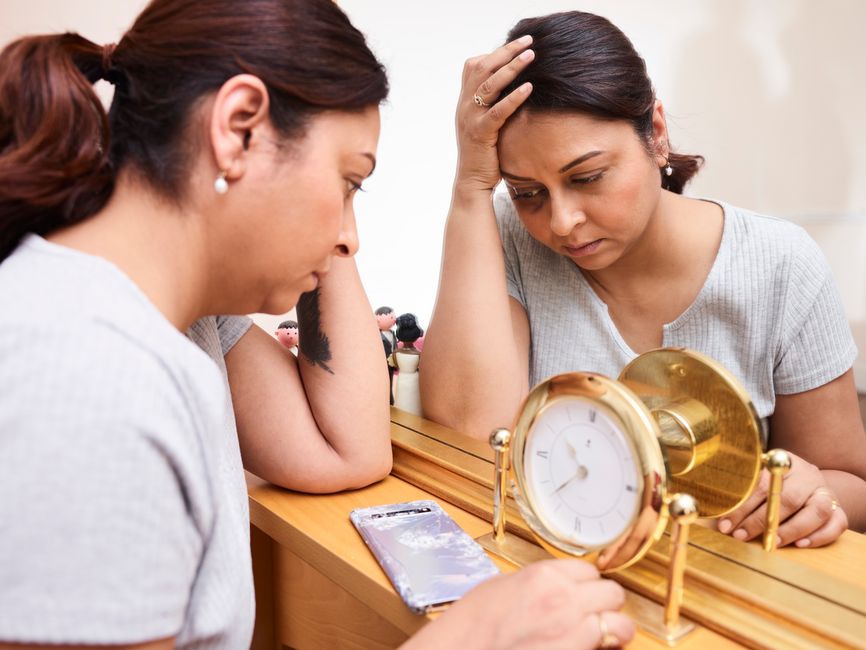
Many people with anxiety notice a pattern: the morning feels manageable, the afternoon is busy, and then evening arrives with a wave of worry that seems to come from nowhere. The most common reason is that evening is when the distractions stop, your body is tired, and your nervous system finally has space to register the stress it has been holding all day. Anxiety that reliably worsens in the evening is not a sign that something is uniquely wrong with you. It is a predictable result of how stress hormones, attention, and daily routines interact.
Why Is My Anxiety Worse In The Evening? Causes And Fixes
Anxiety tends to peak in the evening because several things happen at once. Your cortisol, one of the body’s main stress hormones, follows a daily rhythm. Levels typically rise shortly after waking and decline through the day, reaching their lowest point late at night. When cortisol drops, the stimulating “push” that kept you moving is gone, and underlying worry becomes more noticeable.
At the same time, the mental load that occupied you all day disappears. Work ends. Chores are done. The phone gets quieter. For many people, that quiet is the first moment the mind has had to process everything it set aside. This is sometimes described as the “let-down effect” — anxiety rising precisely when you finally relax.
Fatigue plays a role too. Tiredness lowers your tolerance for uncertainty and makes threats feel bigger. A worry that felt small at noon can feel overwhelming at 10 p.m. Blood sugar can also dip if you ate dinner early or skipped snacks, and low blood sugar can mimic or amplify anxiety symptoms like shakiness and a racing heart.
None of this means evening anxiety is imaginary or untreatable. It means the timing is explainable, and once you understand the pattern, you can work with it rather than against it.
What Is Happening In Your Body When Evening Anxiety Hits?
Anxiety is a whole-body event, not just a mental one. When your brain perceives a threat — real or imagined — it activates the sympathetic nervous system. This triggers the release of adrenaline and cortisol, which prepare the body to respond quickly.
That response produces physical symptoms you can feel:
- A faster heart rate or a pounding chest
- Shallow, quicker breathing
- Muscle tension, especially in the neck, jaw, and shoulders
- Stomach upset or a churning feeling
- Sweating, trembling, or feeling suddenly hot
- Racing thoughts or difficulty concentrating
In the evening, this system may be more reactive. If you have been running on stress all day, your body’s stress response is already primed. Small triggers — a text you did not answer, a thought about tomorrow — can tip it over the edge.
One detail worth knowing: the physical symptoms of anxiety and the physical symptoms of genuine medical problems can overlap. A racing heart, chest tightness, or shortness of breath can have causes unrelated to anxiety. If these symptoms are new, severe, or come with chest pain, fainting, or difficulty breathing that does not ease, seek medical care rather than assuming it is anxiety.
Why Does Anxiety Feel Worse At Night Than During The Day?
Night removes the last defenses you had. During the day, you have tasks, conversations, and small decisions that keep your attention outward. At night, the external world goes quiet, and attention turns inward.
There is also a well-documented link between anxiety and sleep. Anxiety makes it harder to fall asleep, and poor sleep makes anxiety worse the next day. This can become a loop that strengthens over time. The more you dread the evening, the more your body associates that time with unease.
Darkness itself can matter. Reduced light and quiet surroundings can make some people feel more isolated or vulnerable. If you live alone or spend evenings by yourself, that effect can be stronger.
Some people also experience a specific spike right before bed. Lying still with nothing to do can make intrusive thoughts louder. This is sometimes called bedtime rumination, and it is one of the most common reasons people report that their anxiety is worst at night.
-
 Does Alcohol Help Anxiety Or Make It Worse? Science Says
 -
Why Does My Anxiety Get Worse at Night? What’s Behind It
-
How To Stop Anxiety Thoughts Without Making Them Worse?
-
How To Deal With Anxiety? Science Explained Simply With Data
-
Neuro Surge Reviews 2026 {Neuro Serge}: Scam or Legit Brain Supplement?





What Everyday Changes Can Help With Evening Anxiety?
Small, consistent changes often make a bigger difference than one dramatic fix. The goal is to reduce the conditions that feed evening anxiety and give your nervous system signals that the day is winding down safely.
Watch caffeine timing. Caffeine can stay in your system for hours. If you are sensitive, a cup of coffee at 3 p.m. can still be affecting you at 9 p.m. Many clinicians suggest limiting caffeine after early afternoon, though individual sensitivity varies widely.
Eat regular meals. Skipping meals or eating a very light dinner can leave blood sugar low by evening. A balanced dinner with protein and fiber helps keep energy steadier.
Move your body earlier in the day. Regular physical activity is one of the better-supported ways to reduce anxiety over time. Intense exercise close to bedtime can be stimulating for some people, so timing matters.
Create a wind-down routine. A predictable sequence — dimming lights, putting the phone away, a warm shower, light reading — gives your body cues that the day is ending. Consistency matters more than the specific activities.
Limit evening alcohol. Alcohol can feel calming at first, but it disrupts sleep and can increase anxiety as it wears off. For some people, this rebound effect shows up in the middle of the night.
Write worries down. Putting anxious thoughts on paper can reduce their intensity by moving them out of your head and into a fixed place. Some people find it helpful to schedule a short “worry time” earlier in the evening rather than letting thoughts pile up at bedtime.
When Should You Get Professional Help For Evening Anxiety?
Occasional evening anxiety is common and often responds to lifestyle changes. But there are signs that it is worth talking to a doctor or mental health professional.
Consider seeking support if:
- Anxiety interferes with sleep most nights
- You avoid evening activities or social plans because of worry
- You rely on alcohol or other substances to calm down
- Physical symptoms are frequent or frightening
- Anxiety is affecting work, relationships, or your ability to function
- You have thoughts of harming yourself
If you are having thoughts of self-harm, contact a crisis line or emergency services right away. In the United States, you can call or text 988 to reach the Suicide and Crisis Lifeline.
Treatment for anxiety is well established. Talk therapies, particularly cognitive behavioral therapy, have strong evidence behind them. Certain medications are also commonly prescribed. A doctor can help determine what fits your situation. This is not a sign of weakness — anxiety is a treatable condition, and many people improve significantly with the right support.
Can Evening Anxiety Be Prevented?
It cannot always be prevented, but it can often be reduced. The most reliable approach is to address the factors that build up during the day rather than only reacting at night.
Managing stress earlier — through movement, breaks, or talking to someone — can lower the amount that surfaces in the evening. Keeping a consistent sleep schedule helps regulate the body’s stress response. And paying attention to what you eat, drink, and do in the hours before bed gives you more control over how the evening unfolds.
It also helps to change your relationship with the evening itself. If you expect anxiety to show up, you may brace for it, which can make it worse. Noticing the pattern without fighting it — “this is my evening anxiety, it usually passes” — can take some of its power away.
Progress is usually gradual. If evenings are consistently hard, that is information worth acting on, not something to push through alone.
Frequently Asked Questions
Why does my anxiety get worse at night?
At night, distractions fade, fatigue lowers your tolerance for worry, and your body’s stress hormones are at their lowest point of the day. This combination allows underlying anxiety to surface more easily.
Is it normal for anxiety to be worse in the evening?
Yes, it is common and often explained by the natural daily rhythm of stress hormones and the let-down effect after a busy day. If it interferes with sleep or daily life most nights, it is worth discussing with a doctor.
How can I calm my anxiety at night?
A consistent wind-down routine, limiting caffeine and alcohol in the evening, eating regular meals, and writing down worries can all help. If these do not reduce symptoms, professional support is a reasonable next step.
Can low blood sugar make anxiety worse in the evening?
Low blood sugar can cause shakiness, a racing heart, and irritability, which can feel like or worsen anxiety. Eating a balanced dinner with protein and fiber helps keep blood sugar steadier through the evening.
