
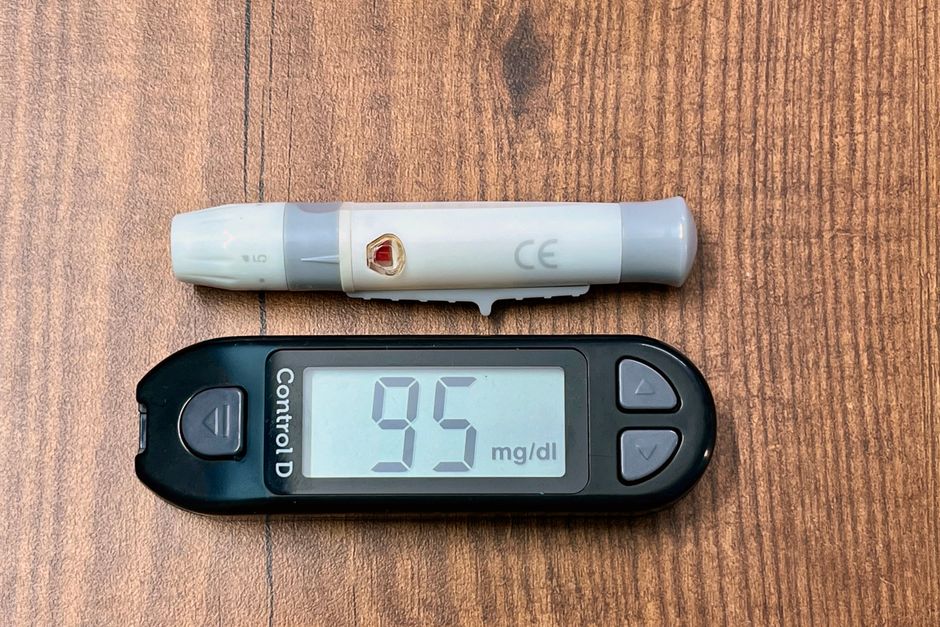
A high A1C with normal glucose readings usually means your average blood sugar over the past two to three months is higher than your daily fingersticks suggest. The two tests measure different things. A glucose meter captures one moment. A1C captures a broad average. When they disagree, the most common explanation is that your glucose rises at times you are not testing — often overnight or after meals. Less often, the A1C itself is being thrown off by something unrelated to your average glucose, such as anemia, kidney disease, or a condition that affects red blood cells.
This is a common and confusing situation. It does not mean one test is wrong. It means you need to figure out which one is telling the fuller story.
What Do A1C and a Glucose Reading Actually Measure?
A1C and a glucose meter answer two different questions. One is about right now. The other is about the recent past.
A glucose meter measures the concentration of sugar in your blood at the moment you test. It is a snapshot. A fasting glucose test measures that snapshot after you have not eaten for at least eight hours. Both are point-in-time numbers.
A1C works differently. It reflects the percentage of your hemoglobin — the oxygen-carrying protein inside red blood cells — that has glucose attached to it. Because red blood cells live about three months, A1C reflects average glucose over roughly the prior two to three months. It is a long exposure, not a snapshot.
This is why the two can part ways. A person can have normal fasting glucose most mornings and still carry a higher A1C if their glucose climbs at other times of day.
Why Is My A1C High But Glucose Is Normal?
The most common reason is that your glucose is rising when you are not looking. Fingersticks sample a handful of moments. They can miss the hours that matter most.
Several patterns explain a high A1C alongside normal daytime or fasting readings:
- High post-meal spikes. Glucose can climb sharply in the hour or two after eating and return to normal before you test again. If you rarely check after meals, you may never see these peaks.
- Overnight and early-morning rises. Glucose can drift upward during sleep. This happens for reasons that include the natural release of hormones like cortisol and growth hormone in the early morning, and in some people a rebound after a low overnight.
- Testing at the same easy times. Many people check fasting and before dinner. Those are often the calmest points of the day. The higher readings may simply be happening outside your testing routine.
- Stress and illness. Physical stress, infection, and poor sleep can push glucose up for stretches you do not happen to measure.
There is a useful way to think about this. A normal fasting glucose tells you your body handles the fasting state well. It says much less about how it handles a meal or a stressful night. A1C captures all of it.
When the A1C Itself Is the Problem
Sometimes the average glucose really is normal, and the A1C is being distorted. A1C depends on red blood cells, so anything that changes those cells can shift the result.
Conditions that can make A1C read falsely high or low include:
- Iron deficiency anemia
- Vitamin B12 or folate deficiency
- Kidney disease, especially advanced stages
- Recent blood loss or blood transfusion
- Some hemoglobin variants, such as sickle cell trait or other inherited hemoglobin differences
- Pregnancy
The direction of the error depends on the condition. Some make A1C read higher than the true average. Others make it read lower. This is why an unexpected A1C result that does not match your glucose readings deserves a conversation with your clinician rather than an assumption.
One clarification worth knowing: a mildly high A1C is not automatically “prediabetes” if your red blood cells are being affected by another condition. The number has to be interpreted in context.
How Can You Tell Which Test Is Right?
You can often sort this out by testing more strategically and by asking for a second type of average measurement.
Practical steps that help clarify the picture:
- Check after meals. Testing about one to two hours after the start of a meal shows the post-meal rise that fasting tests miss.
- Check overnight occasionally. If your clinician suspects nighttime rises, a few middle-of-the-night or early-morning readings can be revealing.
- Consider continuous glucose monitoring. A CGM tracks glucose every few minutes and can show patterns that fingersticks never capture. It is not necessary for everyone, but it is the most direct way to see what is happening between tests.
- Ask about other tests. A clinician may order a repeat A1C, a fasting glucose, or an oral glucose tolerance test. In some cases, checking for anemia or kidney problems helps explain a mismatch.
No single reading settles the question. Patterns do.
Does a High A1C With Normal Glucose Mean Diabetes?
Not necessarily. A high A1C raises the question of prediabetes or diabetes, but one number is not a diagnosis.
Diagnosis generally rests on established thresholds and usually on more than one result. The widely used cutoffs are:
| Test | Normal | Prediabetes range | Diabetes range |
|---|---|---|---|
| A1C | Below 5.7% | 5.7% to 6.4% | 6.5% or higher |
| Fasting glucose | 70 to 99 mg/dL | 100 to 125 mg/dL | 126 mg/dL or higher |
These are standard diagnostic categories. A single result in the diabetes range is typically confirmed with a repeat test unless symptoms are clear. A result in the prediabetes range is a signal to look closer, not a label to accept without context.
If your A1C is elevated but your glucose readings are normal, the honest position is that the cause is not yet known. It could be missed high periods. It could be a red blood cell issue. Sorting out which one matters, because the meaning and the next steps differ.
What Should You Do Next?
Bring both sets of numbers to your clinician and ask directly why they disagree. That question is reasonable and worth asking.
Come prepared with your glucose log, including the times you tested. The timing matters as much as the values. If you only have fasting readings, say so — that gap is part of the explanation.
Ask whether anything in your health history could affect A1C accuracy, including anemia, kidney problems, or a known hemoglobin trait. Ask whether a repeat test or a different kind of test would help.
This article is informational and not a substitute for medical advice. A mismatch between A1C and glucose is a clue, not a verdict. The right next step is figuring out what the clue means for you specifically.
Frequently Asked Questions
Can A1C be high while fasting glucose is normal?
Yes. A1C reflects an average over about two to three months, so glucose can be normal when fasting but higher at other times, such as after meals or overnight. That pattern can raise the average even when your fasting readings look fine.
What causes a falsely high A1C?
Conditions that affect red blood cells can distort A1C, including iron deficiency anemia, vitamin B12 or folate deficiency, kidney disease, and some inherited hemoglobin variants. A clinician can help determine whether any of these apply to you.
Does a high A1C always mean diabetes?
No. An A1C of 6.5% or higher falls in the diabetes range, but diagnosis usually requires confirmation with a repeat test unless symptoms are clear. A result between 5.7% and 6.4% falls in the prediabetes range and calls for a closer look.
Should I check my blood sugar after meals instead of fasting?
Checking after meals can reveal rises that fasting tests miss, which is often the reason A1C and fasting glucose disagree. Talk with your clinician about the timing that makes sense for your situation.
