
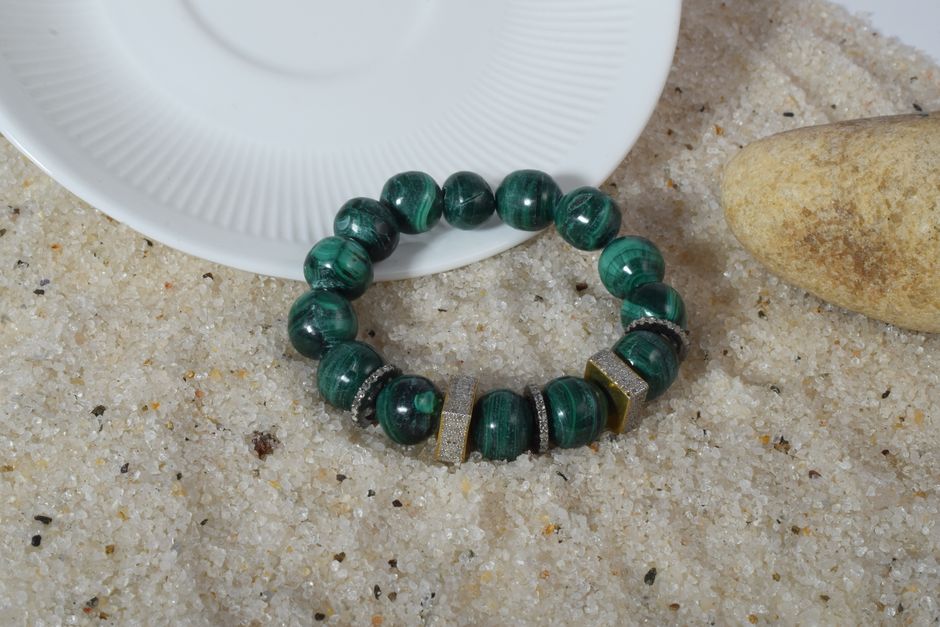
Malachite is toxic because it contains copper, and copper is a heavy metal that becomes harmful when enough of it enters the body. The danger is not theoretical. Malachite is copper carbonate hydroxide, a mineral that is roughly 57 percent copper by weight, and that copper can leach out when the stone is exposed to moisture, acids, or the human body. People get poisoned by breathing in malachite dust while cutting or polishing it, by swallowing particles from jewelry or tumbled stones, or by absorbing copper through the skin from prolonged contact.
Why Is Malachite Toxic And How Does It Poison You?
Malachite is toxic because copper is toxic in excess, and malachite is a concentrated copper compound. The mineral’s chemical formula is Cu2CO3(OH)2, which means copper is the dominant element in its structure.
When malachite breaks down, that copper becomes bioavailable. It can dissolve into sweat, saliva, or water. Once copper enters the bloodstream, it circulates and accumulates in organs. The liver takes up copper first. When the liver’s storage capacity is exceeded, copper spills into the bloodstream and deposits in the brain, kidneys, and eyes.
This is the same mechanism behind copper toxicity from any source. The difference with malachite is that it is a solid, concentrated, and often handled directly against the skin.
Copper is also an essential nutrient. The body needs small amounts of it for iron metabolism, connective tissue formation, and nerve function. Adults generally need around 900 micrograms of copper per day, a figure established by the National Institutes of Health. The problem with malachite is not the element itself but the dose and the route.
How Does Copper From Malachite Enter Your Body?
Copper from malachite enters the body through three main routes: inhalation, ingestion, and skin absorption. Inhalation is the fastest and most dangerous.
When someone cuts, grinds, or polishes malachite without a respirator, fine dust particles become airborne. Those particles are small enough to reach the deep airways and lungs. From there, copper crosses into the bloodstream quickly. Occupational health studies of copper workers have long documented respiratory and systemic effects from inhaling copper dust.
Ingestion is the second route. This can happen accidentally, such as when particles transfer from hands to food. It can also happen deliberately, when people swallow malachite powder as part of unproven health practices. The stomach absorbs copper, and the liver processes it.
Skin absorption is the slowest route but not zero. Copper can form complexes with sweat and skin oils, and some of those complexes can pass through the skin barrier. This is why wearing a raw malachite ring or bracelet for hours a day is different from picking up a polished stone for a few seconds.
One detail people miss: malachite is often sold as tumbled stones for children. Children absorb copper more efficiently than adults and have a lower threshold for toxicity. The same stone that is harmless on a shelf can be a real risk in a child’s mouth.
What Are The Symptoms Of Malachite Poisoning?
Symptoms of copper toxicity from malachite depend on how much copper entered the body and how fast. Acute exposure, usually from swallowing a large amount or inhaling a heavy dose of dust, produces symptoms within hours.
Early signs include:
- Metallic taste in the mouth
- Nausea and vomiting
- Abdominal pain and cramping
- Diarrhea
- Headache
- Burning sensation in the throat or stomach
Severe acute copper poisoning can cause vomiting of blood, low blood pressure, jaundice, and damage to the liver and kidneys. In extreme cases it can be fatal. These cases are rare from malachite specifically, but they are documented from copper salts in general.
Chronic exposure is different. It builds slowly over weeks or months. Symptoms can include fatigue, irritability, difficulty concentrating, and in some cases tremors or mood changes. Because these symptoms are vague, chronic copper toxicity is often missed.
One well-known genetic condition, Wilson’s disease, causes copper to accumulate because the body cannot excrete it properly. People with Wilson’s disease are far more vulnerable to any added copper load, including from malachite. If you have Wilson’s disease, any copper exposure matters more.





Is Wearing Malachite Jewelry Dangerous?
Wearing polished malachite jewelry is generally low risk for most adults, but it is not risk-free. The polished surface limits how much copper can leach out. The risk goes up when the stone is raw, cracked, or worn against sweaty skin for long periods.
Several factors increase the risk:
- Raw or unpolished malachite, which has more surface area and looser particles
- Wearing it during exercise or in hot weather, when sweat increases copper solubility
- Wearing rings or bracelets that rub against the skin and create micro-abrasions
- Children or pregnant women wearing or handling malachite
- People with Wilson’s disease or other copper metabolism disorders
There is no established safe exposure limit for skin contact with malachite. That means no one can tell you a specific number of hours is safe. The honest position is that short, occasional contact is unlikely to cause harm for a healthy adult, and prolonged daily contact with raw stone is a risk that has not been well studied.
If you notice skin discoloration, a greenish tint, or irritation where the jewelry sits, that is a sign copper is leaching. Remove the piece and wash the area.
Can You Get Copper Poisoning From Malachite Dust?
Yes. Dust is the most common route of serious exposure for people who work with malachite. Lapidary workers, jewelers, and stone cutters are the main groups at risk.
Cutting or grinding malachite with power tools releases fine particles. Without a fitted respirator and proper ventilation, those particles go straight into the lungs. Over time, repeated exposure can lead to copper accumulation in the body.
Occupational safety guidelines from agencies like OSHA and NIOSH treat copper dust as a hazard. The permissible exposure limit for copper fume is set well below the levels generated by dry cutting stone. That is why wet cutting, local exhaust ventilation, and respiratory protection are standard in professional stone shops.
If you cut malachite at home as a hobby, the same precautions apply. A dust mask from a hardware store is not the same as a fitted respirator. The particles that matter are too small to see.
What Should You Do If You Think You’ve Been Exposed?
If you swallowed malachite or inhaled a large amount of dust, contact a poison control center or seek medical care right away. Do not wait for symptoms to become severe.
For skin contact, wash the area with soap and water. Remove any jewelry and clean it separately. If irritation persists, see a doctor.
For suspected chronic exposure, a doctor can order blood tests for copper and ceruloplasmin, a protein that carries copper in the blood. These tests help show whether copper levels are elevated. They are not routine, so you may need to explain the exposure.
There is no home remedy that removes copper from the body. Treatments for copper toxicity, such as chelation therapy, are medical procedures with their own risks. They should only be done under medical supervision.
Prevention is straightforward. Do not eat, drink, or smoke while handling malachite. Wash your hands after contact. Keep malachite away from children and pets. Use proper respiratory protection when cutting or polishing. Store raw malachite in a sealed container.
Does Malachite Have Any Legitimate Health Use?
No clinical evidence supports using malachite for any health purpose. Claims that it balances energy, detoxifies the body, or treats disease are not backed by human trials.
Some traditional practices used copper compounds topically, and copper does have antimicrobial properties on surfaces. That is a different claim from saying malachite heals the body. A surface killing bacteria is not the same as a stone treating illness.
Malachite powder and malachite elixirs sold for internal use are a genuine hazard. There is no established safe dose for swallowing malachite. No clinical guidelines exist for using it internally, and the copper content makes any internal use risky.
If you are drawn to malachite for its color or history, that is fine. Treat it as a mineral specimen, not a medicine.
Frequently Asked Questions
Is malachite toxic to touch?
Touching polished malachite briefly is unlikely to cause harm for most healthy adults. Prolonged contact with raw or unpolished malachite, especially on sweaty skin, can allow small amounts of copper to be absorbed.
Can malachite kill you?
Swallowing a large amount of malachite or inhaling heavy dust can cause severe copper poisoning, which has been fatal in documented cases. Death from typical jewelry contact is not a realistic concern.
Is it safe to sleep with malachite under your pillow?
There is no established safety data for overnight skin contact with malachite. Given that copper can leach with moisture and heat, keeping it out of prolonged direct contact is the more cautious choice.
How do you detox from copper poisoning?
Copper toxicity is treated medically, usually with chelating agents that bind copper so the body can excrete it. This must be done under medical supervision because chelation carries its own risks.
