
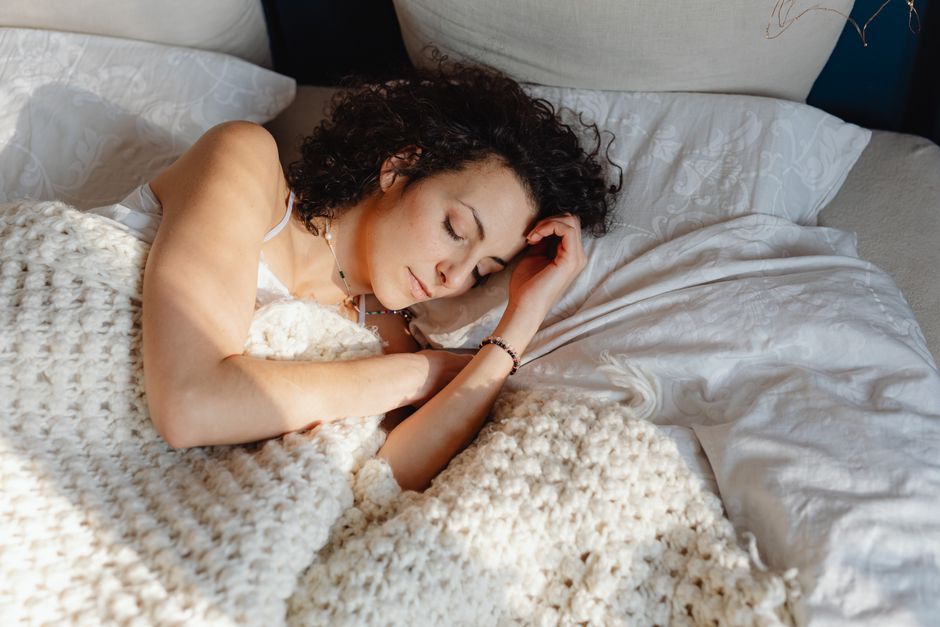
Sleeping with wet hair is not dangerous in any dramatic sense. But it can create real problems for your scalp, your hair strands, and your sleep quality. The main issues come down to moisture trapped against your scalp for hours, increased friction between wet strands, and a cooler scalp temperature that may disturb sleep.
Why Is It Bad To Sleep With Wet Hair? The Science Explained
Hair is weakest when it is wet. Water causes the hair shaft to swell and the outer protective layer — called the cuticle — to lift. When you lie down on wet hair, the strands rub against your pillowcase and against each other.
That friction does more damage to wet hair than it would to dry hair. The swollen cuticle catches and tears more easily. Over time, this can lead to split ends, rough texture, and breakage.
Your scalp is also affected. A wet scalp stays damp for hours under a pillow. That warm, moist environment is not ideal for skin health.
And there is a temperature factor. Water evaporating from your scalp pulls heat away from your head. That cooling effect can be uncomfortable and may interfere with falling asleep or staying asleep.
Does Sleeping With Wet Hair Cause Scalp Problems?
A scalp that stays wet for hours is more vulnerable to irritation. The outermost layer of your skin, the stratum corneum, acts as a barrier. When it stays damp too long, that barrier can weaken.
Weakened skin is more easily irritated by yeast and bacteria that normally live on your scalp without causing problems. One common scalp condition — seborrheic dermatitis — is linked to a yeast called Malassezia that naturally lives on most people’s scalps.
Whether sleeping with wet hair directly triggers seborrheic dermatitis is not firmly established. What is clearer is that moisture changes the scalp environment in ways that can aggravate existing conditions.
If you already deal with dandruff, itching, or flaking, going to bed with a wet scalp may make those symptoms worse. If your scalp is healthy, the risk is lower but not zero.
Some people also develop what is sometimes called “wet hair headache.” The exact mechanism is not well understood. Cold stimulation to the scalp can trigger headache in susceptible people, but this is not the same as a true medical condition and research here is limited.
Can Wet Hair Cause Hair Breakage or Damage?
Yes. This is the most well-supported concern.
Hair in its dry state is relatively resilient. When wet, the hydrogen bonds inside the hair shaft break and reform, which is why wet hair can be stretched and reshaped. That same flexibility makes it more fragile.
Studies on hair physiology show that wet hair has lower tensile strength and stretches further before breaking. When you sleep on wet hair, you create hours of friction and tension. Pillowcases — especially cotton — grip wet strands.
The result is mechanical damage that accumulates over time. You may notice more split ends, rougher texture, and strands that snap easily. This is not a one-night problem. It is a repeated-exposure problem.
If you already have chemically treated, color-treated, or fine hair, the damage risk is higher because these hair types are more fragile to begin with.





Does Sleeping With Wet Hair Make You Sick?
No. This is a common belief, but it does not hold up.
Colds and flu are caused by viruses, not by cold temperatures or wet hair. You catch a cold from being exposed to a virus, not from having a damp head.
That said, there is a nuance worth understanding. Cold exposure can cause blood vessels near the skin’s surface to narrow. Some research suggests this may affect how your immune system responds in the nasal passages, but the evidence is not strong enough to say that wet hair makes you more likely to get sick.
The idea that going outside with wet hair causes illness is a widespread myth with no solid scientific backing. Illness comes from pathogens, not from moisture or temperature alone.
How Does Wet Hair Affect Sleep Quality?
Your body temperature needs to drop slightly for you to fall asleep. This is a normal part of the sleep-wake cycle.
But a wet scalp creates a different kind of cooling. Evaporation pulls heat away from your head continuously, and that sensation can be uncomfortable. Some people find it hard to fall asleep when their head feels cold and damp.
Others may wake up during the night because of the dampness or the smell of wet hair on the pillow.
There is also a practical issue. Wet hair on a pillow can make the pillow damp, which affects comfort and may require more frequent washing. A damp pillowcase is also a better environment for dust mites than a dry one.
Sleep quality matters for far more than how you feel in the morning. Poor sleep affects mood, memory, immune function, and metabolism. If wet hair is disrupting your sleep even mildly, it is worth addressing.
What About Going to Bed With Damp Hair vs Soaking Wet Hair?
The difference matters. Hair that is dripping wet creates far more moisture on your scalp and pillow than hair that has been towel-dried and air-dried for a while.
Damp hair — meaning hair that is no longer dripping but still feels cool and moist — is less problematic. The scalp is not sitting in a puddle of water. Evaporation is slower. Friction damage is reduced.
If you must sleep with hair that is not fully dry, aim for damp rather than soaked. A microfiber towel or a cotton T-shirt can remove more water than a regular bath towel without roughing up the cuticle as much.
- Soaking wet: highest risk for scalp irritation, breakage, and sleep disruption
- Damp: moderate risk, especially for fragile hair types
- Mostly dry: minimal risk for most people
- Completely dry: no added risk from moisture
Who Should Be Most Careful About Sleeping With Wet Hair?
Some people are more vulnerable to the effects of sleeping with wet hair than others.
If you have a scalp condition like seborrheic dermatitis, psoriasis, or eczema, moisture can aggravate it. If your hair is fine, color-treated, relaxed, or otherwise chemically processed, it is more prone to breakage when wet.
People with a sensitive scalp or a history of cold-triggered headaches may also want to avoid it.
And if you already struggle with sleep, adding a cold, damp scalp to the equation is not helpful.
For most healthy adults with untreated hair, sleeping with damp hair occasionally is unlikely to cause lasting harm. The concern is more about repeated exposure over months and years.
What Can You Do Instead?
The simplest solution is to wash your hair earlier in the day. If you shower at night, give your hair time to air-dry before bed.
If that is not possible, a few practical steps can reduce the risk:
- Blot hair with a microfiber towel or soft cotton T-shirt instead of rubbing with a rough towel
- Use a blow dryer on the lowest heat setting, keeping it at least six inches from your hair
- Loosely braid or bun damp hair to reduce friction against the pillow
- Use a silk or satin pillowcase, which creates less friction than cotton
- Flip your hair up over the pillow rather than sleeping directly on it
A silk or satin pillowcase is a practical option for anyone who regularly sleeps with damp hair. These fabrics allow hair to slide rather than catch, reducing mechanical damage.
If you have a scalp condition that seems to flare after sleeping with wet hair, talk to a dermatologist. They can help you figure out whether moisture is a trigger and what to do about it.
Frequently Asked Questions
Is it bad to sleep with wet hair every night?
Sleeping with wet hair every night increases the risk of hair breakage, scalp irritation, and sleep disruption over time. Occasional nights are unlikely to cause lasting harm, but regular exposure can add up.
Can wet hair cause dandruff?
Wet hair does not directly cause dandruff, but a damp scalp can worsen existing dandruff or seborrheic dermatitis. If you already have flaking or itching, moisture may make it worse.
Does sleeping with wet hair cause hair loss?
No. Sleeping with wet hair does not cause hair loss from the root. It can cause breakage along the hair shaft, which may look like thinning but is different from actual hair loss.
What is the best way to sleep with wet hair if I have no choice?
Remove as much water as possible with a microfiber towel, loosely braid the hair, and use a silk or satin pillowcase. This reduces friction and limits how much moisture stays against your scalp.
