
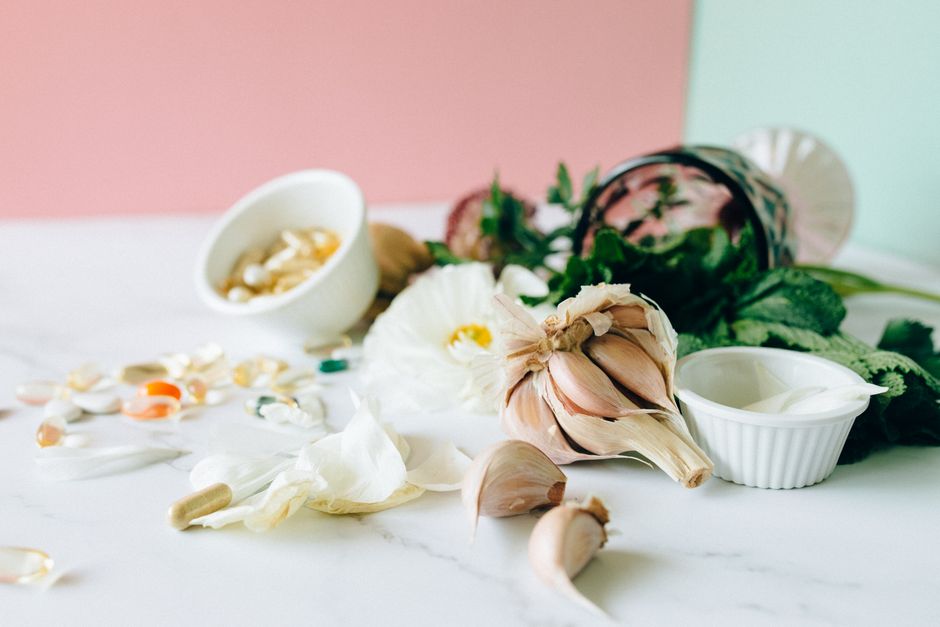
Purple garlic is not a different species or a sign of spoilage. It gets its color from the same family of natural pigments that make blueberries blue and red cabbage red: anthocyanins. These water-soluble compounds build up in the papery skin and sometimes in the clove itself, and their exact shade shifts with the acidity of the plant’s cells.
If you have sliced open a head of garlic and found deep violet streaks instead of creamy white, you are looking at normal plant chemistry, not mold or dye. The color is genetic, influenced by variety and growing conditions, and it behaves much like a natural pH indicator.
Why Is Garlic Purple The Science Behind The Color?
Anthocyanins are the pigments responsible. They belong to a larger group called flavonoids, and they are produced through the same metabolic pathway that makes other plant color compounds.
In garlic, these pigments concentrate mainly in the wrapper leaves — the thin skins around each clove and around the whole bulb. Some varieties also deposit pigment inside the clove tissue, which is why you sometimes see marbled purple and white flesh rather than a solid color.
The shade is not fixed. Anthocyanins change structure depending on pH. In acidic conditions they tend toward red and pink. In neutral to slightly alkaline conditions they shift toward blue and purple. Garlic tissue is mildly acidic, which is part of why the color usually lands in the purple-to-magenta range rather than true blue.
Temperature, sunlight, and soil minerals also influence how much pigment develops. Cooler growing conditions and strong sun exposure tend to increase anthocyanin production in many plants. This is one reason the same variety can look different from one harvest to the next.
Are Purple Garlic Varieties Different From White Garlic?
They are the same plant species. Purple and white garlic both belong to Allium sativum. The difference comes down to variety and the genetics that control pigment production.
Growers recognize two main cultivated types: hardneck and softneck garlic. Many hardneck varieties — particularly those in the purple-striped group — show strong purple coloration. Softneck varieties, which are the ones most often sold in supermarkets, tend to be white or off-white.
Color is not a reliable marker of flavor or potency. A purple-striped hardneck and a white softneck can both be pungent or mild depending on variety and how they were grown. The pigments themselves are odorless and tasteless.
One practical difference: hardneck varieties generally have a shorter storage life than softneck types. If your purple garlic sprouts or dries out faster than expected, that is a variety trait, not a sign that the color caused a problem.
Does Cooking Change the Purple Color?
Yes, and often dramatically. Anthocyanins are not heat-stable in the way some other pigments are.
When you roast or sauté purple garlic, the color frequently fades to tan, brown, or off-white. Heat degrades the pigment molecules. The garlic is still fine to eat — it simply loses the visual trait.
Acidity can slow this. Cooking purple garlic in a acidic medium, such as a tomato sauce or with a splash of lemon or vinegar, tends to preserve more of the color than cooking it in plain oil or water. This is the same reason red cabbage holds its color better in vinegar than in plain boiling water.
There is a well-known kitchen quirk worth knowing. Garlic can turn blue or green when it reacts with acid, particularly in the presence of certain minerals or when garlic is crushed and then exposed to acid. This is a separate reaction from the natural purple pigment. It involves sulfur compounds in garlic forming colored complexes, and it is harmless. It looks alarming on a pizza, but it is not spoilage.
Is Purple Garlic More Nutritious Than White Garlic?
The evidence does not support a strong claim either way. Garlic in general contains organosulfur compounds, and these are the compounds most studied for potential health effects.
Anthocyanins are also studied for their antioxidant properties. But the amount present in garlic skin is small compared with foods like berries, and there is no established clinical evidence that eating purple garlic provides meaningful health benefits beyond those of garlic in general.
Some research suggests anthocyanins have antioxidant activity in laboratory settings. Whether that translates into measurable health outcomes in people at the amounts found in garlic is not established. The honest position is that the color is interesting chemistry, not a proven nutritional advantage.
If you are choosing garlic for health reasons, the variety matters far less than how much you eat and how it is prepared. Crushing or chopping garlic and letting it sit briefly before cooking is a common practice because it allows certain sulfur compounds to form. Whether this produces meaningful clinical effects in humans is still an area of ongoing research, and I would not present it as settled.
Can Garlic Turn Purple for Other Reasons?
Natural anthocyanin is the usual explanation, but not the only one. Context matters.
- Natural variety color: Purple skin or flesh in a fresh, firm, good-smelling bulb is normal.
- Acid reactions during cooking: Blue or green discoloration after contact with acid is a known chemical reaction, not spoilage.
- Mold or spoilage: This usually looks fuzzy, patchy, or accompanied by softness, slime, or an off smell. Color alone is not the signal — texture and odor are.
- Pickling: Garlic pickled in vinegar can take on purple or blue tones from the same pigment and pH chemistry.
If a bulb is firm, dry, and smells like garlic, color is not a safety concern. If it is soft, wet, or smells sour or musty, discard it regardless of color.
Does Purple Garlic Taste Different?
Not because of the color. Flavor in garlic comes from sulfur compounds, not pigments.
Some purple hardneck varieties are described as having a richer or more complex flavor than standard supermarket garlic. That is a variety characteristic, and descriptions of garlic flavor are largely subjective. There is no consistent evidence that purple garlic is milder or stronger than white garlic as a category.
What does affect flavor is freshness, storage, and preparation. A fresh white garlic will often taste better than an old purple one.
Why Does Some Garlic Look Purple Only in Certain Spots?
Pigment distribution is uneven because anthocyanins are produced in specific tissues. In many varieties, the deepest color appears in the layers closest to the outer skin and fades toward the center of the clove.
Growing conditions also create unevenness. A bulb that experienced temperature swings or uneven sun exposure during development may show streaking rather than uniform color. This is normal and does not affect edibility.
You may also notice that the color intensifies after harvest and storage in some varieties, while fading in others. This reflects ongoing chemical changes in the plant tissue, not decay.
Is Purple Garlic Safe to Eat?
Yes, when it is fresh and handled normally. The pigment is a normal plant compound, and people have eaten purple garlic for as long as the varieties have existed.
The same food safety rules apply to purple and white garlic. Keep it dry and well ventilated. Discard bulbs that are soft, moldy, or smell wrong. Garlic stored in oil at room temperature carries a documented risk of botulism, and this applies to any garlic variety — it is a real hazard, not a theoretical one. Garlic-in-oil mixtures should be refrigerated and used within a short time, or made fresh.
If you have a garlic allergy or sensitivity, the color of the bulb makes no difference. The allergenic proteins and irritant compounds are present regardless of variety.
Frequently Asked Questions
Is purple garlic safe to eat?
Yes, purple garlic is safe to eat when it is fresh and firm. Discard any bulb that is soft, slimy, moldy, or smells sour, regardless of its color.
Why does my garlic turn blue or green when I cook it?
This is a harmless chemical reaction between sulfur compounds in garlic and acid, often triggered by lemon juice, vinegar, or certain minerals. It is not spoilage and the garlic is still safe to eat.
Is purple garlic healthier than white garlic?
No clinical evidence confirms that purple garlic provides health benefits beyond those of garlic in general. The anthocyanin pigments are the same compounds found in berries and red cabbage, but the amounts in garlic are small.
Does purple garlic taste different from white garlic?
Flavor comes from sulfur compounds, not pigments, so color alone does not determine taste. Any flavor differences come from the specific variety and how fresh the garlic is.
Why does purple garlic lose its color when cooked?
Anthocyanins break down with heat, so the purple fades to tan or brown during cooking. Cooking in an acidic liquid like tomato sauce or vinegar helps preserve more of the color.
