
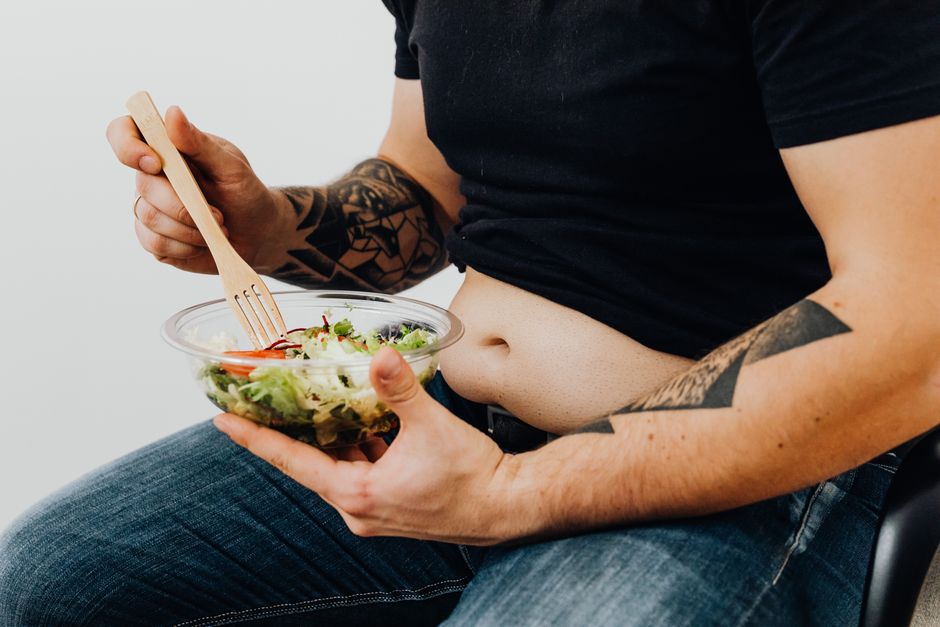
Belly fat is stubborn because it isn’t just fat. Visceral fat — the deep fat wrapped around your organs — behaves differently from fat under your skin. It has a richer blood supply, more hormone receptors, and it responds to stress, sleep, and blood sugar in ways that make it resist ordinary dieting.
That difference explains a lot. Two people can eat the same meals and move the same amount, yet one carries more belly fat than the other. The reasons are biological, not moral. Understanding what visceral fat actually does is the first step toward doing something useful about it.
What Is the Difference Between Belly Fat and Other Fat?
Not all fat is the same tissue doing the same job. The fat you can pinch just under the skin is called subcutaneous fat. It sits on your hips, thighs, and belly, and it is relatively inert. The fat you cannot pinch — the fat packed around your liver, pancreas, and intestines — is visceral fat.
Visceral fat is metabolically active. It releases hormones and inflammatory signals that travel through the bloodstream. It also drains directly into the liver through the portal vein, which means the compounds it releases hit the liver before they reach the rest of your body.
This matters because visceral fat is linked to insulin resistance, high blood pressure, and cardiovascular disease. Subcutaneous fat is linked to far fewer health problems. That is why waist size can tell a doctor more about your metabolic risk than body weight alone.
You cannot feel visceral fat or see it directly. A person with a flat stomach can still carry a meaningful amount of it, and a person with a soft belly may carry mostly subcutaneous fat. Imaging is the only way to know for sure, but waist circumference is a reasonable stand-in for most people.
Why Is Belly Fat So Hard to Lose?
Visceral fat responds to hormones that make it resistant to simple calorie cutting. Cortisol is the clearest example. When stress is chronic, cortisol stays elevated, and visceral fat cells have a high density of cortisol receptors. The tissue essentially gets a signal to hold on and grow.
Insulin plays a similar role. When cells stop responding well to insulin — a state called insulin resistance — the body compensates by producing more insulin. High insulin levels promote fat storage and make it harder to release stored fat for energy. This creates a loop: more visceral fat worsens insulin resistance, which makes it easier to store more visceral fat.
There is also a mechanical reason. Fat cells do not disappear when you lose weight. They shrink. If you lose weight quickly and then return to old eating patterns, those cells refill. This is one reason weight regain tends to concentrate in the same places it was before.
Age adds another layer. After menopause, women often notice fat shifting from hips and thighs to the abdomen. This is driven by falling estrogen, not by a sudden failure of willpower. Men go through a similar shift gradually as testosterone declines, though the pattern is less abrupt.
Does Belly Fat Come From Eating Fat?
No. Dietary fat is not the primary driver of visceral fat storage. Excess calories from any source — fat, carbohydrate, or protein — can be stored as fat when the body has more energy than it needs.
That said, the type and timing of carbohydrates can influence visceral fat in some people. Diets high in refined carbohydrates and added sugars tend to raise insulin more sharply. For people who are already insulin resistant, this can make fat storage easier.
Alcohol deserves its own mention. It is metabolized in the liver, and heavy or frequent drinking is associated with fat accumulation in the abdominal area. This pattern is common enough that it has a name in clinical settings. It is not limited to people who drink heavily — regular moderate drinking can contribute in some individuals.
What consistently helps is a pattern of eating that keeps blood sugar steadier and provides enough protein and fiber. No single food causes belly fat, and no single food removes it.
Can You Target Belly Fat With Exercise?
You cannot spot-reduce fat. Doing crunches will strengthen your abdominal muscles, but it will not preferentially burn the fat sitting on top of them. The body pulls energy from fat stores across the body, not from the area you happen to be working.
That said, exercise still matters — just not in the way most people expect. Aerobic exercise reduces visceral fat even when body weight does not change much. Some studies suggest that visceral fat responds to exercise more readily than subcutaneous fat does. The effect appears to be partly independent of total weight loss.
Resistance training helps preserve muscle mass, which supports metabolic rate. Muscle also uses glucose more efficiently, which can improve insulin sensitivity over time.
The practical takeaway is that consistency matters more than intensity. A brisk walk most days of the week will do more for visceral fat than an occasional hard workout. This is one of the few areas where the evidence is fairly consistent.
How Do Sleep and Stress Affect Belly Fat?
Short sleep and chronic stress both raise cortisol and disrupt appetite regulation. People who consistently sleep less than seven hours tend to have higher levels of ghrelin, a hormone that increases hunger, and lower levels of leptin, a hormone that signals fullness. The result is not just eating more — it is eating more of the foods that promote fat storage.
Stress works through the same pathway. It also affects where fat is stored. Elevated cortisol specifically favors visceral fat deposition, which is why chronic stress can show up as a change in waist size even when weight stays stable.
This does not mean that managing stress will melt belly fat. It means that ignoring sleep and stress makes every other effort harder. These are not soft factors. They are part of the physiology.
What Actually Works for Reducing Visceral Fat?
The interventions with the strongest evidence are not dramatic. They are consistent and cumulative.
- Calorie deficit — eating somewhat less than you burn reduces visceral fat, even without extreme dieting.
- Aerobic activity — regular moderate exercise reduces visceral fat independently of weight loss.
- Sleep — consistently getting seven or more hours supports appetite hormones and cortisol regulation.
- Stress management — whatever reliably lowers your stress load, whether that is walking, therapy, or time outdoors.
- Limiting alcohol — reducing frequency and amount can make a measurable difference for some people.
- Blood sugar control — for people with insulin resistance or type 2 diabetes, working with a doctor on glucose management matters.
No supplement has strong evidence for reducing visceral fat. Some are marketed heavily, but the clinical trials are small or absent. If a product promises targeted belly fat loss, that claim is not supported by the current evidence.
Waist circumference is a useful way to track progress. For most adults, a waist over 40 inches for men or 35 inches for women is considered a risk threshold by many clinical guidelines. These are not perfect cutoffs, and they vary by population, but they are more informative than weight alone.
Why Does Belly Fat Come Back After Weight Loss?
Weight regain is the norm, not the exception. The body defends its highest weight through a combination of hormonal changes that persist after weight loss. Ghrelin stays elevated. Leptin stays lower. Energy expenditure drops slightly more than expected for the new body size.
This is not a failure of discipline. It is a predictable biological response to weight loss that has been documented in controlled studies. The people who maintain weight loss long-term tend to do so with ongoing habits — regular activity, consistent eating patterns, and frequent self-monitoring.
Visceral fat tends to return first when weight comes back. That is one reason yo-yo dieting can leave someone with a higher waist circumference even at the same weight.
Frequently Asked Questions
Can you lose belly fat without losing weight?
Yes. Aerobic exercise can reduce visceral fat even when the scale does not move much. This is because visceral fat responds to exercise partly independently of total weight loss.
Is belly fat worse than fat on your hips?
Yes, from a health standpoint. Visceral fat is linked to insulin resistance, high blood pressure, and cardiovascular disease, while hip and thigh fat is linked to far fewer health problems.
How long does it take to reduce visceral fat?
Some studies show measurable reductions in visceral fat within a few weeks of consistent exercise and calorie reduction. The timeline varies widely by person, and no single schedule applies to everyone.
Do waist trainers or wraps help reduce belly fat?
No. There is no evidence that wraps, creams, or compression garments reduce visceral or subcutaneous fat. Any temporary change in appearance is from fluid shifts or posture, not fat loss.
