

The chicken or the pasta question is familiar to anyone who has flown. But no matter which you pick, the meal often tastes bland, salty, or just odd. This is not your imagination or a conspiracy by airlines. The science of airplane food explains why your taste buds behave differently at 35,000 feet. Low cabin pressure, dry air, and engine noise all change how you perceive flavor. The food itself is also prepared in ways that attempt to compensate for these conditions.
How Cabin Pressure Affects Taste Buds
Your sense of taste depends on chemical signals reaching your taste buds. At cruising altitude, cabin pressure is roughly equivalent to an elevation of 6,000 to 8,000 feet. This lower pressure dulls your sensitivity to sweet and salty flavors. At the same time, bitter and sour notes become more noticeable. That is why coffee tastes bitter and why orange juice can seem sour or metallic.
Research has shown that taste receptor function is reduced at altitude. A 2010 study by Lufthansa and the Fraunhofer Institute found that saltiness perception drops by about 20 percent at cruising altitude. Sweetness perception also decreases. This means airlines need to add extra salt and sugar just to make the food taste normal on the ground. Without that adjustment, the food would taste nearly flat to passengers.
The Role of Dry Air and Dehydration
Cabin air is extremely dry, with humidity levels often below 20 percent. Dry air reduces your sense of smell because the mucous membranes in your nose need moisture to detect odor molecules. Smell contributes about 80 percent of what we call flavor. When your nose dries out, food loses much of its complexity.
Dehydration also plays a role. Most people do not drink enough water during flights. Even mild dehydration can reduce saliva production, which is needed to dissolve food chemicals and deliver them to taste buds. The combination of dry air and dehydration makes food taste dull and one-dimensional.
How Background Noise Changes Flavor Perception
Airplane cabins are noisy, typically around 80 to 85 decibels during cruise. This noise level can alter your perception of food. Studies have shown that loud background noise reduces the ability to taste sweetness and saltiness while enhancing umami perception. One study published in the Journal of Experimental Psychology: Human Perception and Performance found that noise made food seem less salty and less sweet, but more crunchy.
This is why many airlines have started offering umami-rich foods. Umami is the savory taste found in tomatoes, mushrooms, aged cheese, and soy sauce. Because umami perception holds up better in noise and at altitude, it can help make meals taste more satisfying. Some research suggests that umami taste receptors are less affected by the combination of low pressure and noise compared to sweet or salty receptors.




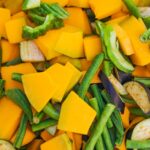
Why Airline Food Is Pre-Cooked and Reheated
The logistics of feeding hundreds of people in the sky require that meals be fully cooked on the ground, then chilled and reheated onboard. The reheating process happens in convection ovens that use hot air, not microwave radiation. This method can dry out food even more and cause uneven heating. Textures suffer — meat can become tough, vegetables mushy, and sauces congeal.
To compensate, airlines choose foods that hold up well to this process. For example, braised meats, curries, and stews tend to survive reheating better than grilled fish or crisp salads. Potatoes are often used because they retain moisture. But even with careful selection, the results are limited by the equipment and the time between cooking and serving, which can be 12 hours or more.
Do Airlines Actually Try to Make Food Taste Better?
Yes, airlines invest significant effort into making food palatable under these challenging conditions. They work with chefs and food scientists to design meals that work at altitude. One common strategy is to boost umami flavors using ingredients like tomato paste, soy sauce, mushrooms, and Parmesan cheese. These ingredients provide savory notes that remain detectable even when sweet and salty are muted.
Airlines also add extra salt, sugar, and spices — often 20 to 30 percent more than in a comparable ground-level recipe. Spices like chili, ginger, and cinnamon are used to stimulate the trigeminal nerve (the nerve responsible for the “heat” of chili or the coolness of mint) which can add perceived flavor intensity. Some airlines adjust the menu based on route and passenger demographics, though the core science remains the same for all.
Despite these efforts, the food will never taste as good as a fresh meal on the ground. The physiology of the human body at altitude sets a hard limit on how much can be done.
Why Is Airplane Food So Bad The Science Explained? The answer is a combination of low cabin pressure dulling taste receptors, dry air reducing smell, loud noise altering perception, and the logistical necessity of pre-cooking and reheating. Each factor adds up to a less satisfying eating experience. Airlines attempt to compensate with extra salt, sugar, and umami, but they are working against biology and physics.
Can You Improve Your In-Flight Meal Experience?
You cannot change the cabin environment, but you can take steps to get more enjoyment from airplane food. Drink plenty of water before and during the flight to stay hydrated. Avoid alcohol and caffeine, which contribute to dehydration. Use a saline nasal spray to keep your nasal passages moist, which helps your sense of smell.
Choose meals with strong umami or savory profiles when you pre-order. Tomato-based dishes, curries, and anything with mushrooms or cheese tend to fare better. Some travelers bring their own seasoning packets — like hot sauce, salt, or pepper — to adjust flavors to their liking. Avoid dishes that rely on crisp textures or delicate flavors, as these do not hold up well to reheating.
Eating a small meal before flying can also help. If you are already hungry and expecting the food to be bland, you may be more disappointed. Managing expectations is part of the experience.
Frequently Asked Questions
Why does food taste bland on airplanes?
Low cabin pressure dulls your ability to taste sweet and salty flavors, while dry air reduces your sense of smell.
Why do tomatoes taste better on a plane?
Tomatoes are rich in umami compounds, and umami perception is less affected by low pressure and noise than sweetness or saltiness.
Do airlines add more salt and sugar to airplane food?
Yes, airlines typically add 20 to 30 percent more salt and sugar than in a ground-level recipe to compensate for dulled taste.
Is airplane food safe to eat?
Yes, airline meals are prepared under strict food safety regulations and are safe to eat. The taste may be poor, but the safety standards are high.
