
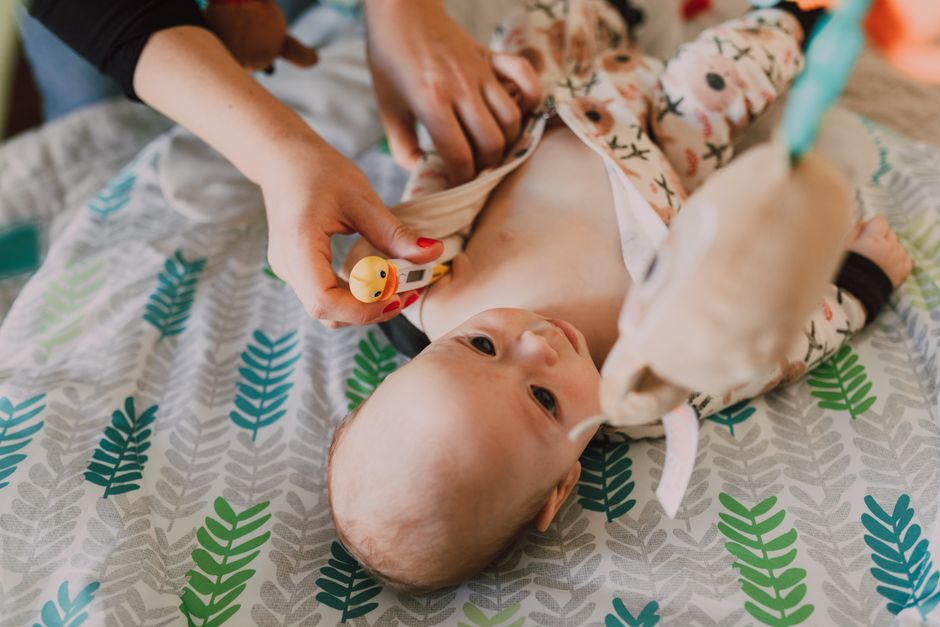
Honey can contain spores of Clostridium botulinum, the bacteria that cause botulism. An infant’s digestive tract is not mature enough to stop those spores from germinating and producing toxin. That is why health authorities advise against giving honey to any child under 12 months old.
This is not about allergies or sugar. It is about a rare but serious illness called infant botulism, and honey is the one food source most clearly linked to it. The risk is small, but the illness can be severe, and the prevention is simple.
Why Infants Can’t Have Honey? The Core Reason
The danger comes from bacterial spores, not from live bacteria or from the honey itself being “spoiled.” Clostridium botulinum spores are widespread in soil and dust. Bees pick them up while foraging, and the spores can end up in honey.
Spores are dormant. They are hardy structures that survive heat, drying, and ordinary processing. Pasteurization does not reliably destroy them, and honey is not sterilized before sale. So a jar of honey can carry a small number of spores even though it looks and tastes completely normal.
In an adult or an older child, swallowed spores pass through the gut without causing harm. The mature intestinal tract and its established community of bacteria keep them in check. In a young infant, the gut is still developing, and the spores can germinate in the intestine, multiply, and release botulinum toxin. That toxin is what causes illness.
The key point: honey is not the only possible source of these spores, but it is the one that has been most consistently identified in infant botulism cases. That is why the warning is specific and firm.
What Is Infant Botulism and How Does It Affect a Baby?
Infant botulism is a rare condition, but it is the most common form of botulism in the United States. It happens when spores germinate inside a baby’s intestine and produce toxin there. This is different from foodborne botulism in adults, which comes from eating pre-formed toxin in improperly canned food.
The toxin blocks nerve signals that tell muscles to move. The result is weakness that tends to come on gradually. Early signs can be subtle and easy to miss.
- Constipation that appears before other symptoms
- Weak suck and poor feeding
- A weak cry
- Floppy muscles and reduced movement
- Drooping eyelids and a sluggish expression
- Breathing difficulty in more serious cases
Symptoms usually begin within a range of days to weeks after exposure, though the exact timing varies. Infant botulism is treated in a hospital. With supportive care, most infants recover fully, but recovery can take weeks to months. This is a serious illness, not a mild reaction.
At What Age Is Honey Safe?
The threshold used by health authorities is 12 months. After a child’s first birthday, the digestive system and gut bacteria are mature enough that the spores no longer pose the same risk, and honey can be introduced like other foods.
Twelve months is a widely used cutoff, not a magic switch that flips on a birthday. It reflects the age at which the risk is considered low enough to be acceptable. For that reason, some clinicians suggest erring on the side of caution and waiting a little past the first birthday if it is easy to do so. There is no nutritional need to give honey to a baby, so waiting costs nothing.
This guidance applies to all honey, including raw honey, pasteurized honey, and honey sold as organic. Pasteurization does not remove the spores, so “pasteurized” does not make honey safe for an infant.




Does Cooking or Baking Kill the Spores in Honey?
Ordinary cooking and baking do not reliably make honey safe for a baby. The spores are heat-resistant, and normal home cooking temperatures are not guaranteed to destroy them.
This matters because honey shows up in baked goods, sauces, granola, and packaged foods. A muffin or a marinade made with honey still carries the same theoretical concern for an infant. The cautious approach is to avoid honey-containing foods entirely until 12 months.
Boiling honey at home is not a reliable fix either. There is no home method that has been shown to make honey consistently safe for infants, so it should not be attempted.
What About Honey on a Pacifier or for Coughs?
Some traditional practices involve dipping a pacifier in honey or giving a small amount of honey for a cough. For infants under 12 months, this is not safe. The cough benefit seen in older children does not change the botulism risk in babies.
For a baby with a cough, talk to a pediatrician about appropriate options. Honey is not one of them at this age. The same applies to honey used to sweeten a bottle, soothe teething, or encourage a baby to eat.
Common Misconceptions About Honey and Babies
A few ideas circulate that are worth correcting directly.
“Local or raw honey is safer.” It is not. Raw and local honey can carry the same spores, and the lack of processing does not reduce the risk. Some people believe raw honey is more natural and therefore safer, but for infants the opposite concern applies.
“A tiny taste won’t hurt.” The guidance is to avoid honey entirely under 12 months. There is no established safe amount for infants, so a “tiny taste” is not recommended.
“Honey is a healthy sweetener for babies.” Babies do not need added sugar of any kind. Honey offers no nutritional advantage for an infant, and breast milk or formula provides what a baby needs.
“Pasteurized honey is fine.” Pasteurization does not reliably eliminate the spores. This is one of the most common misunderstandings.
How to Handle Honey Safely Around a Baby
The practical steps are simple and mostly about awareness.
- Read labels on baked goods, cereals, sauces, and snacks before offering them to a baby.
- Keep honey out of a baby’s reach and out of any food prepared for an infant.
- Tell caregivers, grandparents, and babysitters about the 12-month rule, since honey is a common home remedy.
- Wait until after the first birthday before introducing honey.
If a baby under 12 months has eaten honey, it does not automatically mean they will get sick. The risk is small. Watch for the signs above, especially constipation followed by weakness or poor feeding, and contact a pediatrician if anything seems off. If a baby has trouble breathing or seems unusually floppy, seek emergency care right away.
Why the Warning Is So Consistent
Infant botulism is rare, and most babies who eat honey do not become ill. That can make the warning feel like overkill to some parents. But the illness can be serious, the treatment often requires hospitalization, and there is no benefit to giving honey to a baby that would justify the risk.
The recommendation is consistent across pediatric and public health guidance for a reason: it is a low-cost precaution against a potentially severe illness. When the prevention is as easy as waiting a year, the sensible choice is clear.
Frequently Asked Questions
Why can’t babies under 1 have honey?
Honey can contain Clostridium botulinum spores that a baby’s immature gut cannot stop from germinating and producing toxin. This can cause infant botulism, a rare but serious illness.
Does pasteurized honey still carry a risk for infants?
Yes. Pasteurization does not reliably destroy the spores, so pasteurized honey is not considered safe for babies under 12 months.
What happens if a baby accidentally eats honey?
The risk of illness is small, but you should watch for constipation, weakness, poor feeding, or a weak cry and call a pediatrician with any concerns. Seek emergency care for breathing trouble or unusual floppiness.
Can babies have baked goods made with honey?
It is safest to avoid them under 12 months, since ordinary baking does not reliably destroy the spores. Check labels on breads, cereals, and snacks before offering them to a baby.
